

Touchless Soap, Sanitizer
& Foam Dispenser PCBA.
Supplied-design PCB assembly for non-potted automatic liquid soap, sanitizer and foaming dispenser control boards, separated IR sensor boards and modular pre-certified BLE/RF telemetry sub-boards. Align single-face mounting, optical coating masking, firmware loading and dry electrical checks before production.
Board-Level Assembly for
Non-Potted Dispenser Electronics.
Touchless washroom and countertop dispensers rely on compact proximity-sensing and pump-drive boards working inside humid housings. We assemble supplied-design FR-4 dispenser PCBAs using SMT, through-hole and mixed assembly with single-sided component mounting, lead-free reflow, first-article review and AOI. Single-sided component mounting is independent of copper-layer count, and one SMT reflow face does not confirm fit if through-hole headers, bulk capacitors or optical sensors sit on the reverse side—so we review Top and Bottom Gerbers and the full BOM package list before quoting.
Orders can include customer-approved firmware loading, conformal coating with customer-defined chemistry and keep-out drawings, and agreed dry-bench electrical and optical-target checks. Start with a draft BOM, schematic, Gerbers or reference sample; final files lock before production. Potted washdown faucets, flush valves, housing or pump supply, capacitive liquid-tolerance R&D, wet fluid testing and finished-product certification stay outside scope.
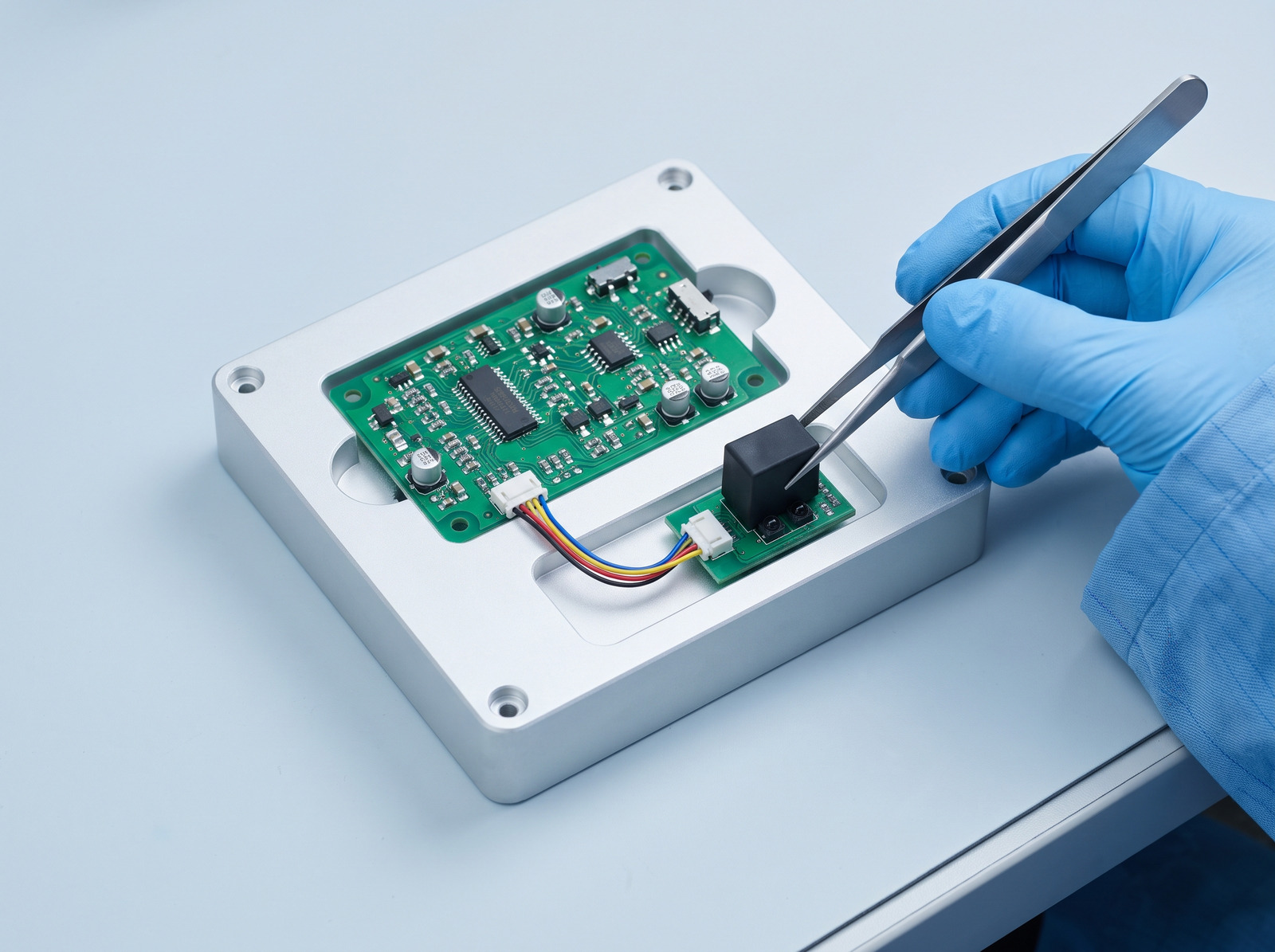
Verify Fit Around Dispenser Hardware Constraints.
Commercial and countertop soap, sanitizer and foam dispensers pack optics, motor drivers and moisture protection into tight housings. Resolving board-face layout, sensing scope and environmental boundaries early keeps assembly predictable from first sample through repeat builds.
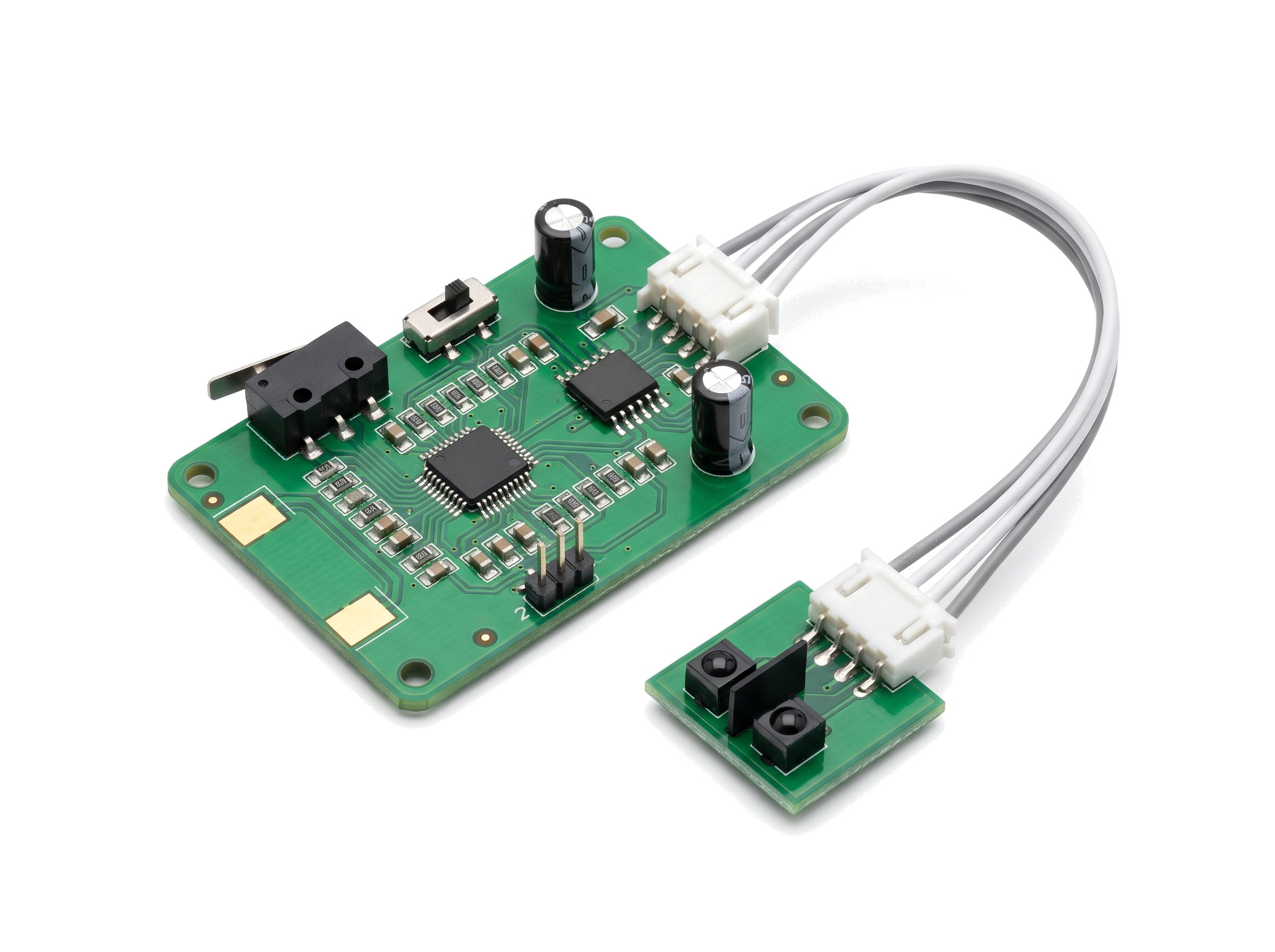
Single-Face Layout & Gerber Verification
Single-Face Layout & Gerber Verification
Single-PCB dispensers frequently pit inward-facing battery, capacitor or motor hardware against a downward-facing IR transceiver. Even with one SMT reflow side, reverse-side through-hole headers or optics still fail single-sided component mounting regardless of copper-layer count. Checking Top and Bottom Gerbers alongside every BOM package confirms viability or flags a harnessed-sensor split before quoting.
Firmware Loading & Sensing Scope
Firmware Loading & Sensing Scope
We load customer-approved production firmware onto active-IR dispenser control boards and modular pre-certified BLE/RF sub-boards within the assembly order. Creating custom ambient-light cancellation algorithms, capacitive liquid-tolerance tuning, Time-of-Flight temperature calibration or connected washroom fleet platforms sits outside assembly scope, so proven sensing hardware and production firmware files remain customer-owned.
Conformal Coating vs. Washdown Sealing
Conformal Coating vs. Washdown Sealing
Washroom dispensers face humidity, condensation and cleaning aerosols rather than immersion. Conformal coating follows customer-defined chemistry and keep-out drawings so circuit traces stay shielded while IR lenses, switches and battery pads remain clear. Because no coating forms an impermeable waterproof seal, coating never substitutes for enclosure-level IEC 60529 ratings or out-of-scope potted washdown hardware.
Early Fit Review Before Locked Release
Early Fit Review Before Locked Release
Dispenser OEMs owning housing tooling and pump mechanics can begin an early manufacturability discussion using a draft BOM, schematic, Gerbers or sample board. Early review flags opposite-face components, X-ray-dependent bottom-terminated packages and optical keep-out clearances before tooling commits. Released board files, approved alternates and dry-bench acceptance checks lock prior to production.
Compare Dispenser Board Architectures & Scope.
Touchless soap, sanitizer and foam dispensers partition optical sensing, motor power and wireless telemetry across distinct non-potted board layouts. Compare how four in-scope board architectures map onto single-face mounting, optical masking and dry-bench verification.
Single-Sided Active-IR Control Board
Ribbon-Separated Sensor & Main Boards
Liquid/Foam Motor Driver & Power Boards
Pre-Certified BLE / RF Telemetry Sub-Board
Four Controls Behind Reliable Dispenser PCBAs.
Reliable touchless soap, sanitizer and foam dispenser electronics depend on controlling optical isolation, selective coating boundaries, battery-inrush power stability and dry actuator verification where circuit design meets physical board assembly.
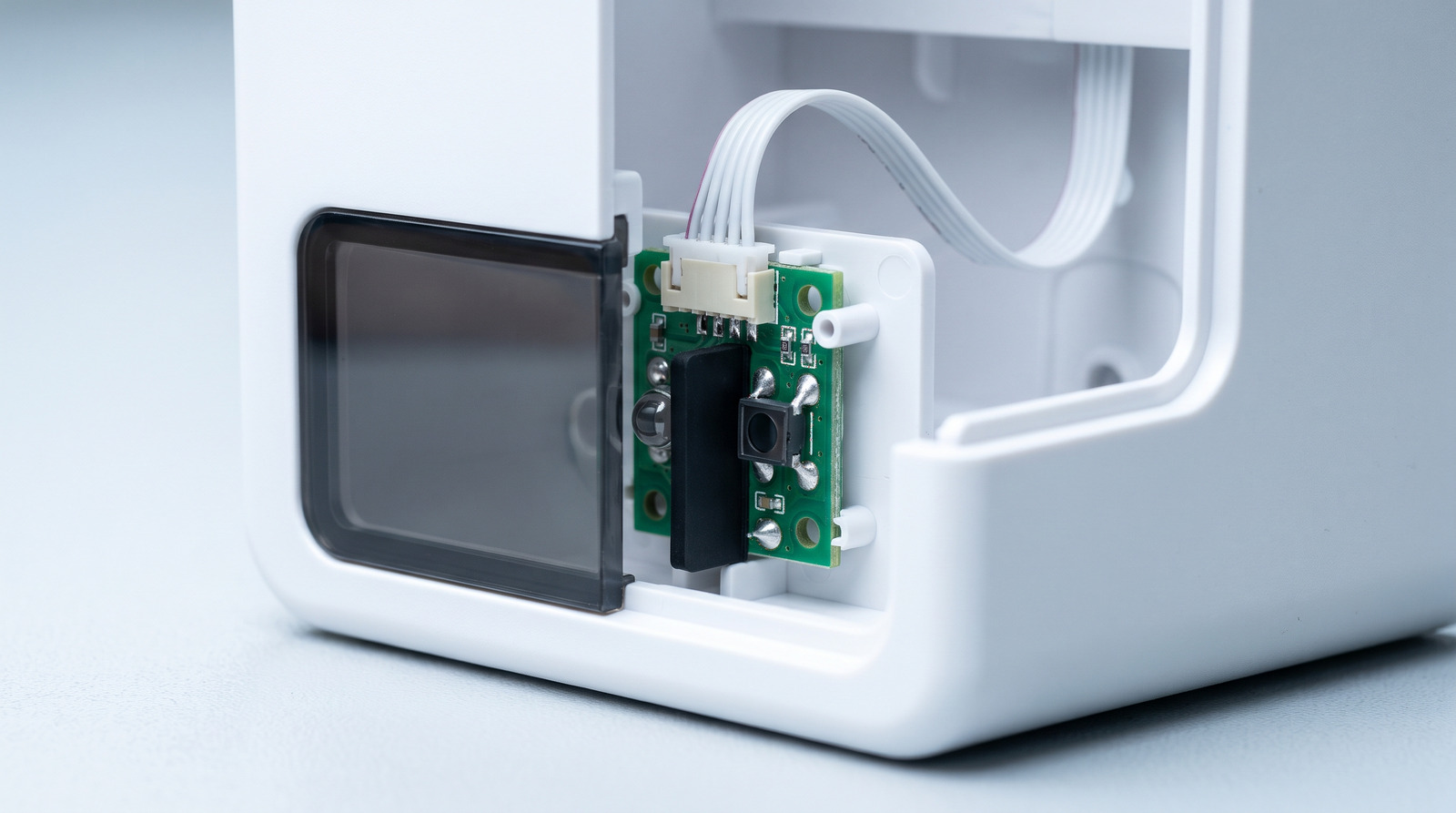
Optical Crosstalk, Light Barriers & Sensing Scope
Active-IR dispensers lose sensing margin when emitted infrared light reflects internally off the enclosure cover window into the photodiode, raising static offset counts and triggering phantom dispenses. Proven designs pair an opaque mechanical light barrier across any sensor-to-window air gap with controlled aperture geometry, pulsed ambient-light rejection and drift-tolerant thresholds. Because capacitive liquid-tolerance tuning and Time-of-Flight thermal or multi-target optical calibration require dedicated engineering laboratories, we focus assembly on customer-proven active-IR hardware.
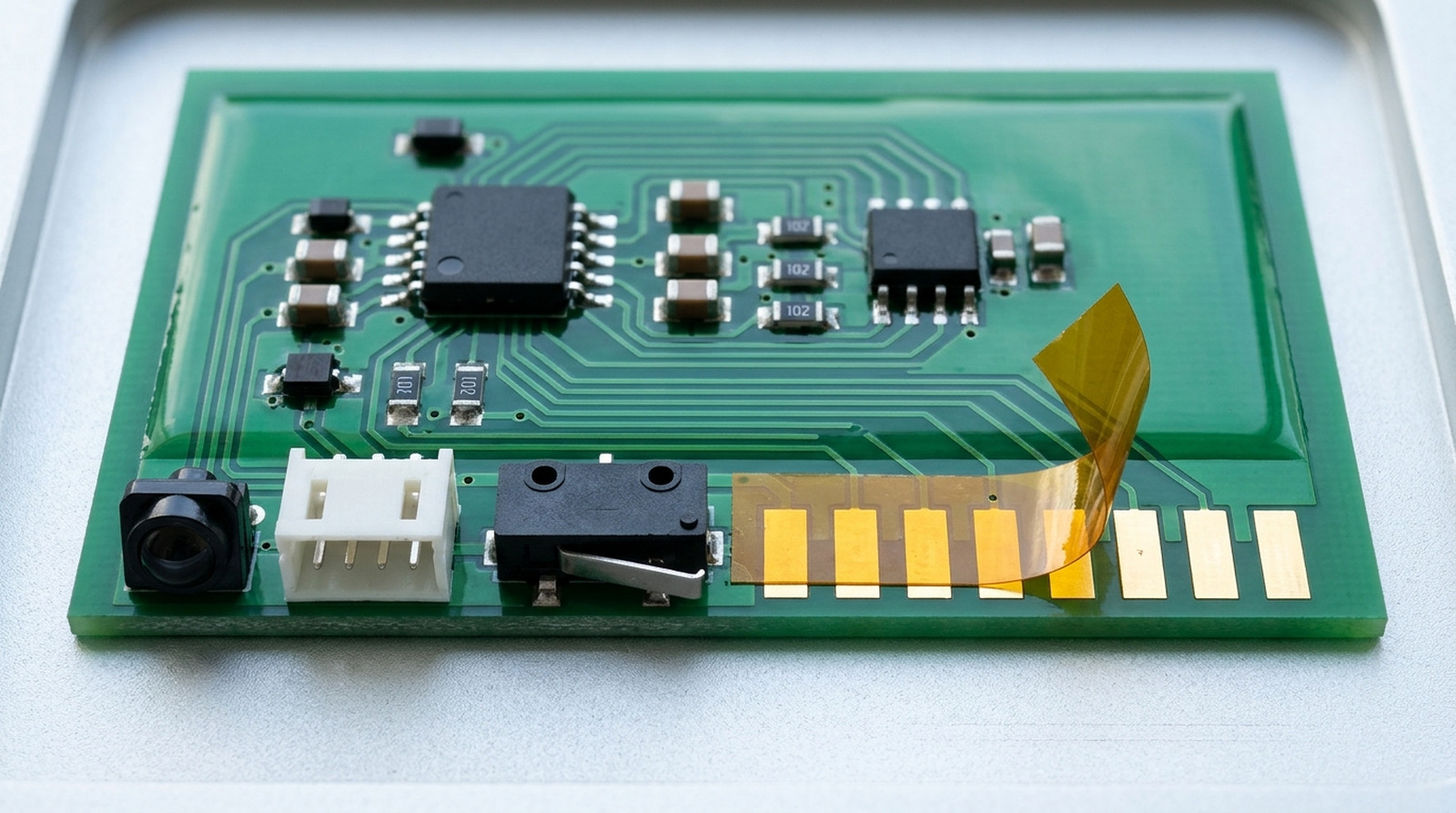
Conformal Coating Masking, Overspray & Creep
Washroom humidity, condensation and aerosolized soap or alcohol cleaning sprays corrode exposed conductors, yet unintended coating on IR lenses, cam switches, battery contacts or programming headers degrades optical transmission or causes open circuits. Effective protection pairs customer-defined chemistry and keep-out drawings with residue-free, non-conductive masking covers or tapes (avoiding conductive-adhesive ESD tape over conductors), open-via bleed-through review, and agreed boundary checks for overspray or creep, including UV inspection where fluorescent coatings are specified.
Battery Sleep Discipline & Motor-Inrush Brownout
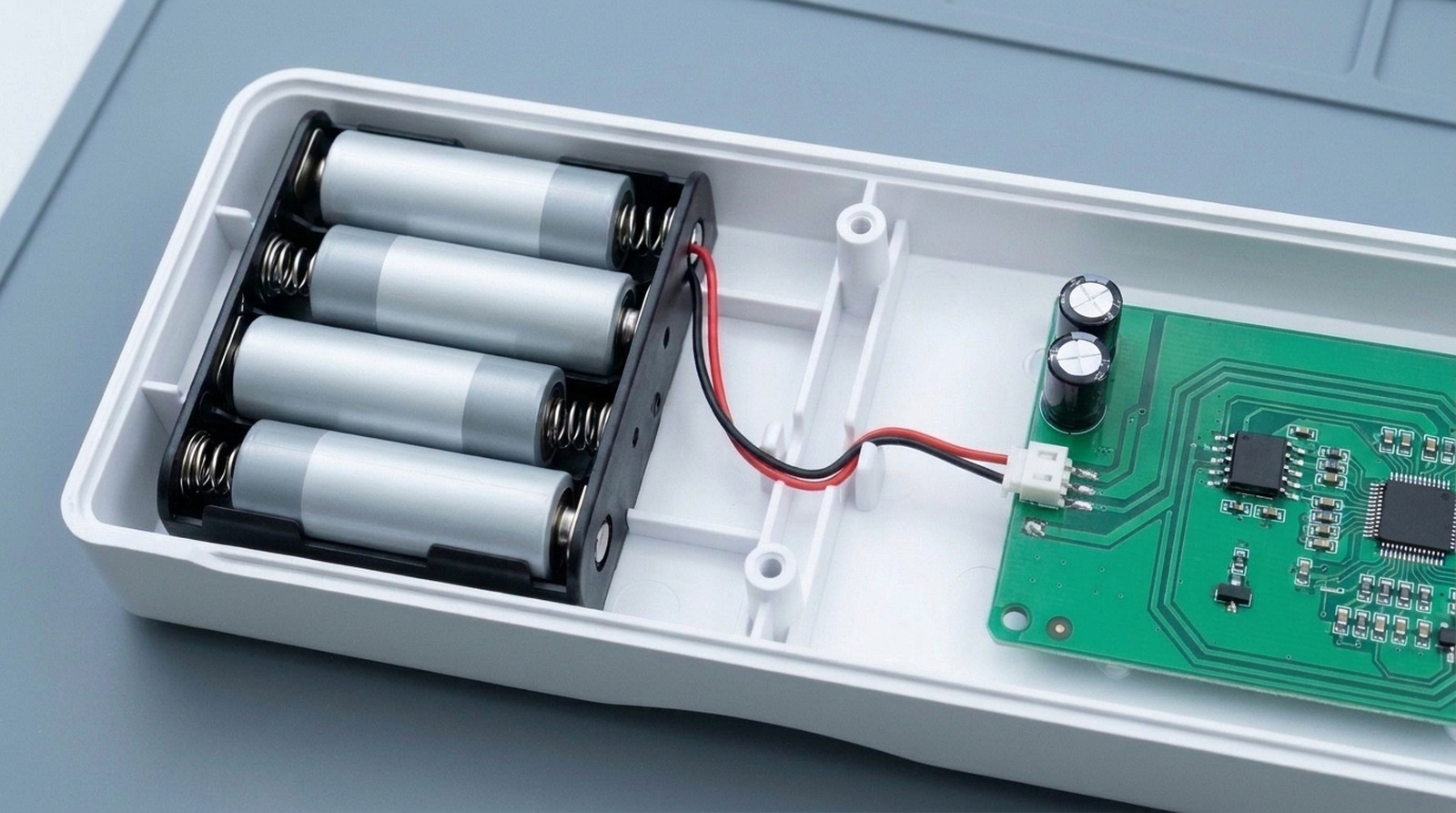
Battery-powered dispensers stay idle almost continuously via duty-cycled IR pulses, MCU sleep intervals and motor-driver sleep control, then draw sharp startup inrush spikes during actuation. Terminal voltage drop follows Ohm’s Law (ΔV = I_load × R_internal), where total alkaline internal resistance—combining fast electronic resistance and slower electrochemical ionic polarization—rises as cells discharge or cool. Preserving bulk decoupling capacitors, optical-rail filtering, separated motor/IR ground returns and secure battery contacts prevents assembly variations from aggravating droop.
Pump-Motor Drive, Stall Feedback & Dry Checks
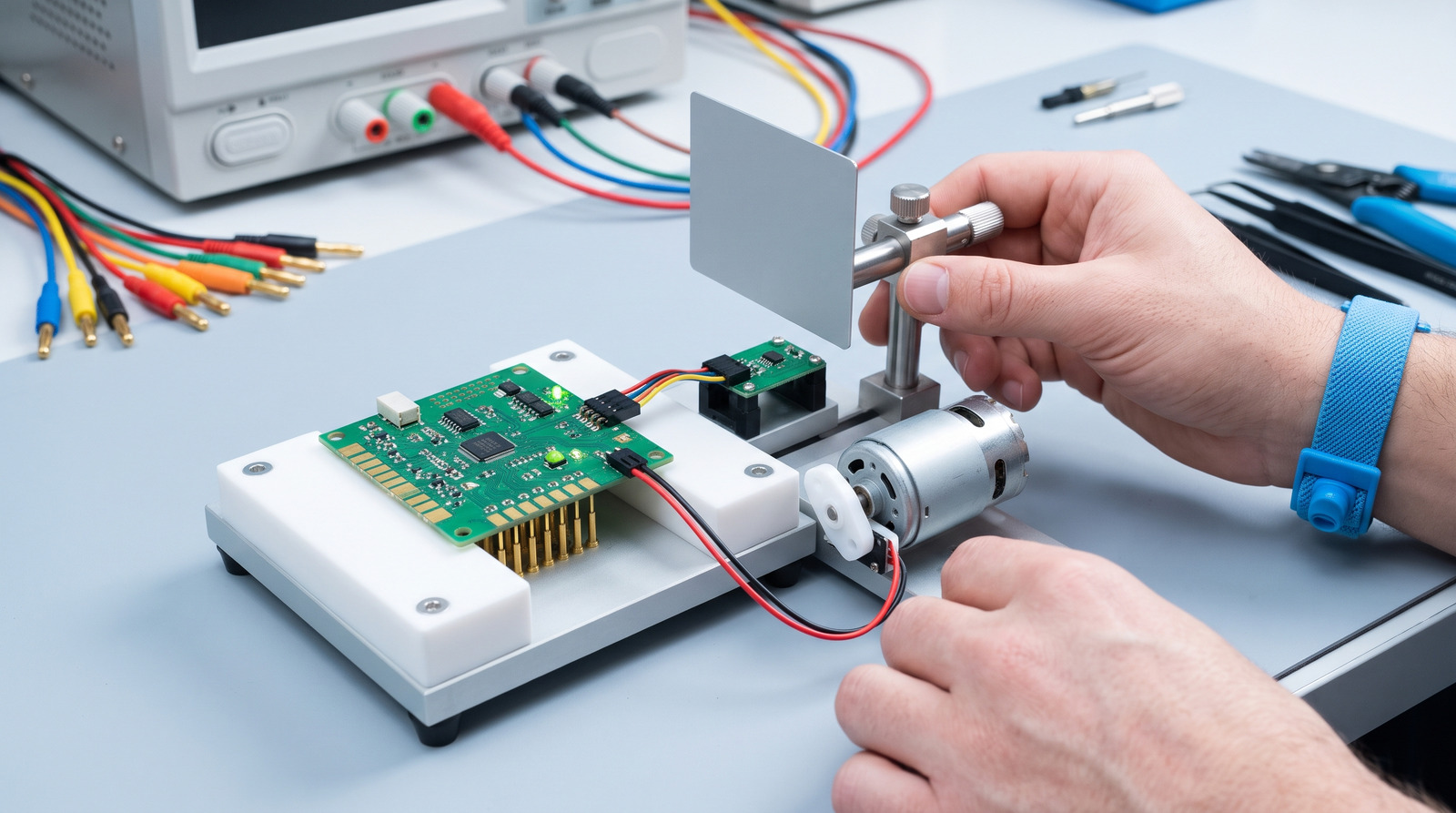
Dispenser boards drive brushed-DC cartridge cams or bulk liquid and foam pumps via flyback-protected low-side switches or integrated H-bridges with overcurrent and thermal protection. Stroke completion and jam cutoffs rely on motor-driver current-mirror stall sensing or PCB-mounted cam microswitches alongside cover-closed and refill interlocks. Agreed dry-bench fixtures confirm standby draw, standardized dry reflective target triggering, simulated motor actuation, stall or cam cutoff and status LEDs—clearly distinct from wet viscosity, priming, dose-volume or foam-quality verification.
Where Dispenser Control Boards Take Shape.
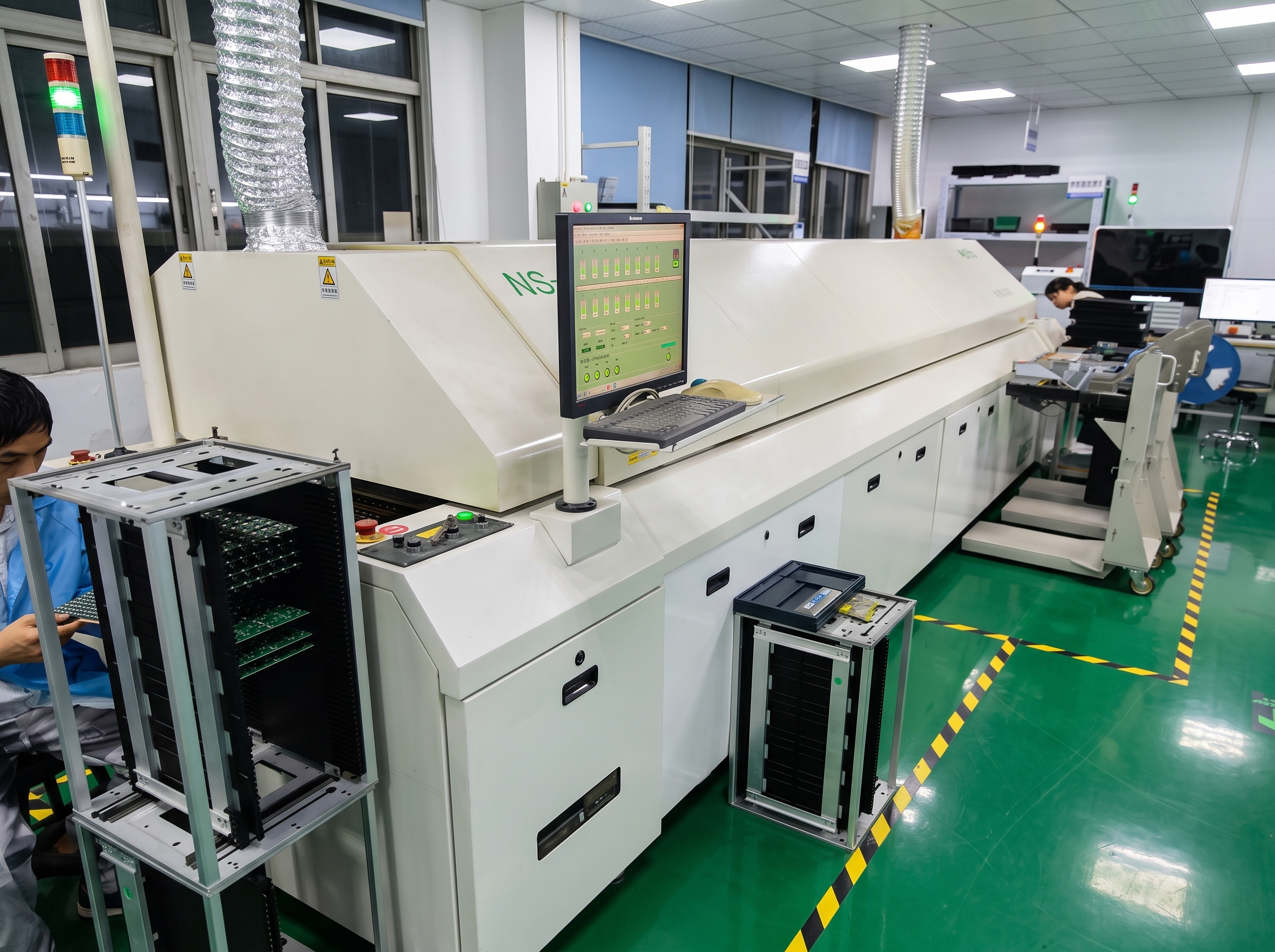
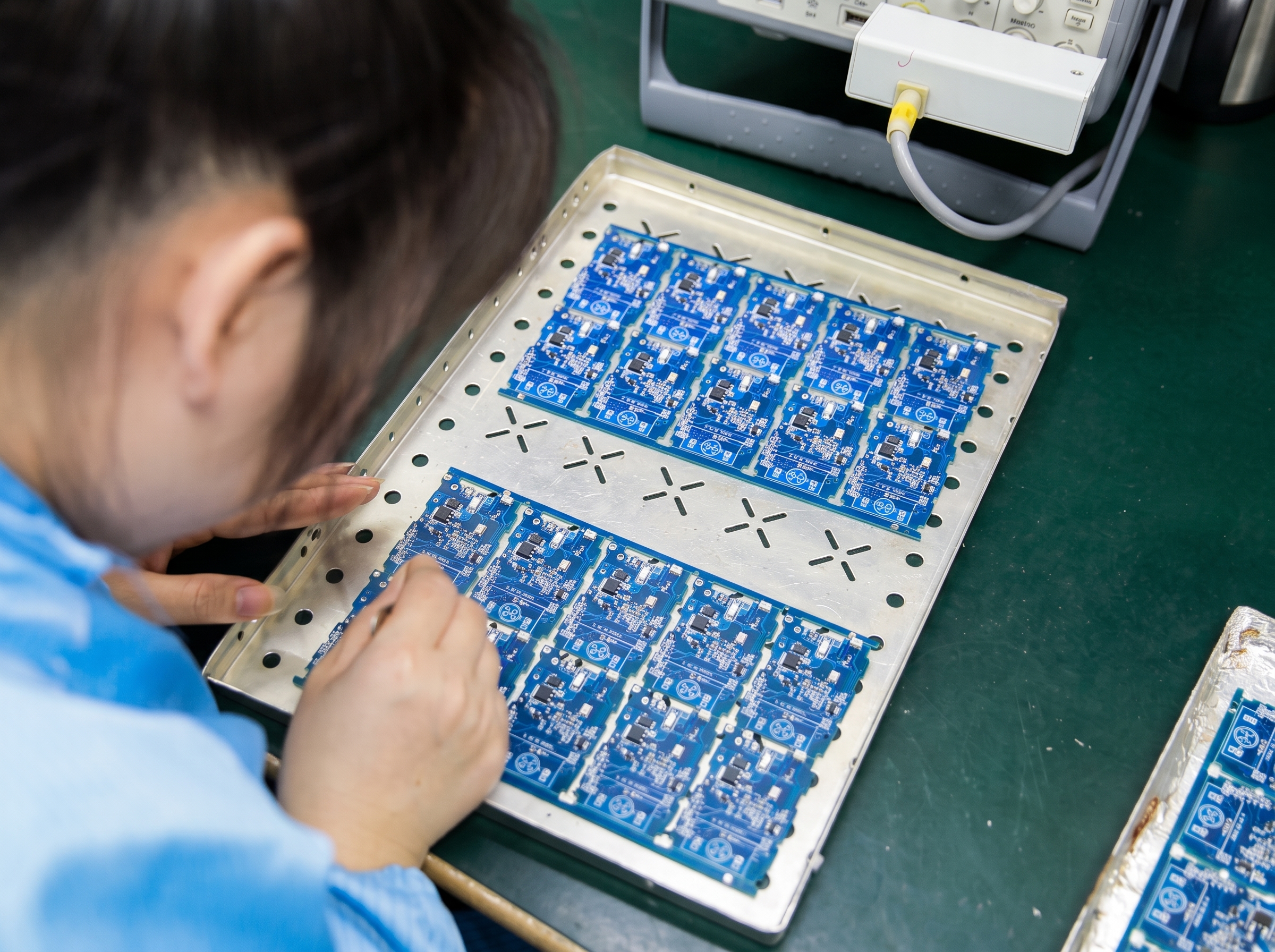
Once Top and Bottom Gerbers, BOM packages, firmware builds and coating keep-out drawings are confirmed, assembly moves through structured production bays. These stations illustrate the manufacturing setting for single-side SMT placement, mixed hardware fitting, lead-free reflow and dry post-assembly checks governed by your released revision.


Single-Side SMT Assembly
Approved microcontrollers, optical proximity ICs, brushed-DC motor drivers and chip passives populate one component face of the FR-4 board. Placement and polarity checks on optical packages and driver pins keep line setup aligned with your released revision.
Through-Hole & Harness Fitting
Bulk radial capacitors, cam home-position microswitches, battery contacts and wire or ribbon headers for separated IR sensors and DC pump leads complete mixed builds on the verified component face. Assembly drawings hold mechanical seating height and connector orientation consistent for enclosure fit.
Lead-Free Reflow
Populated dispenser control boards and modular telemetry sub-boards move through lead-free reflow tuned around actual substrate mass and component thermal requirements rather than one fixed profile. Visible-joint packages support thorough post-reflow optical solder-joint inspection without X-ray dependency.
First-Article, Coating & Dry Verification
First-article review and AOI confirm component presence, orientation and solder-joint quality before continuing the run. Where specified, boards proceed through masked conformal coating with agreed keep-out inspection—including UV checks for fluorescent coatings—approved customer firmware loading and agreed dry-bench optical and motor-load checks.
Board Assemblies Across Non-Potted Dispenser Formats.
Sealed-cartridge wall units, bulk foam dispensers and connected telemetry sub-boards impose distinct layout, masking and actuation demands. These three in-scope formats show how electronics architecture connects to our board assembly contribution.
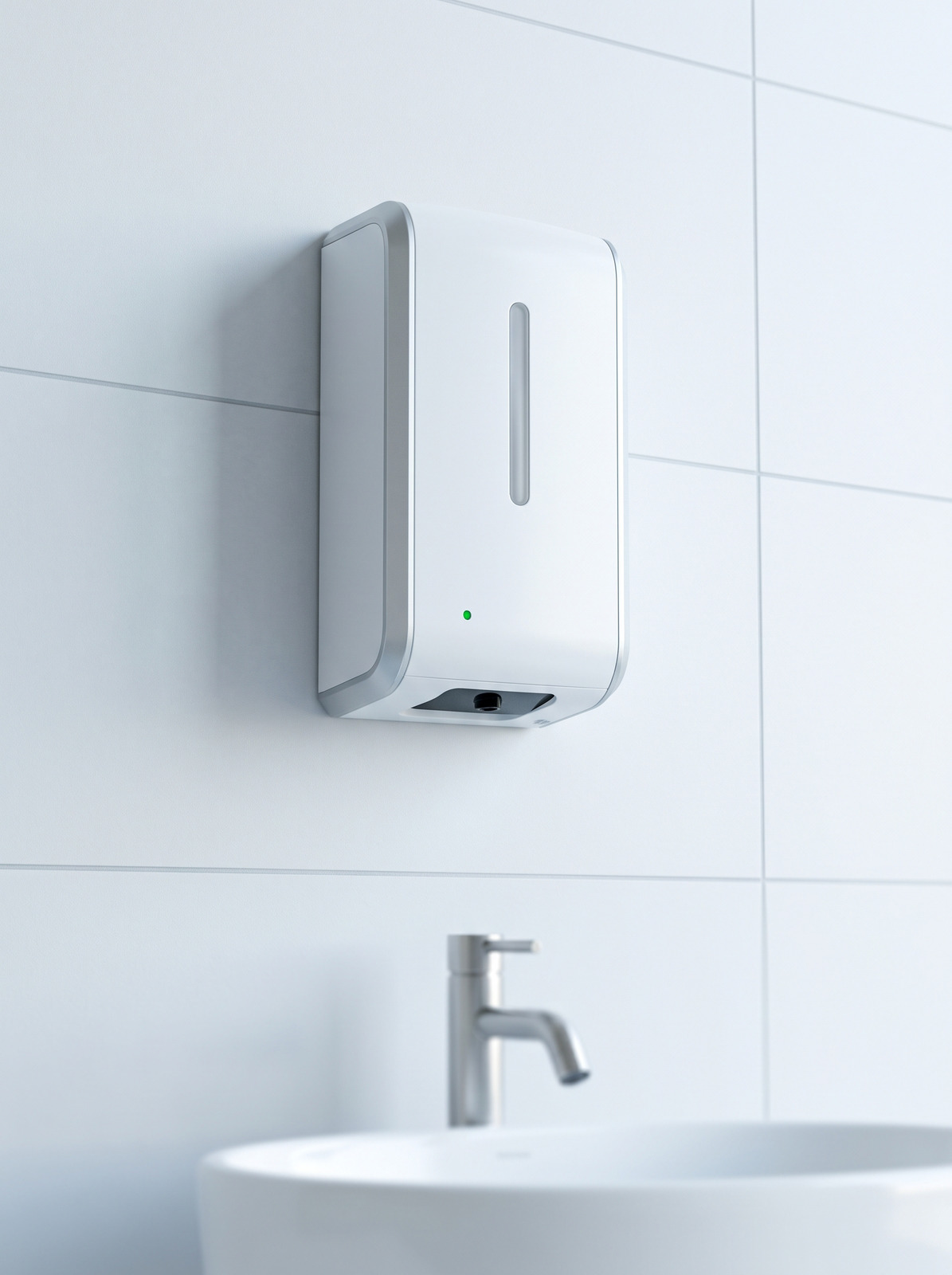
Commercial Soap & Sanitizer
Active-IR · Cam Switch · Cartridge
Commercial Soap & Sanitizer
Wall-mounted cartridge units pair geared DC motors, cam switches and harnessed IR sensors. We assemble FR-4 control boards mounted on one face with masked coating, firmware loading and dry checks.

Bulk & Countertop Foam
Bulk Liquid · Foam Pump · Power
Bulk & Countertop Foam
Countertop and bulk dispensers run foam-mixer pumps from batteries or external low-voltage DC adapters. We assemble FR-4 boards mounted on one face with dry stall checks; wet testing stays separate.

Modular Telemetry Sub-Boards
Pre-Certified RF · Refill Telemetry
Modular Telemetry Sub-Boards
Connected dispensers put refill tracking on modular pre-certified BLE/RF sub-boards. We assemble FR-4 boards mounted on one face with antenna keep-outs and firmware loading; OEMs own RF compliance and cloud.
From Gerber Review to Dry-Checked Dispenser Boards.
Bringing a touchless dispenser control board into repeatable production starts by verifying single-face layout, optical coating keep-outs and dry electrical checks before material commitment.
Share Files or Sample
Send Top and Bottom Gerbers, a draft or released BOM, assembly drawings, sensing topology and coating notes. A reference sample board or preliminary schematic is enough to start a practical fit review.
Confirm Fit & Scope
Verify single-sided component placement, visible-joint AOI inspectability, customer-defined conformal coating chemistry and keep-out zones, firmware file details and agreed dry optical-target and motor-load checks before release.
Assemble, Coat & Flash
Run SMT and mixed assembly on FR-4 boards with lead-free reflow and first-article review. Apply masked conformal coating with agreed keep-out checks and load customer-approved firmware where specified.
Check & Hand Over
Complete AOI and the agreed dry-bench standby, reflective-target trigger, stall-cutoff and LED checks before shipment. Carry approved revisions into repeat orders while your team completes wet dispensing and housing validation.
Common Questions.
Direct answers on multi-pump board reuse, selective coating and washdown limits, dry functional testing, sensing firmware boundaries and appliance compliance ownership.
Can one control board platform serve liquid, gel and foaming dispenser variants?
Liquid, gel and foam dispensers can share active-IR proximity and brushed-DC control electronics when voltage, motor drive and feedback interfaces align, while fluid differentiation sits inside the mechanical pump—such as duckbill liquid valves versus dedicated foam-mixer housings. We assemble shared or variant-specific BOMs and load each SKU’s approved firmware and dry load limits, while pump mechanics and viscosity handling remain OEM-owned.
Does selective conformal coating eliminate optical masking—or replace IP67/IP68 potting?
No. Automated selective coating still requires masking where open vias wick coating to opposite-face pads or where tight clearances border optical lenses, switches or headers—making customer keep-out drawings and agreed boundary checks (UV-checked where fluorescent coatings are specified) essential. Equally, no conformal coating forms an impermeable barrier or survives immersion; under IEC 60529, IP codes such as IP67 and IP68 classify finished enclosures rather than bare coated boards, and potted washdown faucets remain outside scope.
What does dry electrical and optical testing verify—and why doesn’t it prove wet dispensing?
Agreed dry-bench checks verify board-level standby power draw, standardized dry reflective target triggering, simulated DC motor actuation, stall-current or cam-switch cutoff and status LED response. Even when the motor runs electrically, incorrect soap viscosity, clogged nozzles, stuck duckbill valves, unprimed cartridges or misaligned foam mixers can still stop dispensing inside the housing. Wet priming, dose-volume metrology and foam-quality validation belong to OEM mechanical testing.
Do you handle capacitive liquid-tolerance tuning, Time-of-Flight calibration or fleet apps?
No. We assemble supplied-design control boards and load customer-approved production firmware onto active-IR boards and modular pre-certified BLE/RF sub-boards. Designing capacitive active-shield and guard-sensor liquid-tolerance filters, running thermal-chamber, crosstalk or multi-target Time-of-Flight optical calibration, and building washroom fleet apps sit outside assembly scope. Boards entering production should arrive with proven sensing hardware and approved firmware builds.
Who owns finished-appliance safety and wireless compliance, such as IEC 60335-1 or US FCC?
Finished-product compliance rests with the OEM brand owner. At the finished-appliance level, IEC 60335-1 addresses electrical safety for household and similar layman-operated appliances—including DC-supplied and battery-operated units—while rechargeable battery-pack safety and market-specific wireless or EMC approvals (such as US FCC authorization) are also OEM-owned. Our contribution stays at the board level: building to your approved BOM, mounting drawings, coating keep-outs and agreed dry checks so your team completes appliance evaluation.
Manufacturing Experience. Direct Cooperation.
Our factory’s experience includes long-term supplier relationships with Fortune Global 500 customers and demanding supplier audits. We bring that production discipline to sample runs, initial commercial builds and repeat orders, aligning board quality gates around the dispenser electronics your hardware needs.
Long-term supplier to Fortune Global 500 customers.
Sustained enterprise supply is part of our manufacturing background. We apply that execution consistency to touchless dispenser control boards and telemetry sub-boards, with build inputs and dry checks agreed clearly for each order.
Passed demanding supplier audits and customer reviews.
Our factory has passed demanding supplier audits. That experience supports straightforward discussion of the workmanship expectations, coating keep-out drawings and acceptance criteria relevant to your dispenser assembly.
First-article, AOI, and board checks.
First-article review, AOI, agreed coating keep-out checks where specified and dry-bench electrical tests examine distinct aspects of the finished board. Released BOM, Gerber and firmware references tie each check directly to your build.
Long-term relationships.
Global brands.



Start with
what you have.
Tell us about your touchless soap, sanitizer or foam dispenser board. Top and Bottom Gerbers, a draft BOM or a reference sample board is enough to start a practical fit review; share your sensing topology, coating keep-out notes and intended build stage.
Reviewing a new dispenser board?
Bring early Gerbers, a draft BOM or a sample to verify single-face layout, optical masking clearances and dry check criteria before tooling commits.
Moving an established board to repeat runs?
Share your released revision, approved BOM, firmware file and any optical or harness updates so we can align setup and dry-bench checks.
 Spanish
 English
 German
 Arabic
 French
 Portuguese (Portugal)
 Korean
 Indonesian
 Chinese
 Russian
 Italian
 Dutch
 Polish
 Hindi
 Thai
 Portuguese (Brazil)