

Humidifier & Diffuser
PCB Assembly.
PCB assembly for water-based ultrasonic humidifier, water-mist aroma diffuser and evaporative wick-fan control boards. Coordinate single-sided SMT or mixed assembly, customer firmware loading, masked conformal coating and dry bench checks matched to your approved transducer and BOM.
Built Around Water-Mist
and Wick-Fan Electronics.
Water-based ultrasonic humidifiers, water-mist aroma diffusers and evaporative wick-fan units rely on compact control boards that coordinate resonant piezo drive or fan speed, water-shortage cutoffs, ambient indicators and moisture-zone isolation. We assemble immersed ceramic-disc driver boards, microporous vibrating-mesh atomizer boards, water-mist diffuser controllers and transducer-free evaporative fan control boards on FR-4 and aluminum-core substrates with single-sided component mounting. Production covers SMT, through-hole and mixed assembly, lead-free reflow, first-article review, AOI, customer-approved firmware loading, selective conformal coating per customer keep-out drawings and agreed dry bench checks.
Single-sided component mounting does not define copper-layer count, and one SMT reflow face alone does not confirm fit if opposite-face through-hole headers, switches, USB or DC jacks, contact springs, LEDs or inductors sit on the reverse side; both Top and Bottom Gerbers and the full BOM package list—including do-not-populate (DNP) rows—are screened before quoting. Start from a draft BOM, schematic, Gerbers or reference sample while final files, masking drawings and test agreements lock before build release. Waterless scent diffusers are covered separately under our Dispensing & Air-Care scope, while medical nebulizers (IEC 60601), steam or boiler humidifiers, HVAC duct humidifiers, vacuum potting and concealed-joint X-ray sit outside default assembly scope, and wet mist or acoustic lab validation plus finished-appliance certifications (IEC 60335 family) stay with the OEM.
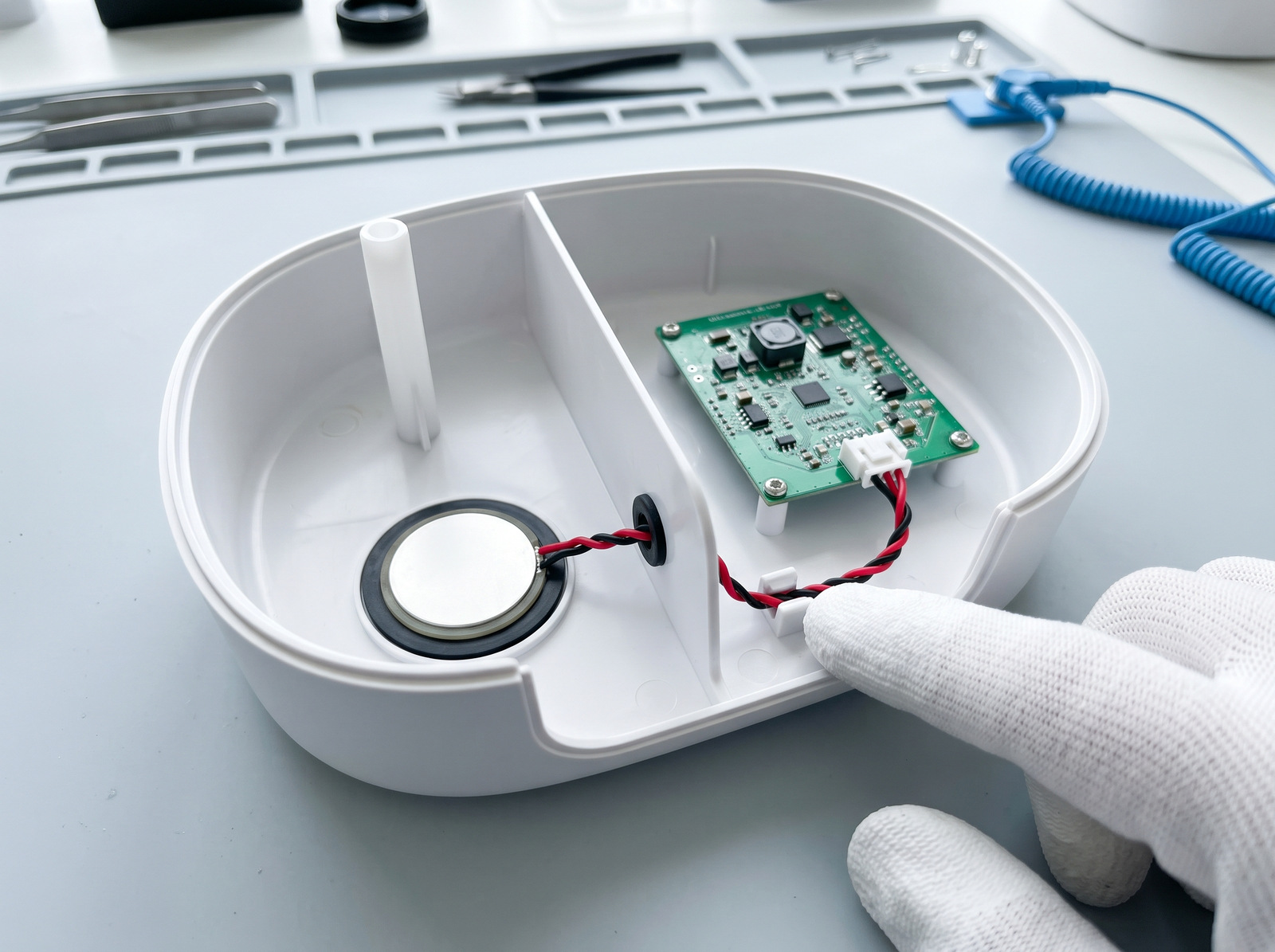
Align Board Assembly With Your Mist Hardware.
Ultrasonic atomizers, dry-run sensing and moisture-exposed interfaces tie circuit behavior directly to the matched transducer and housing. Align these four assembly checkpoints before releasing a sample or production run.
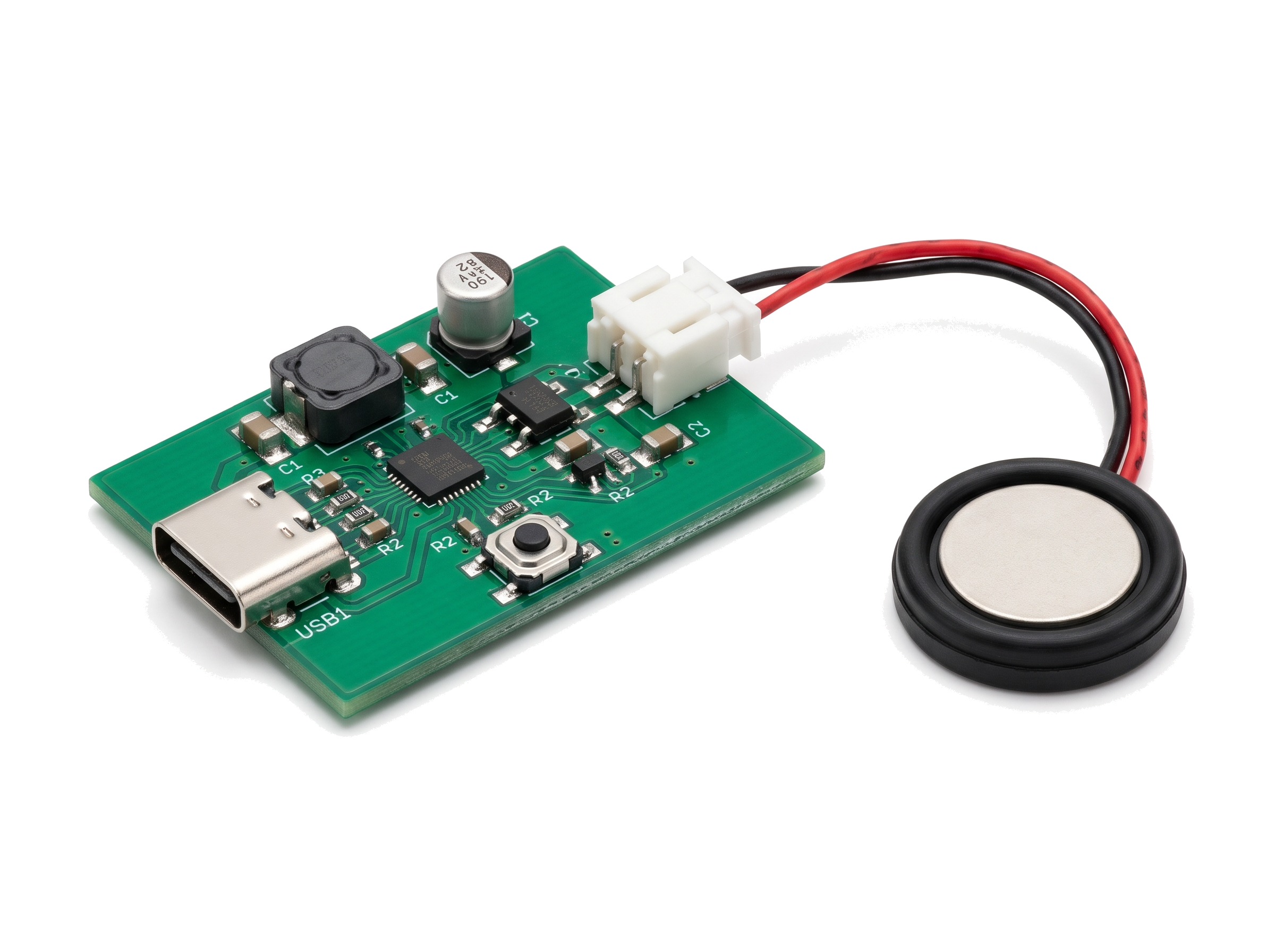
Matched Transducer & Locked Drive BOM
Matched Transducer & Locked Drive BOM
Both immersed ceramic discs and microporous vibrating meshes can rely on active frequency sweeping, current-feedback tracking or phase locking rather than a single universal oscillator split. Because transformer winding ratios, boost inductors, switching MOSFETs, tuning passives and current-sense shunts couple tightly to the matched piezo element, we enforce strict no-substitution BOM control and verify do-not-populate (DNP) variant tables before setup.
Both-Face Layout & Mixed-Hardware Fit
Both-Face Layout & Mixed-Hardware Fit
Compact round diffuser and USB-rechargeable atomizer layouts often place upward-facing RGB LEDs, touch springs, capacitive water-detect contacts or passive dividers opposite the main circuitry. Pre-quote review of Top and Bottom Gerbers alongside every BOM package confirms single-face buildability across two-layer or multi-layer boards—or identifies reverse-side hardware best moved to a separate UI sub-board.
Approved Firmware & Bounded Variant Builds
Approved Firmware & Bounded Variant Builds
MCU-based sweep, timer, blower and status controllers run customer-owned production code, while shared base PCBs often span feature tiers through controlled do-not-populate (DNP) population lists and modular UI or sensor sub-boards. We flash customer-released binaries and evaluate bounded BOM-alternate questions on mature designs case by case; ultrasonic tuning firmware, RF engineering and mobile apps stay OEM-owned.
Dry Electrical Bench Checks vs. Wet Validation
Dry Electrical Bench Checks vs. Wet Validation
A piezoelectric atomizer behaves as a reactive electromechanical resonator whose mist output depends strongly on supply voltage, water temperature and water-column depth, so a fixed resistive load cannot prove mist performance. Agreed dry bench checks verify power rails, logic boot, button/LED/fan I/O, dry-run switch paths and drive waveform presence; wet-tank mist output and acoustic validation remain with your team.
Compare Water-Mist & Evaporative Board Families.
Water-based humidifiers and aroma diffusers span four distinct control architectures, from immersed ceramic-disc drivers to transducer-free evaporative fan controllers. Review each in-scope board family’s circuit path, assembly controls and dry-check boundary before locking your revision.
Immersed Ceramic-Disc Humidifier Board
Microporous Mesh Wick-Fed Atomizer Board
Water-Mist Ultrasonic Aroma Diffuser Board
Evaporative & Wick-Fan Control Board
Four Engineering Controls for Water-Mist Builds.
Reliable humidifier and aroma-diffuser electronics depend on matching assembly controls to the real electromechanical, water-sensing, airflow and condensation boundaries inside a partitioned reservoir base.
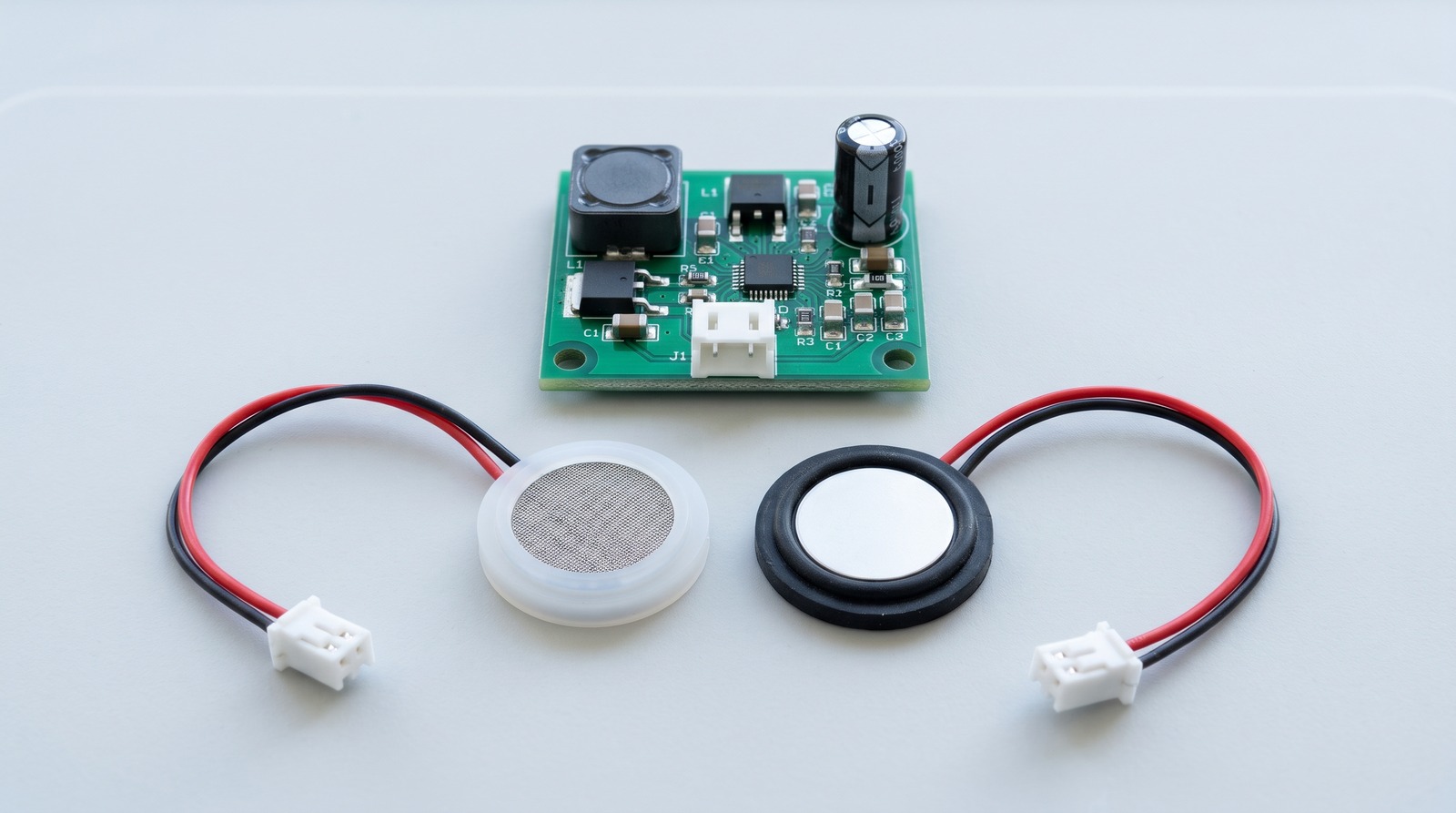
Matched Piezo Drive & Reactive Load Discipline
Both immersed ceramic discs and wick-fed microporous meshes exhibit part-to-part resonance shifts and behave as reactive Butterworth-Van Dyke (BVD) electromechanical resonators rather than fixed resistors. Both classes can use active frequency sweeping, current-feedback tracking or phase locking depending on the driver IC—never a blanket fixed-versus-tracking rule. Because transformer leakage inductance, tuning capacitance, switching MOSFETs and current-sense shunts couple tightly to the matched transducer, we enforce strict no-substitution BOM control, keyed two-pin header polarity and explicit do-not-populate (DNP) variant tables while separating dry drive-waveform checks from OEM wet mist validation.
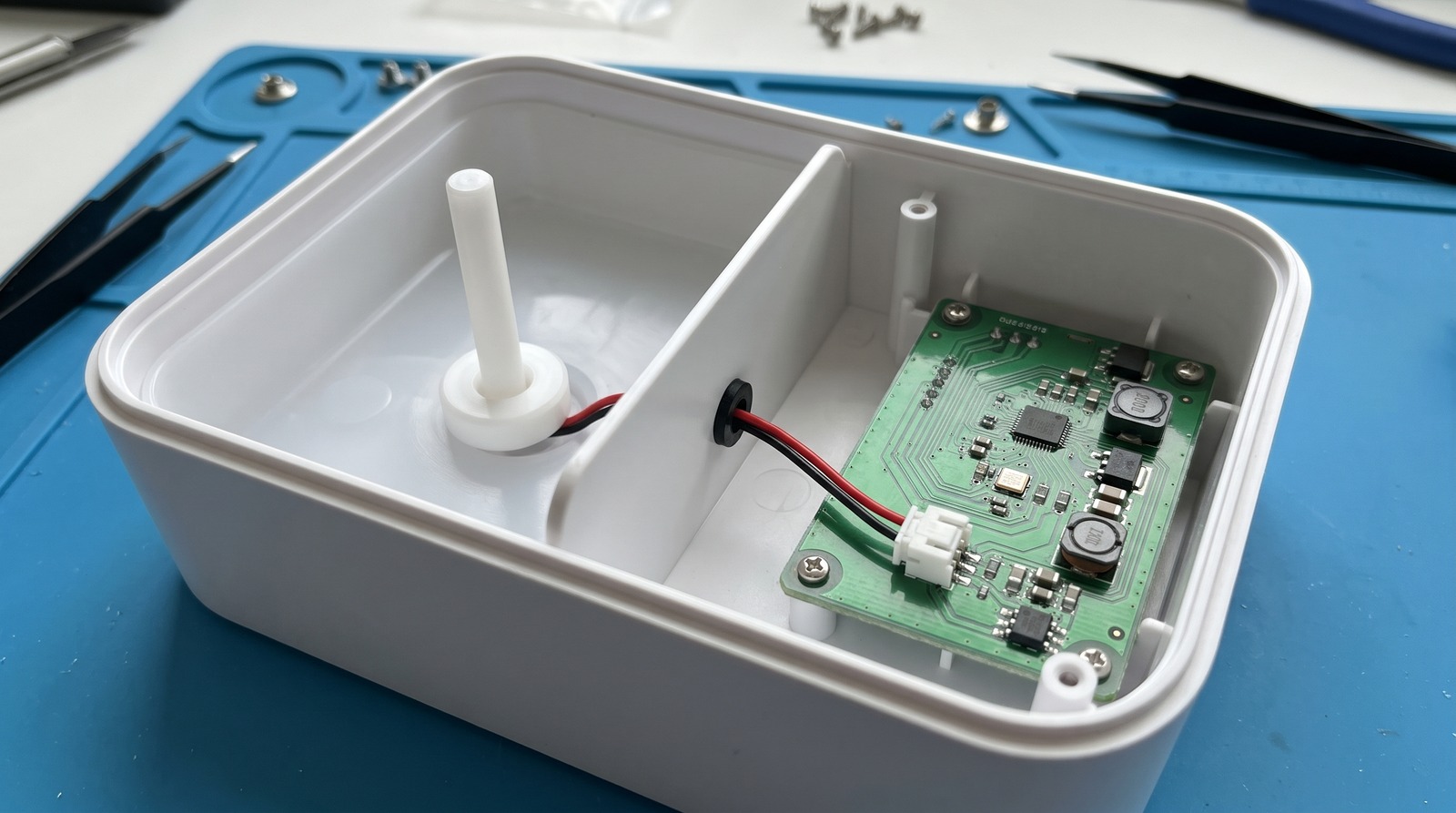
Water-Level Sensing & Dry-Run Cutoff Interfaces
Operating an ultrasonic disc or mesh dry risks rapid overheating and piezo damage. Humidifier boards detect low water via magnetic float-reed switches wired from the partitioned basin, capacitive tank-wall or contact electrodes with reference ground shielding, optical or mechanical alignment interlocks, or transducer current-shift sensing across a precision shunt. We assemble same-side harness headers, stress-free reed interfaces and tight-tolerance sensing paths; dry bench fixtures verify reed switching with a calibration magnet or check sensing continuity, while wet-tank dielectric thresholds and IEC 60730-1:2022 protective-control compliance remain OEM-owned.
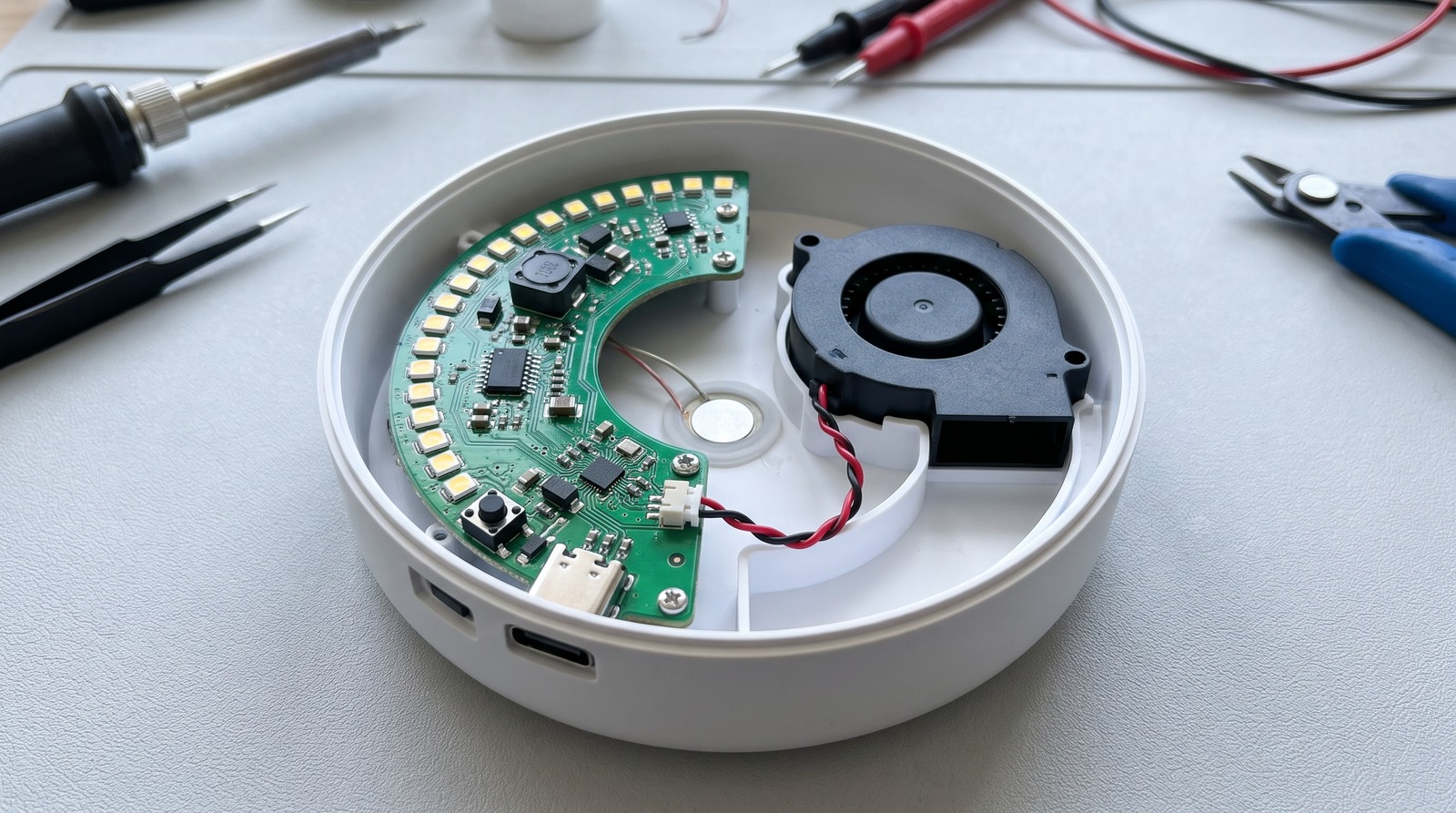
Blower, LED Ring, Moisture-Tolerant UI & Power
Water-mist diffusers and ultrasonic or evaporative humidifiers pair the control stage with centrifugal mist blowers or multi-speed wick fans, annular SMD mood-LED rings, tactile or driven-shield capacitive keys and USB-C or external low-voltage DC power inputs. Compact circular boards often push upward-facing RGB LEDs, touch springs or power passives onto the reverse side, so we screen both Gerber faces early to keep assemblies single-sided or cleanly split onto a separate UI ring board. Where ambient relative-humidity sensors are included, thermal cutouts and remote air-inlet placement prevent power-stage heat from biasing readings.
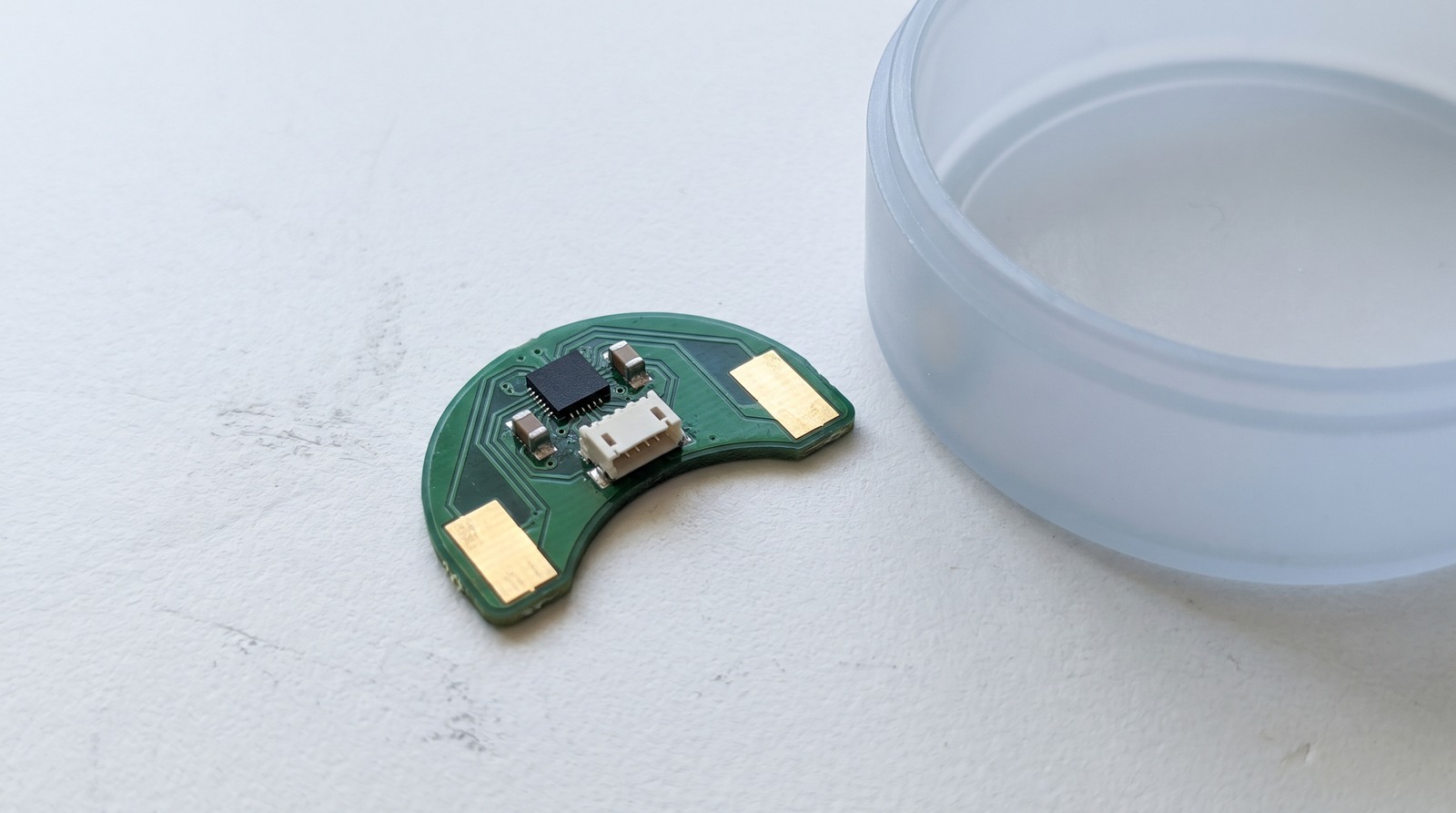
Moisture-Zone Coating Keep-Outs & Sensor Masking
Condensation, stray mist fallback, descaling splashes and volatile essential-oil or flux vapors drive field failures in humid bases. When specified on customer drawings, selective conformal coating protects low-voltage logic while keeping bare connectors, USB/DC jacks, tactile switches, potentiometers, gold contact pads and open humidity-sensor cavities strictly masked. Open-aperture humidity sensors cannot be washed or coated without removable polyimide tape or a PTFE membrane, and volatile solvents bias polymer sensing layers. Thin-film coating mitigates condensation only—it is not potting, does not confer an IEC 60529 enclosure IP rating, and leaves oil-bowl polymer qualification with the OEM.
Where Your Mist Control Boards Are Built.
Once Top and Bottom Gerbers, locked drive components, coating keep-out drawings and dry-test criteria are aligned, the Shenzhen assembly floor connects bare boards and approved materials into repeatable shipments across four production bays.




Automated SMT & Reflow Lines
Driver ICs, MCUs, voltage regulators, switching MOSFETs, current-sense shunts, ambient humidity sensors and SMD LEDs are populated onto FR-4 or aluminum-core boards from locked BOM and centroid files, then soldered through multi-zone lead-free reflow ovens.
DIP Line & Robotic Soldering
Same-side through-hole boost inductors, step-up transformers, electrolytic capacitors, keyed two-pin piezo and blower headers, reed-switch leads and tactile switches complete mixed boards across DIP lines and desktop robotic soldering cells with controlled orientation and height.
Maker-Ray Optical AOI & First-Article QC
First-article verification and optical inspection at Maker-ray AOI workstations check populated boards for part identity, polarity, do-not-populate (DNP) accuracy and accessible solder fillets before selective conformal coating or electrical test.
Dedicated Functional Test Benches
Dedicated functional test benches with toggle-clamp FCT fixtures and digital bench power supplies execute customer-approved firmware loading and agreed dry electrical checks—verifying power rails, button/LED/fan I/O, dry-run switch paths and drive-signal presence before dispatch.
Water-Based Humidifier & Diffuser Applications.
Room humidifiers, compact wick-fed mesh mist units and tabletop water-mist aroma diffusers combine power, sensing and moisture isolation differently. Each board assembly stays anchored to your matched transducer, fan and enclosure boundaries.
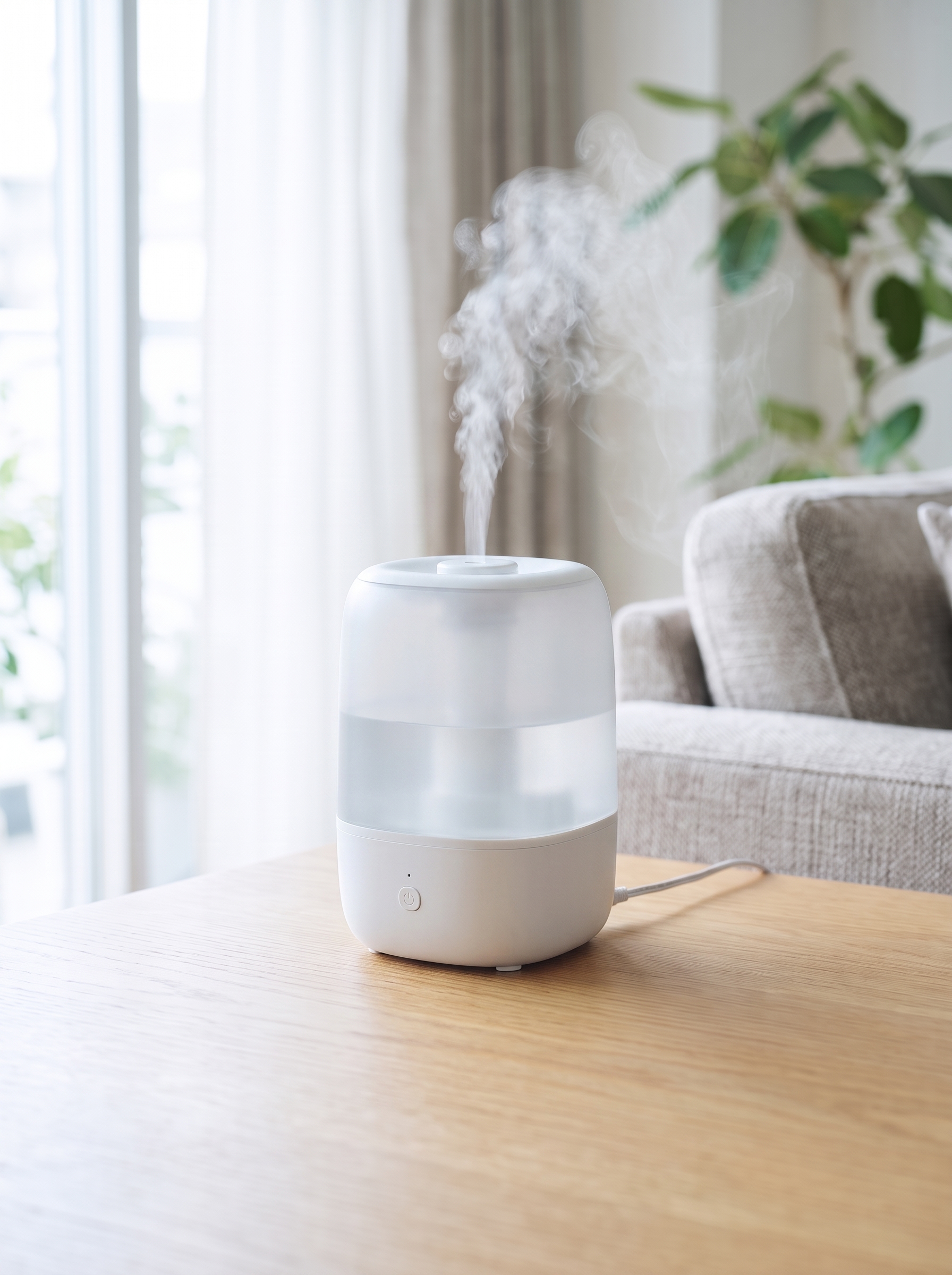
Ultrasonic & Wick Room Humidifiers
Immersed Disc · Evaporative Fan · RH
Ultrasonic & Wick Room Humidifiers
Reservoir-bodied room humidifiers pair immersed ceramic-disc drivers or transducer-free evaporative wick-fan controllers with water-shortage protection, airflow ducts and optional isolated humidity sensing. We assemble single-sided mixed builds locked to your transducer, fan and sensor BOM.
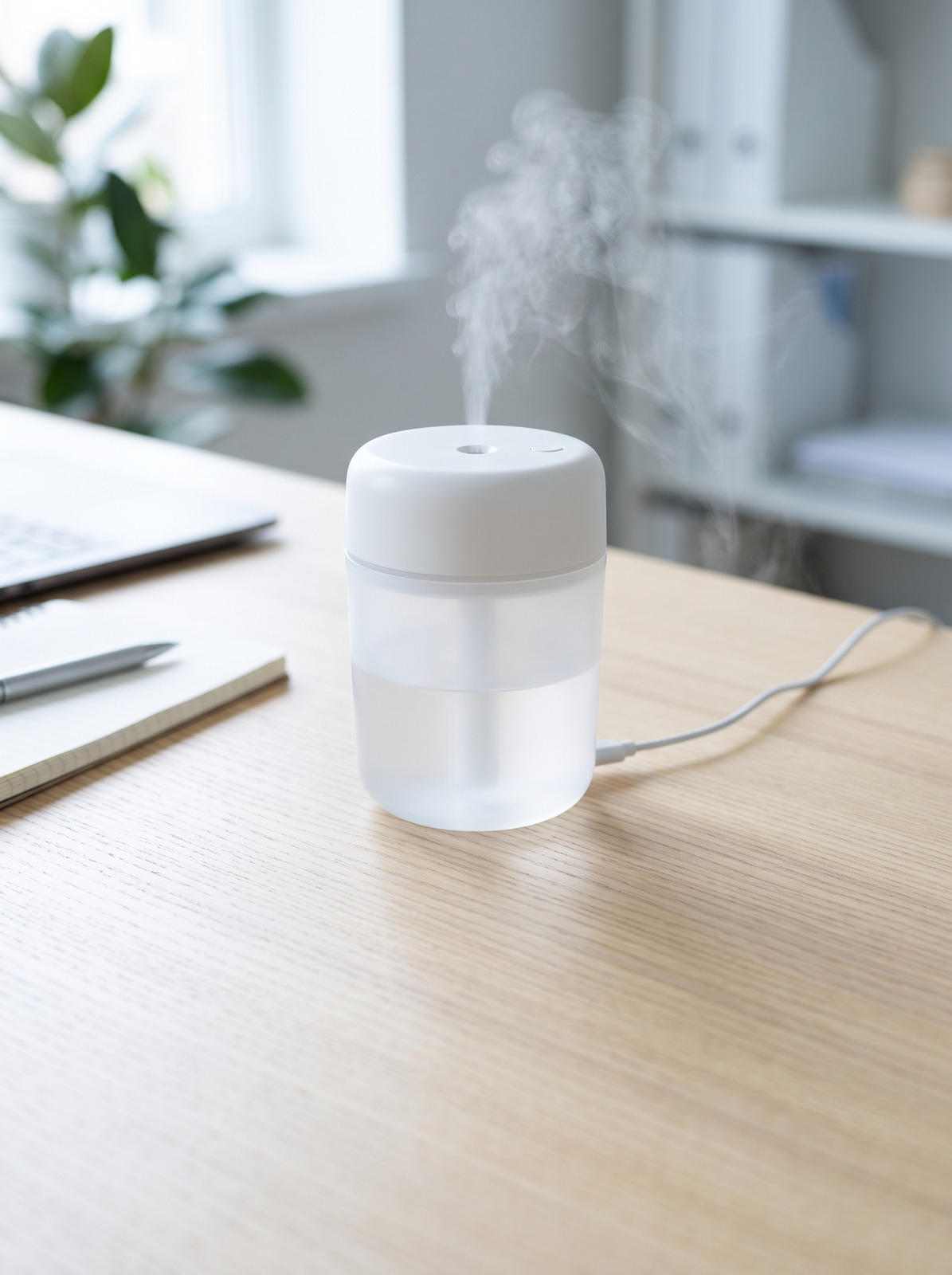
USB & Wick-Fed Mesh Desk Units
Microporous Mesh · USB-C · Dry-Run
USB & Wick-Fed Mesh Desk Units
Compact desktop mist units drive capillary wick-fed microporous steel meshes from USB-C or rechargeable low-voltage supplies using matched step-up transformers and current-sense dry-run detection. We screen both Gerber faces for hidden reverse-side passives and verify dry board logic.
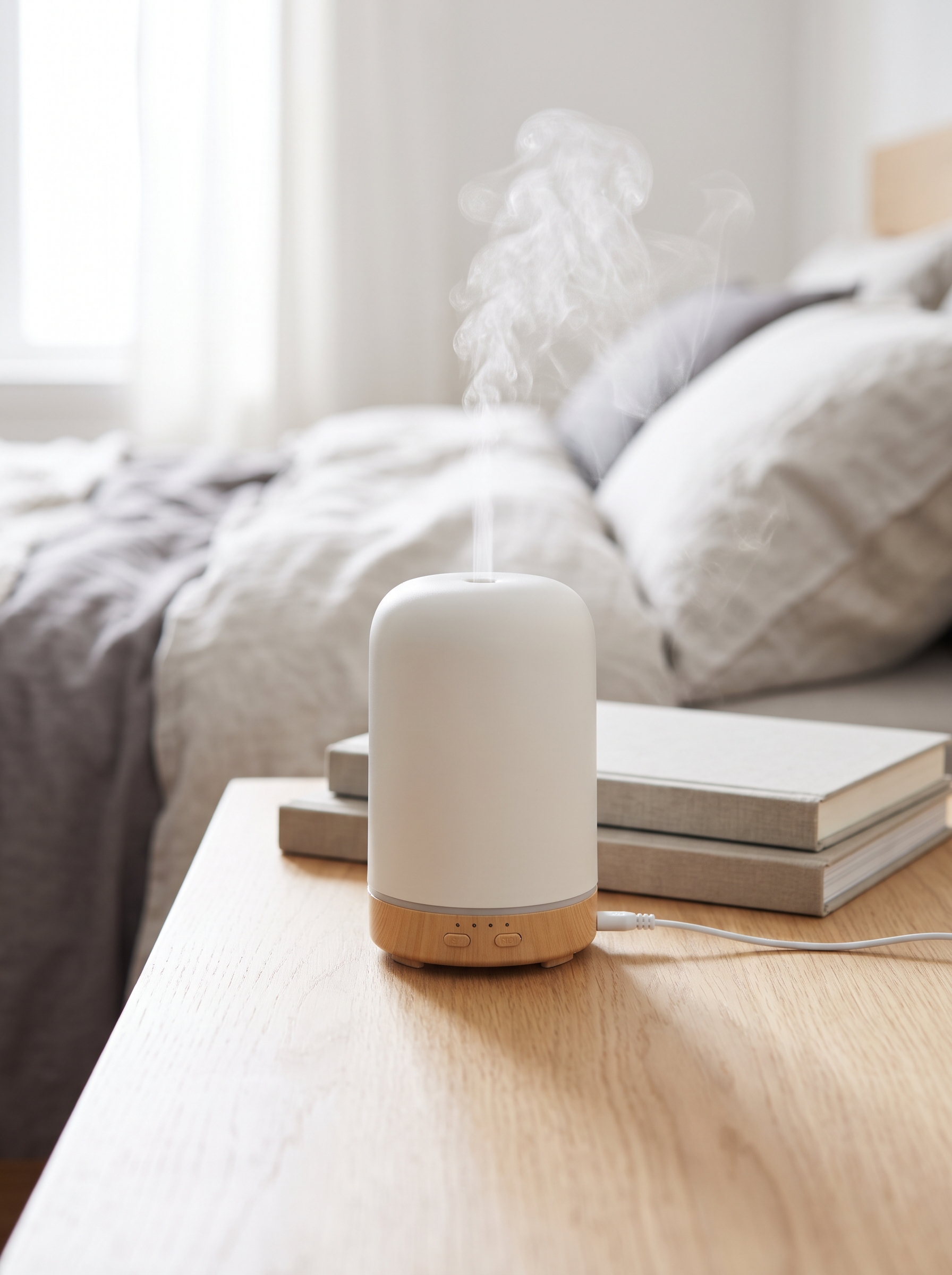
Water-Mist Aroma Diffusers
Oil-in-Water Mist · RGB LED · Blower
Water-Mist Aroma Diffusers
Tabletop water-mist aroma diffusers combine ultrasonic mist drive, centrifugal air blowers, mood-lighting LED rings and touch or tactile timers in circular bases. We build single-face main and UI ring boards with masked coating keep-outs, leaving oil-bowl polymer validation with the OEM.
From Early Files to Verified Mist Control Boards.
Moving a water-based humidifier or aroma diffuser from prototype to repeat shipments starts by locking mounting faces, transducer-matched magnetics, coating keep-outs and dry bench checks before release.
Share Files & Architecture
Send available Top and Bottom Gerbers, a draft or released BOM, schematic, placement data or a reference board. Identify the mechanism—immersed ceramic disc, microporous mesh, water-mist diffuser or evaporative wick fan—along with power input and any separate UI or sensor sub-boards.
Screen Faces, Drive BOM & Keep-Outs
We check both Gerber faces and full package lists—including do-not-populate (DNP) rows—to confirm single-sided mounting fit, flag opposite-side LEDs, springs or jacks, lock no-substitution drive magnetics and MOSFETs, and align conformal-coating keep-outs and dry FCT fixtures.
Assemble, Solder & Mask
Coordinate bare boards and approved components through automated single-sided SMT, multi-zone lead-free reflow, and same-side DIP or robotic soldering for transformers, inductors, keyed piezo headers and switches. Apply customer-defined masking and selective coating on clean, dry assemblies where specified.
Inspect, Dry-Test & Hand Over
Complete first-article verification, Maker-ray optical AOI, customer-approved firmware loading and agreed dry bench checks—verifying power rails, UI/fan I/O, dry-run input logic and drive waveform presence—before dispatch for your wet-tank mist validation and appliance certification.
Common Questions.
Answers to recurring engineering and quoting questions on mounting faces, reactive piezo testing, conformal coating and humidity sensors, scope exclusions and firmware ownership.
Can multi-layer humidifier or diffuser boards fit single-sided component mounting?
Yes, provided every populated SMT and through-hole component mounts on one PCB face. Single-sided component mounting does not define copper-layer count, so two-layer or multi-layer boards with shield planes, ground pours and routing on the reverse face can still fit. However, one SMT reflow face alone does not confirm fit if opposite-face through-hole headers, tactile switches, rotary potentiometers, USB or DC jacks, inductors, upward-facing RGB LEDs or contact springs sit on the reverse side. Both Top and Bottom Gerbers and the full BOM package list—including do-not-populate (DNP) rows—are screened before quoting; compact circular diffusers often split upward-facing LEDs or touch pads onto a separate single-sided UI sub-board.
Can a resistive dummy load prove ultrasonic mist output during factory FCT?
No. A piezoelectric ceramic disc or microporous mesh behaves as a sharply reactive Butterworth-Van Dyke (BVD) electromechanical resonator—static capacitance in parallel with a series motional branch—whose resonance and damping shift with transformer leakage inductance, supply voltage, water temperature and water-column depth. A pure fixed resistor cannot replicate that reactive impedance or verify mist rate or droplet behavior. At the factory, dry bench FCT verifies power rails, MCU clock and firmware boot, button/LED/fan I/O, magnetic reed or sensing continuity and drive waveform presence on an agreed fixture; wet-tank mist performance and acoustic matching remain OEM-owned.
How are conformal-coating keep-outs, RH sensors and essential-oil exposure handled?
Selective conformal coating is applied strictly to customer keep-out drawings, keeping bare connectors, USB/DC jacks, tactile switches, potentiometers, gold contact pads and open humidity-sensor apertures uncoated. Open-cavity humidity sensors cannot be board-washed or directly coated—parts with removable polyimide assembly tape or permanent PTFE membranes are required when wash or coating is planned—and volatile flux or solvent residues bias polymer humidity readings. Thin-film conformal coating protects against condensation only; it is distinct from vacuum potting, does not grant an IEC 60529 enclosure IP rating, and leaves water-bowl or aroma-pad polymer chemical compatibility with the OEM.
Which mist, scent and humidification products fall outside this page’s core scope?
This page covers water-based ultrasonic humidifiers (immersed ceramic disc and microporous vibrating mesh), water-mist aroma diffusers and evaporative wick-fan control boards. Waterless scent diffusers—cold-air Venturi nebulizers, direct-oil waterless piezo modules, dry fan-cartridge diffusers and timed aerosol dispensers—are handled separately under our Dispensing & Air-Care scope. Medical vibrating-mesh drug nebulizers (IEC 60601-1), heated steam/boiler humidifiers (IEC 60335-2-15), whole-house HVAC duct humidifiers (IEC 60335-2-88), vacuum potting and concealed-joint X-ray inspection sit outside standard assembly scope. Finished-appliance compliance—including IEC 60335-2-98:2023 (covering household humidifiers up to 250 V single-phase / 480 V other, including DC-supplied and battery units), IEC 60730-1:2022 protective controls, IEC 62133-2 lithium cell safety and FCC host authorization under 47 CFR Part 15—stays with the OEM.
Do you develop ultrasonic resonance-tracking firmware or companion Wi-Fi/BLE apps?
No. Both immersed ceramic-disc and microporous vibrating-mesh designs can rely on active frequency sweeping, current-feedback tracking or phase locking coupled closely to a specific transducer and transformer—there is no universal fixed-versus-tracking shortcut. Our manufacturing role is build-to-print PCB assembly under strict no-substitution control on drive-stage components plus programming customer-released production firmware binaries and mounting pre-certified RF modules (where FCC host compliance under 47 CFR § 15.212 stays OEM-owned). Bounded BOM-alternate reviews on mature boards can be evaluated case by case, while ultrasonic impedance tuning, firmware R&D and cloud/mobile apps remain customer-owned.
Manufacturing Experience. Direct Cooperation.
Our factory’s experience includes long-term supplier relationships with Fortune Global 500 customers and demanding supplier audits. We bring that manufacturing discipline to sample builds, pilot batches and repeat humidifier and aroma-diffuser board orders, aligning quality expectations around the released electronics your product needs.
Long-term supplier to Fortune Global 500 customers.
Sustained enterprise supply is part of our manufacturing experience. We apply that discipline to build-to-print ultrasonic humidifier, water-mist diffuser and evaporative-fan control boards, with revision baselines, no-substitution drive components and material responsibilities locked for each order.
Passed demanding supplier audits and customer reviews.
Our factory has passed demanding supplier audits. That background supports direct engineering discussion of mounting-face screening, conformal-coating keep-out drawings, humidity-sensor handling and acceptance criteria relevant to your appliance build.
First-article, เอโอไอ, and board checks.
First-article review, Maker-ray optical AOI, approved firmware loading and agreed dry functional checks examine distinct aspects of the finished assembly. Clear BOM, keep-out and fixture references connect those checks directly to your build before wet-tank OEM validation.
Long-term relationships.
Global brands.



Start with
what you have.
Tell us about your water-based humidifier or aroma-diffuser board project. Top and Bottom Gerbers, a draft BOM, schematic or reference sample is enough to start a practical review; share your atomizer or wick-fan architecture, power input, sub-board split and the assembly questions you want to settle.
New or revised mist board?
Share a draft BOM, schematic or Top/Bottom Gerbers early to verify single-sided fit, drive-part locks, coating keep-outs and dry FCT scope.
Transferring a released build?
Send the released revision, do-not-populate (DNP) tables, approved firmware binary and test fixture notes to align repeatable production.
 Thai
 English
 German
 Arabic
 French
 Spanish
 Portuguese (Portugal)
 Korean
 Indonesian
 Chinese
 Russian
 Italian
 Dutch
 Polish
 Hindi
 Portuguese (Brazil)