

Waterless Scent &
Air-Freshener PCBA.
Populated control boards for timed aerosol dispensers, dry-cartridge fan diffusers, cold-air nebulizers and direct-oil piezo atomizers. Align single-sided component mounting, approved firmware or OTP loading, masked conformal coating and dry-bench checks for your FR-4 build.
Control Boards Built
for Waterless Air Care.
Waterless scent diffusers and automatic air fresheners span distinct motor, fan, air-pump and direct-oil piezo drive circuits rather than water-reservoir mist electronics. We assemble populated FR-4 and aluminum-core control boards using SMT, through-hole and mixed assembly with single-sided component mounting, lead-free reflow, first-article review and AOI, alongside customer-approved firmware or OTP configuration loading, OEM-specified conformal coating and agreed dry-bench electrical checks.
Start with released Gerbers and a BOM, a draft schematic or a reference board sample. Because compact scent enclosures often place displays, switches or battery contacts on the reverse side, we inspect both board faces and full package lists before quoting and lock files, alternates and acceptance checks before production begins. Heated wax warmers, mains thermal plug-in diffusers, commercial HVAC scent plants, fragrance formulation, mobile apps and end-product certification stay outside scope; water-tank mist diffusers belong to our humidifier and aroma-diffuser PCBA service.
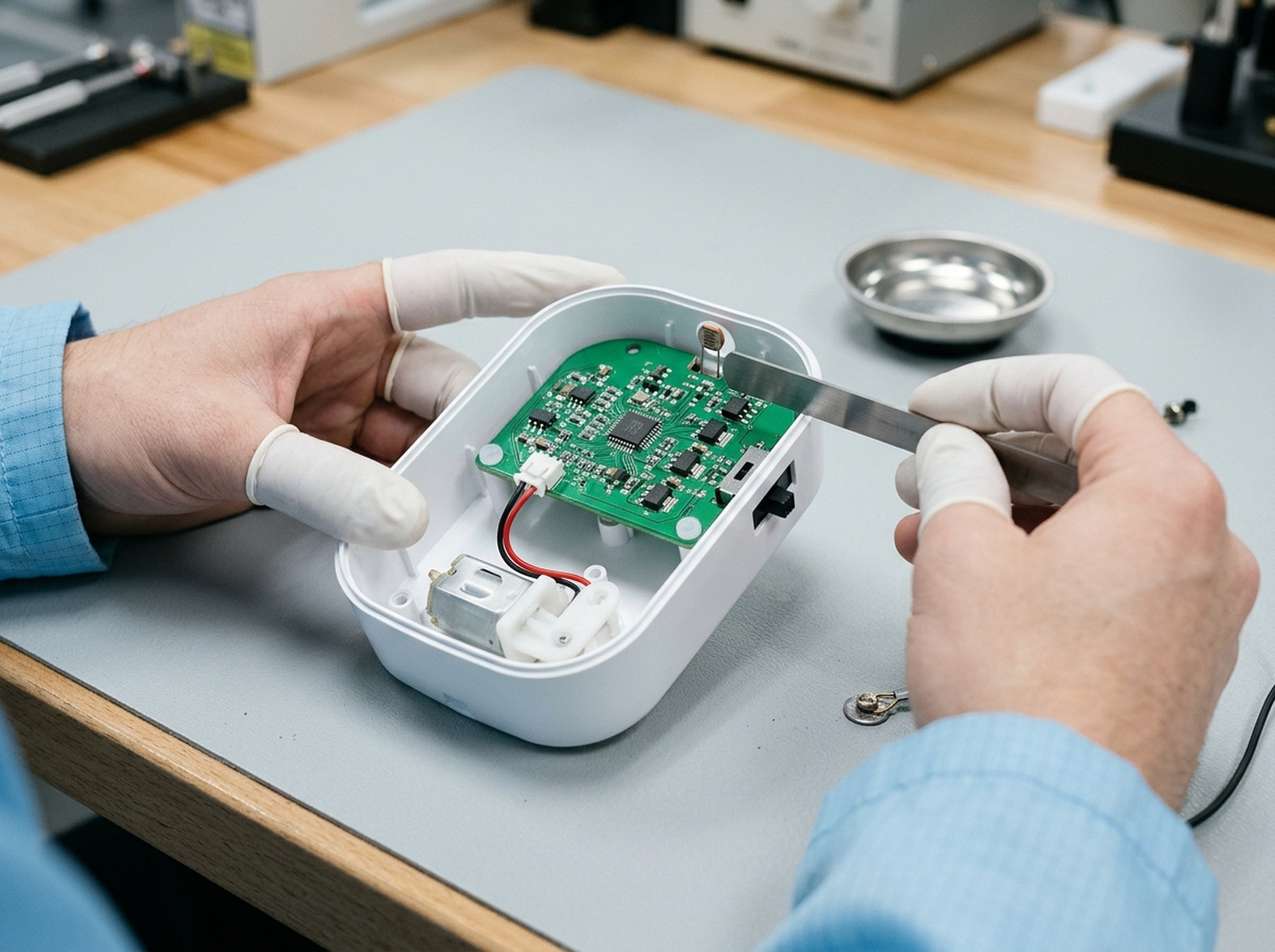
Match Assembly Scope to Your Dispenser Build.
Commercial washroom timers, dry-fan cartridges and connected cold-air scent machines impose very different board geometries and ownership splits. Start from the project situation that matches your hardware.
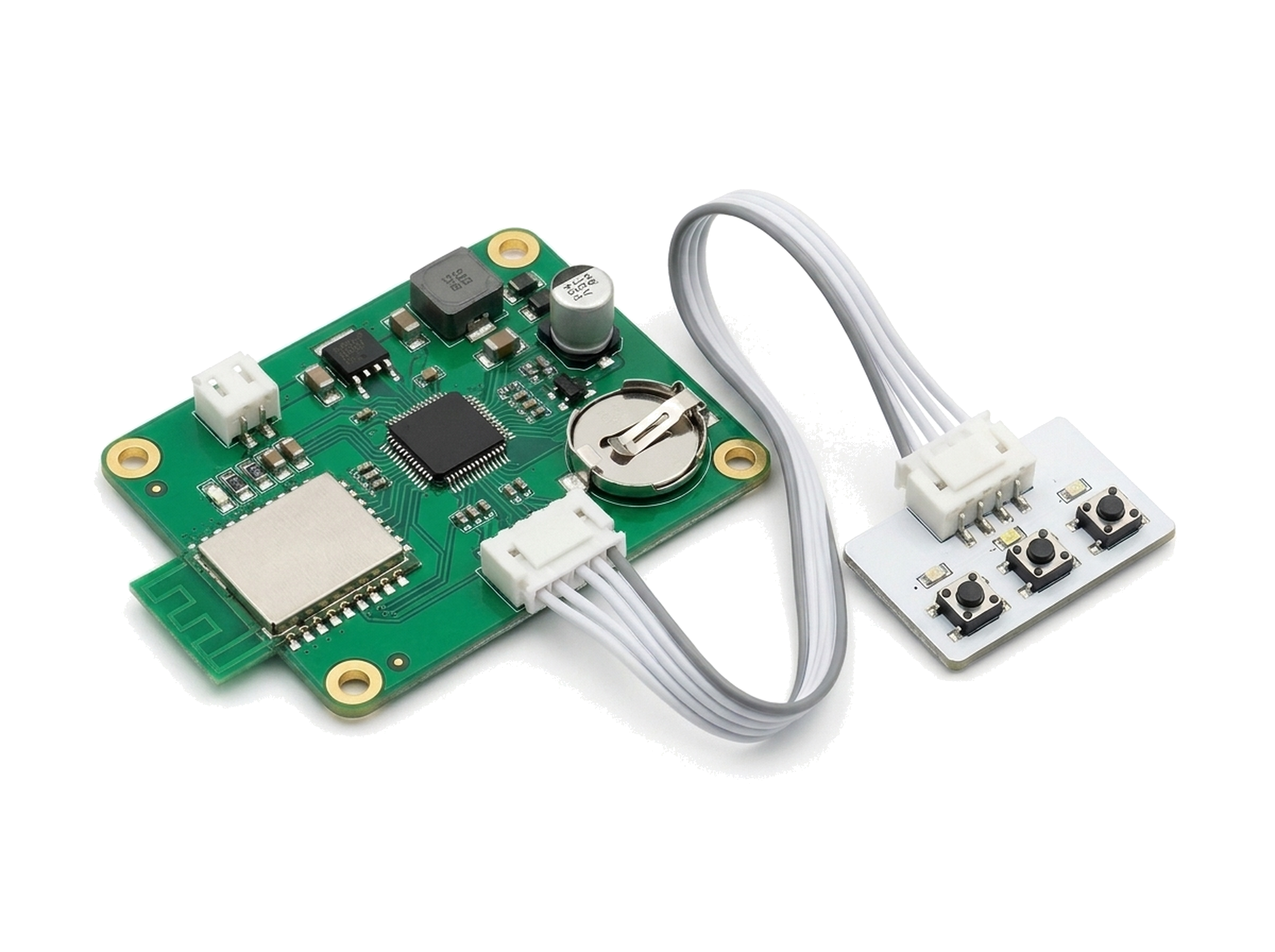
Timed Aerosol & Dry-Fan Control Boards
Timed Aerosol & Dry-Fan Control Boards
Commercial metered aerosol timers and dry-cartridge fan dispensers rely on compact battery or DC control boards combining MCU or OTP scheduling, ambient-light sensing, slide switches and motor or fan drive stages. Keeping those components on one side of an FR-4 board aligns directly with single-sided mounting, approved firmware or OTP loading and dry-bench verification.
Compact & Multi-Board Dispenser Layouts
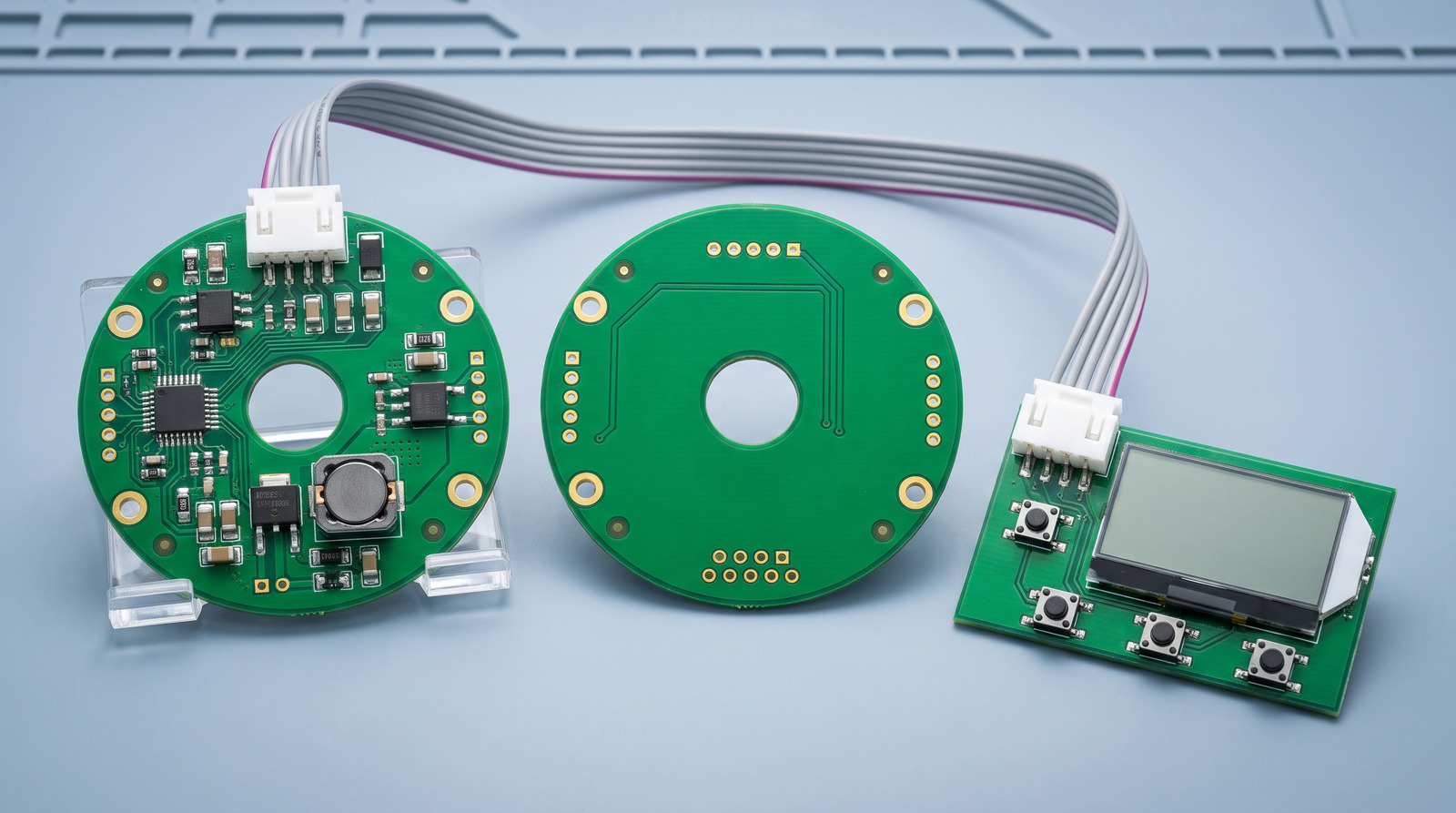
Compact & Multi-Board Dispenser Layouts
Cylindrical and wall-mount scent housings routinely dictate circular or annular PCBs and push displays, touch springs or battery contacts onto the reverse face. Because one SMT reflow face never confirms fit when reverse-side hardware is present, we screen both Top and Bottom Gerbers early; splitting LED or touch interfaces onto a wired sub-board often keeps mounting single-sided on both boards.
OEM-Owned Designs & Service Replacements
OEM-Owned Designs & Service Replacements
This service fits air-care hardware brands, engineering partners and service-board programs that already own enclosure tooling, pumps or actuators and application software while outsourcing populated electronics. We coordinate bare boards, approved components, SMT or mixed assembly and agreed board checks; mechanical box build, fragrance consumables, mobile apps and end-product compliance remain separate scopes.
Early Review From Draft Files or a Sample
Early Review From Draft Files or a Sample
A preliminary BOM, schematic, Gerber pair or reference sample board is enough to start a practical fit review while your design is still settling. Early review catches opposite-face components, X-ray-dependent packages, irreversible OTP sequencing and coating keep-out gaps before purchasing begins. Production starts only after files, approved alternates, firmware images and acceptance checks are locked.
Compare the Four Waterless Control Architectures.
Waterless fragrance devices divide into four distinct actuator loads and mechanical layouts. Compare how each mechanism shapes drive electronics, mounting-face screening and dry-bench test boundaries before locking production files.
Timed Metered Aerosol Actuator Boards
Dry-Cartridge & Gel-Disc Fan Boards
Decoupled Cold-Air Venturi Nebulizer Boards
Direct-Oil Piezo Atomizer Control Boards
Four Board-Level Controls Behind Reliable Builds.
Waterless air-care hardware fails at assembly when double-sided UI parts, aggressive fragrance oils, irreversible memory writes or wireless keep-outs are overlooked. These four engineering controls govern build fit before material reaches the line.
Single-Sided Mounting & Opposite-Face Screening
Single-sided component mounting defines where parts are soldered, not copper-layer count: a two-layer or multilayer FR-4 board can retain a continuous ground plane to limit switching spikes and support current-sense stall detection with startup inrush blanking on gear-motors or diaphragm air pumps. However, one SMT face never confirms fit if through-hole LCDs, touch springs, switches or battery contacts sit on the opposite side. We screen Top and Bottom Gerbers and full BOM packages early, excluding X-ray-dependent BGA or WCSP parts.
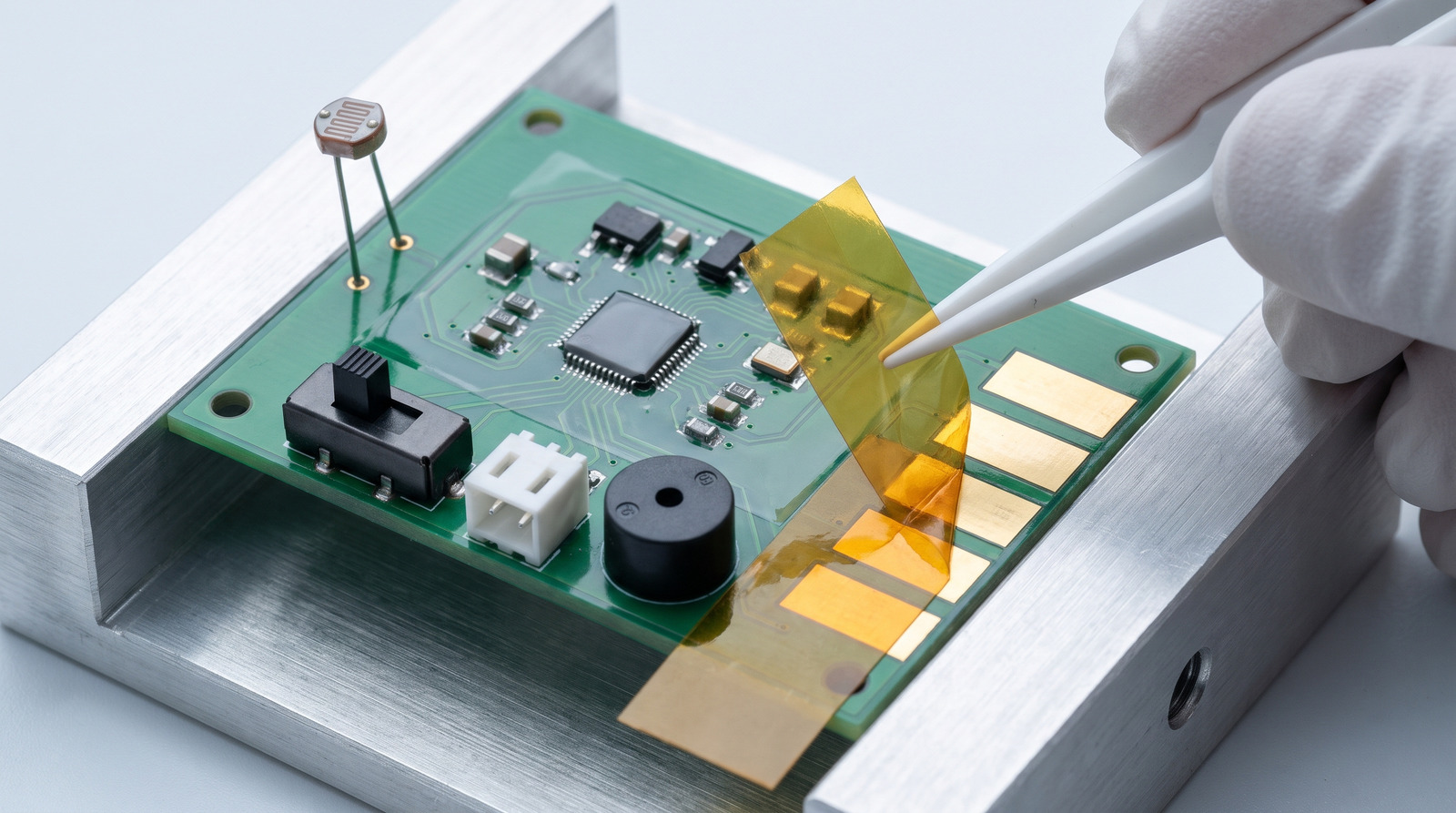
Chemical-Resistant Coating & Masking Keep-Outs
Essential oils and isopropyl-alcohol flushes pose real solvent risk near scent electronics. Under the IPC-CC-830 taxonomy, Type AR acrylic shows poor chemical resistance, thermoset Type UR polyurethane improves protection with longer curing and Type SR silicone favors flexibility, with no universal oil guarantee. The OEM specifies and qualifies chemistry and resin; after confirming cure fit, we follow pre-coat cleaning, non-conductive keep-out masking over LDRs, switches, buzzers, contacts and connectors, and agreed boundary checks, separate from potting or enclosure ingress ratings.
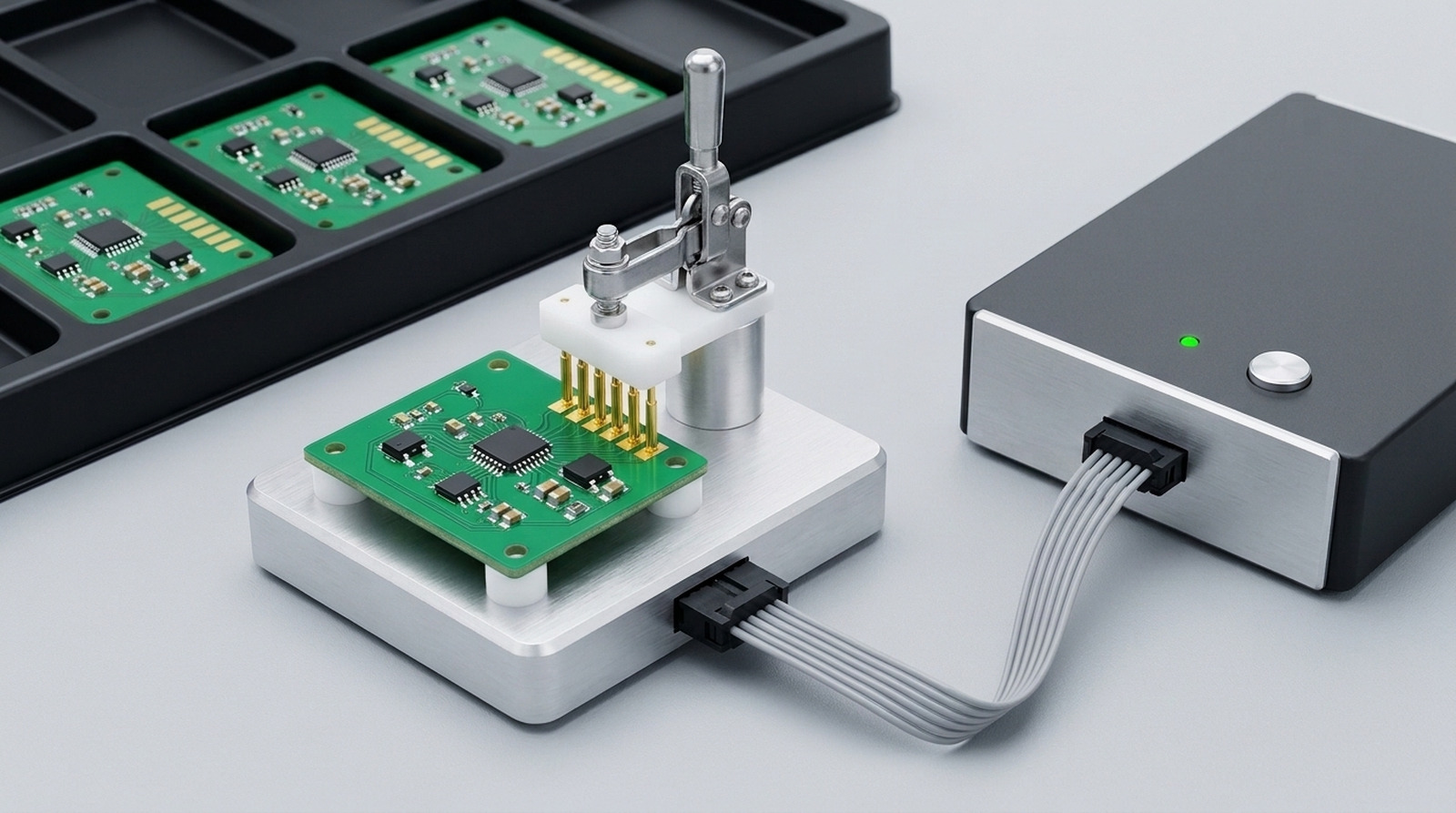
OTP, Flash & EEPROM Configuration Control
Waterless air-care boards span three production programming regimes: in-circuit Flash MCU loading via headers or test pads, serial EEPROM parameter programming for sensorless BLDC fan drivers, and irreversible one-time-programmable (OTP) logic holding interval and ambient-light schedules. A Flash error can be reflashed, whereas an unapproved or mis-sequenced OTP write permanently scraps the part or board. Before assembly, we lock customer-approved golden checksums, verify programming-rail and pre-write status conditions, confirm pre-SMT versus in-circuit order and align on write-verification checks.
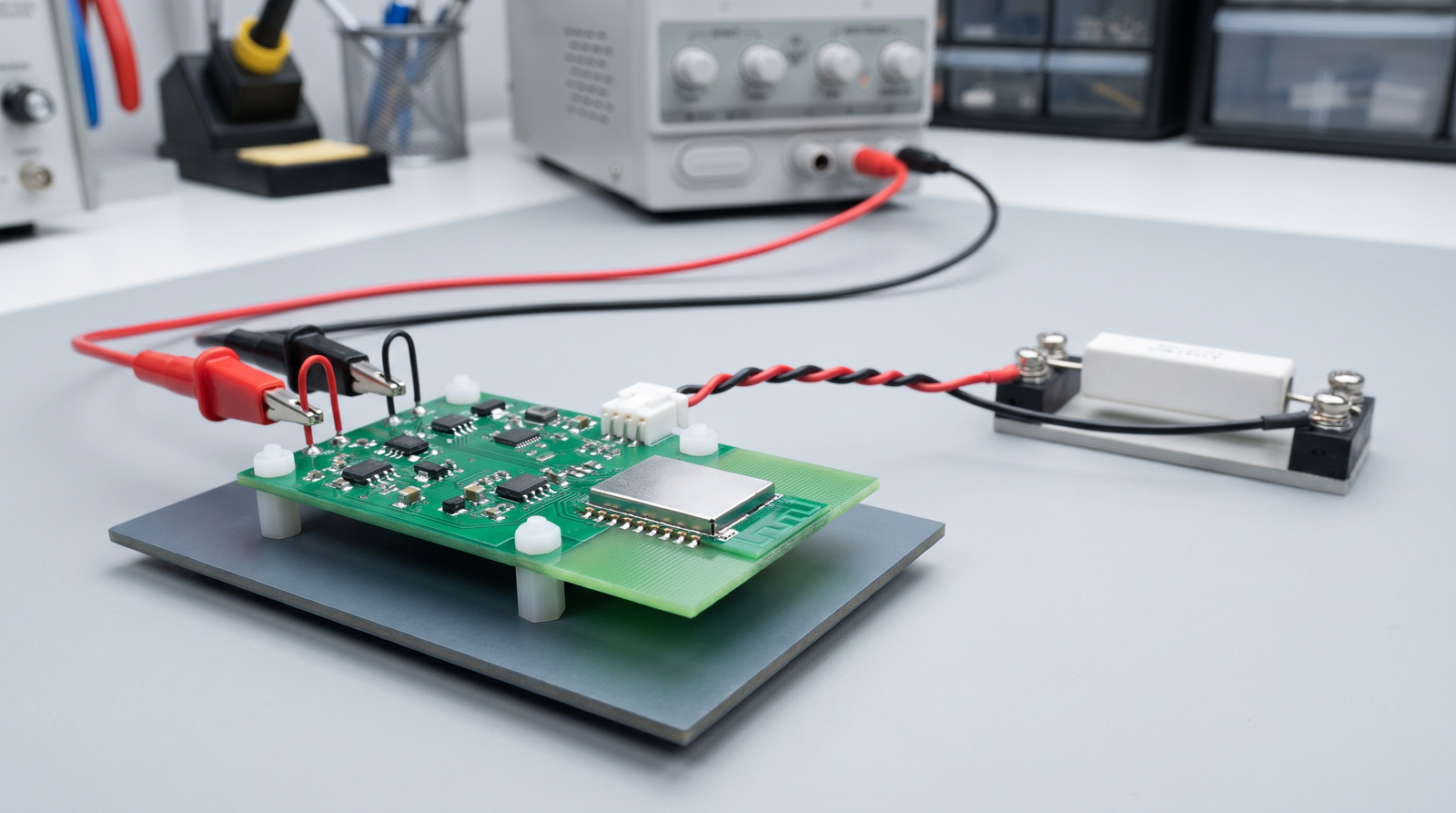
Pre-Certified RF Keep-Outs & Dry-Bench FCT
Wireless scheduling splits between pre-certified castellated modules and chip-down RF designs. For pre-certified BLE or Wi-Fi modules, we follow board-edge placement, all-layer copper-free antenna keep-outs and board-mounted clip or metal clearances per your layout. Where chip-down QFN boards pass face and package screening, we assemble the locked BOM while RF tuning and certification stay with the customer. Agreed dry-bench FCT checks rails, standby draw, switch or LDR transitions and drive outputs, separate from wet-oil, valve-stroke, acoustic or RF lab testing.
Where Your Control Board Takes Shape.
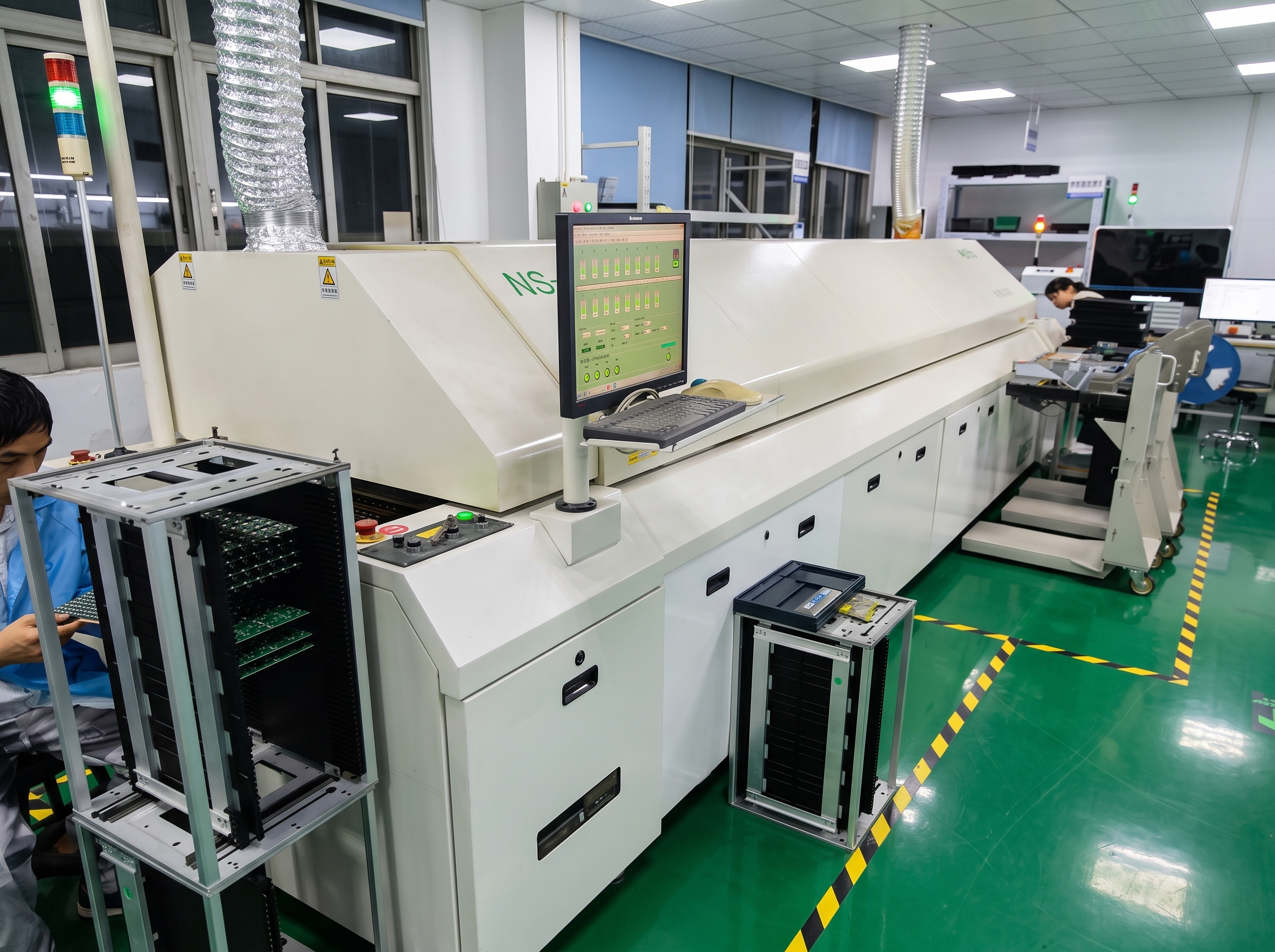
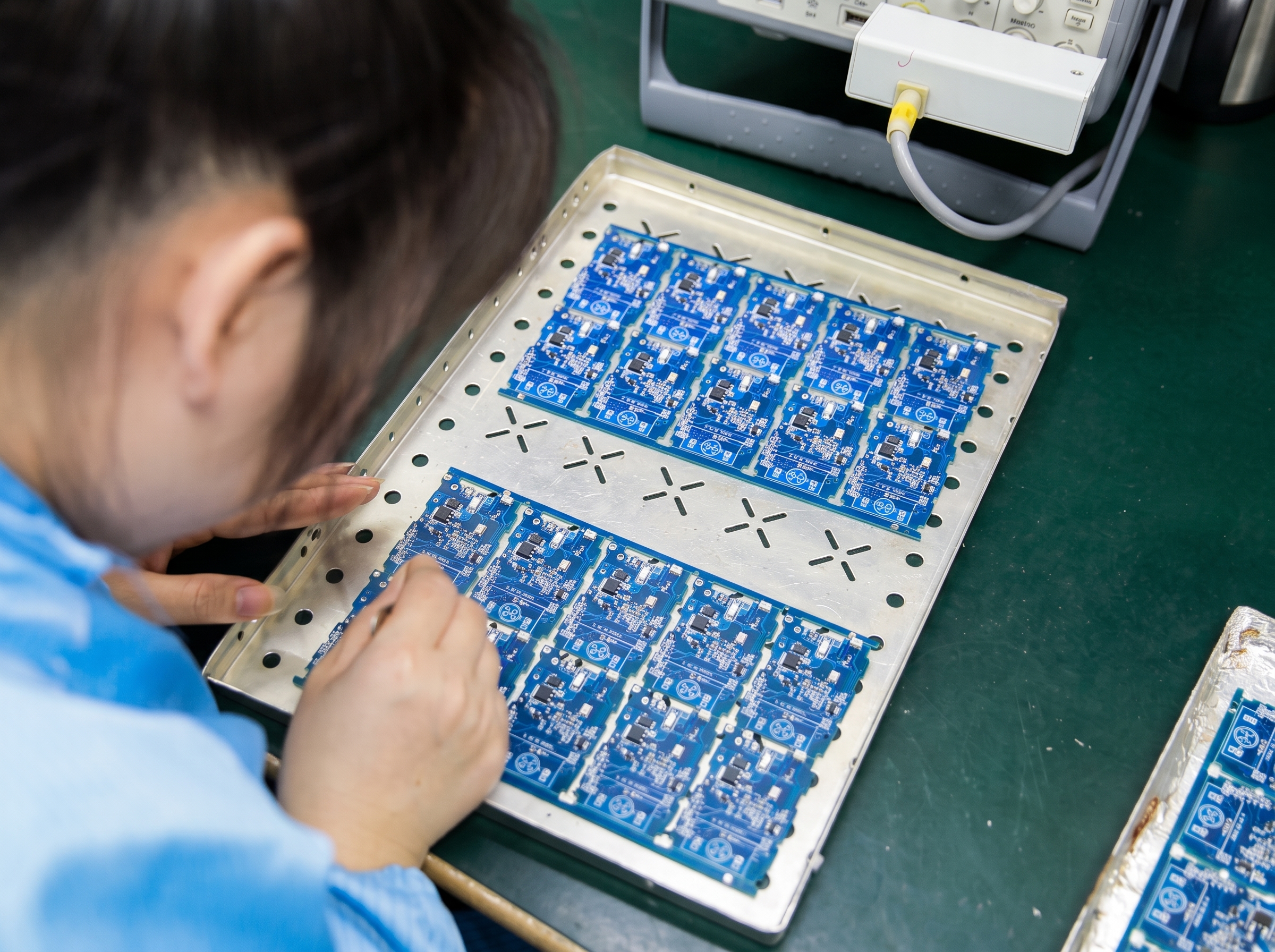
Once Gerber faces, BOM packages, configuration images and keep-out drawings are aligned, production moves across four floor stages. These stations show the physical setting behind SMT placement, mixed hardware fitting, lead-free reflow and first-article review; your released build package governs the run.


Surface-Mount Assembly
Approved reels, trays or tubes feed low-power MCUs, OTP timers, MOSFET drive switches, fan or pump drivers and pre-certified wireless modules onto FR-4 control panels (or aluminum-core LED sub-boards where specified), holding orientation and edge placement to the released build files.
Through-Hole & Mixed Assembly
Leaded interval slide switches, LDR ambient-light sensors, acoustic buzzers, battery contacts and pump or fan wire headers complete mixed assemblies following SMT reflow, preserving optical orientation, seating height and enclosure clearance.
Lead-Free Reflow
Populated boards with single-sided SMT mounting move through lead-free reflow to form consistent solder joints. Reflow setup follows the actual FR-4 or aluminum-core substrate, boost inductor mass and component thermal limits rather than one fixed curve.
First-Article & Inspection Review
The initial board is reviewed against its released BOM, placement data and orientation drawings before batch production continues. AOI, masked conformal coating inspection where specified and agreed dry-bench electrical checks examine distinct build stages.
Control Board Builds Across Waterless Fragrance Devices.
Different waterless dispenser mechanisms raise different board-layout, programming and chemical-masking decisions once designs move to assembly. These three device groups show how board-level controls connect directly to everyday air-care hardware.
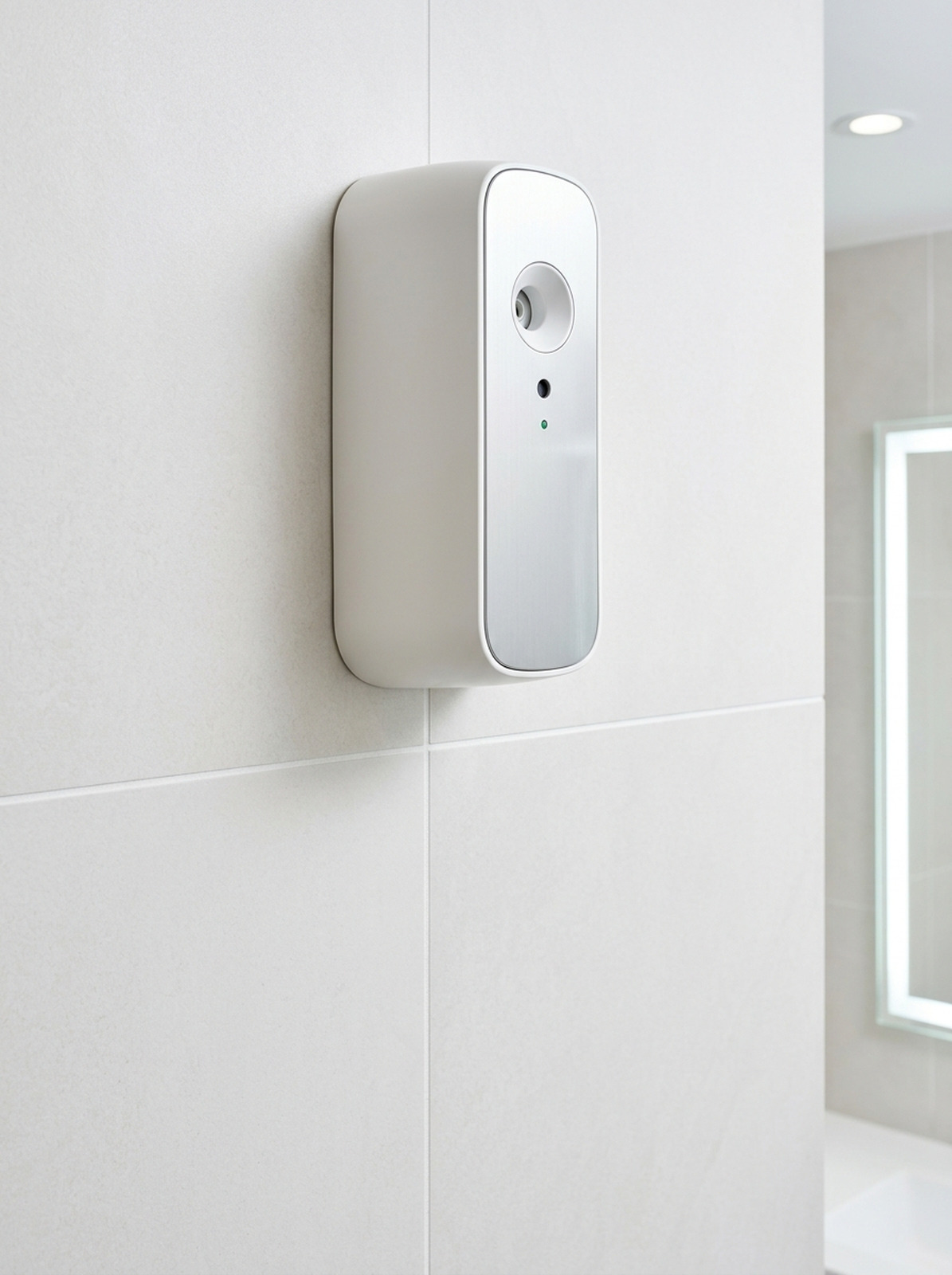
Timed Aerosol Dispensers
Metered Aerosol · Gear Actuator
Timed Aerosol Dispensers
Metered aerosol timers pair gear-motor switching, ambient-light gating and interval selectors on compact battery boards. We handle single-face mounting, approved Flash or OTP loading and dry-bench checks.
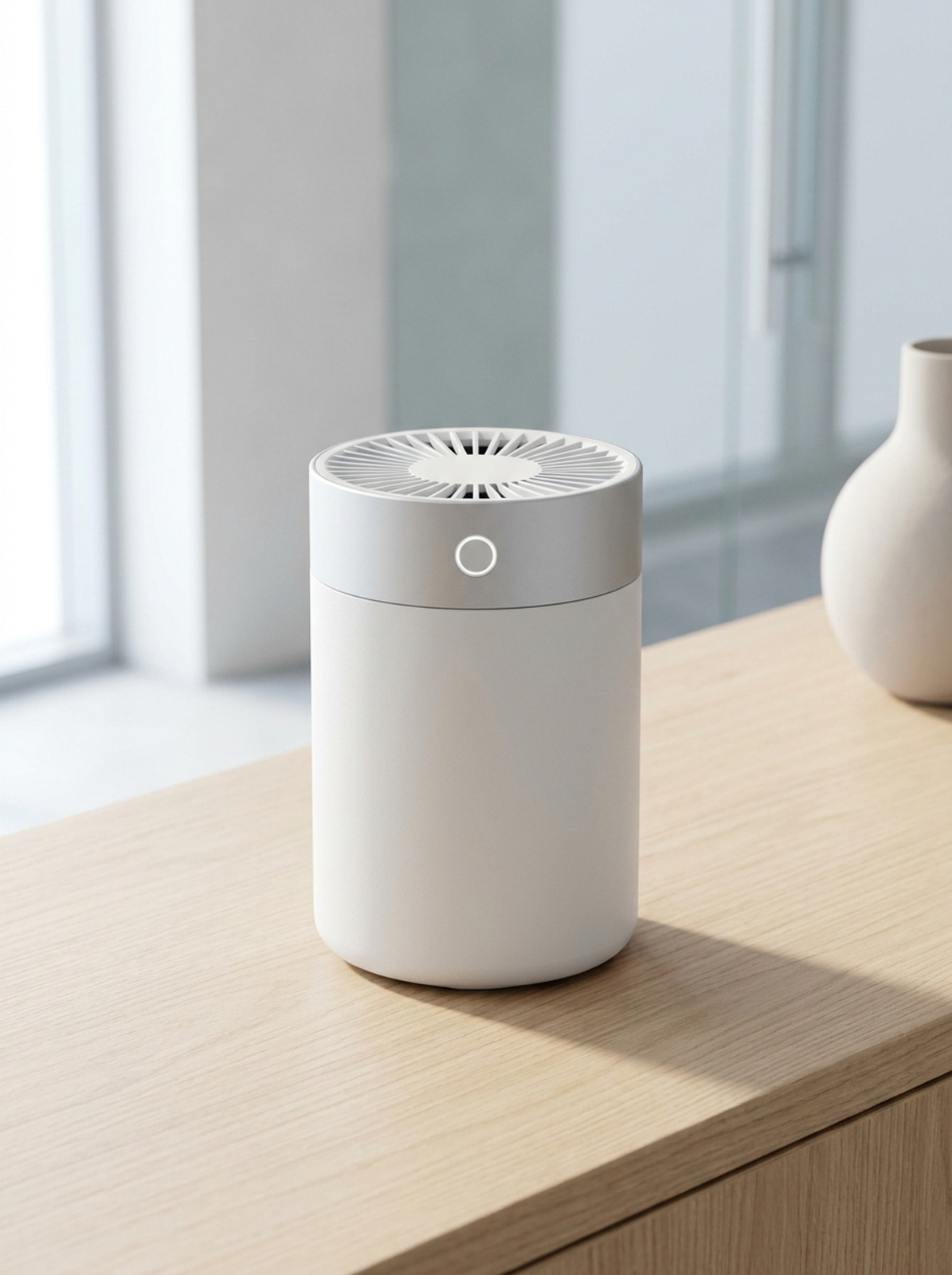
Dry-Cartridge Fan Diffusers
Dry Cartridge · Fan · EEPROM
Dry-Cartridge Fan Diffusers
Dry-capsule and gel-disc units drive brushed or sensorless BLDC fans from compact timer boards. We handle single-face mounting, load driver EEPROM settings and preserve pre-certified wireless layout keep-outs.
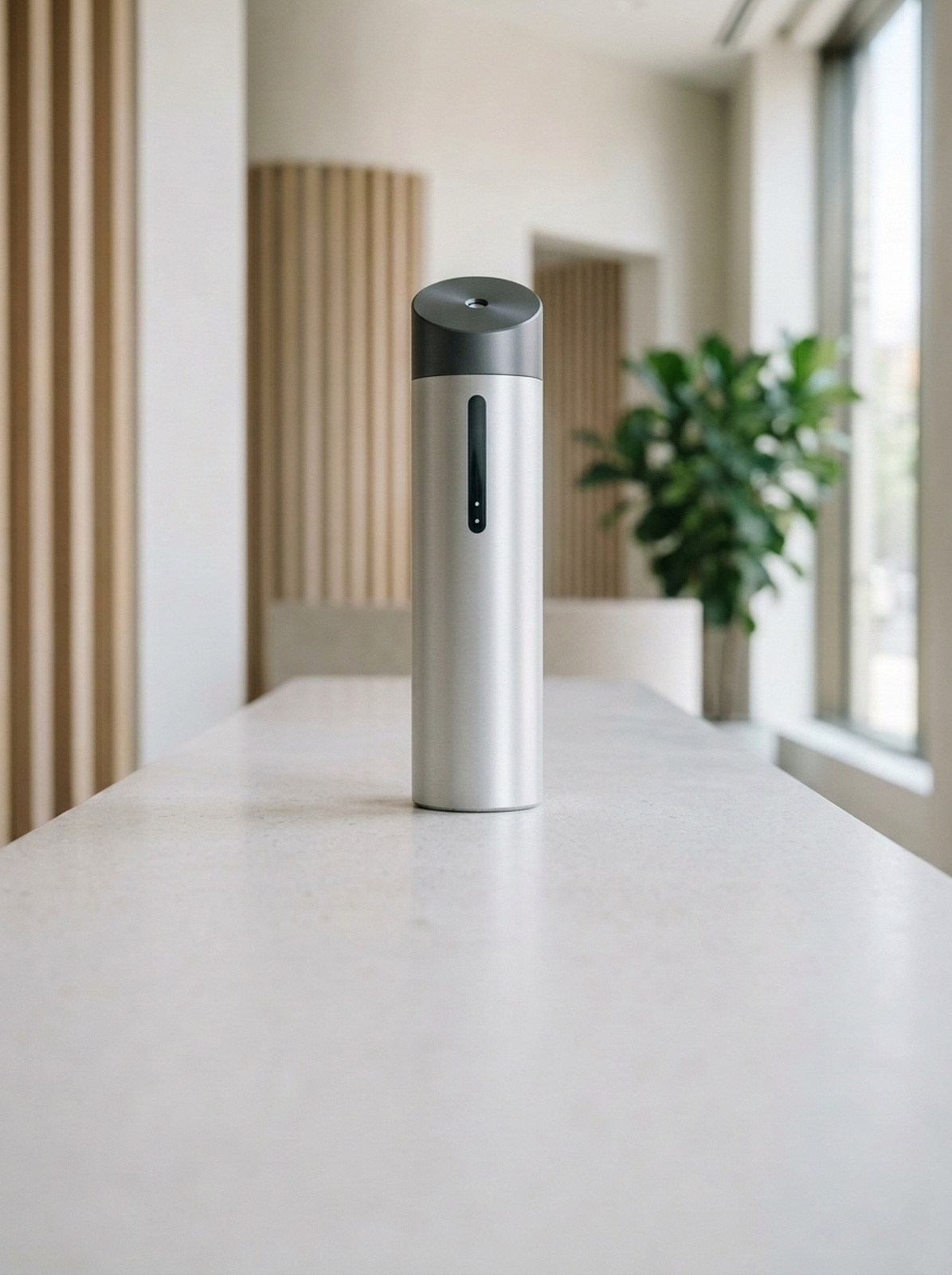
Cold-Air & Piezo Diffusers
Cold-Air Nebulizer · Direct Piezo
Cold-Air & Piezo Diffusers
Venturi nebulizers and direct-oil piezo atomizers place electronics beside essential oils and alcohol flushes. We screen board faces early, mask OEM coating keep-outs and run dry-bench electrical checks.
From Available Files to Verified Control Boards.
Waterless air-care boards move cleanly into production when mounting faces, memory programming, coating keep-outs and dry-bench checks are settled before ordering. Start with your current files and resolve open build items in sequence.
Share Current Files or Sample
Send Top and Bottom Gerbers, a draft or released BOM, schematic or reference sample alongside intended quantity and preferred material arrangement. Early files or a hardware sample are enough to start a practical fit review.
Confirm Fit, Memory & Coating Scope
Verify single-face component mounting and package fit, lock approved alternates, confirm Flash, EEPROM or OTP programming order, align OEM coating chemistry, cure fit and keep-out drawings and agree on dry-bench FCT criteria before release.
Assemble, Program & Coat
Coordinate bare boards and approved components against the released revision, complete single-sided SMT, through-hole or mixed assembly with lead-free reflow and first-article review, load approved firmware or OTP images and apply masked conformal coating where specified.
Inspect, Check & Hand Over
Complete AOI, agreed coating boundary inspection where coated and agreed dry-bench electrical checks before dispatch. Carry sample feedback or approved component updates cleanly into repeat production batches.
Common Questions.
Direct answers on waterless versus water-mist scope, board-face screening, essential-oil coating limits, wireless or OTP handling and non-PCBA boundaries.
How do waterless scent diffuser boards differ from water-tank mist diffuser PCBAs?
Water-tank ultrasonic and mesh mist diffusers belong on our dedicated Humidifier & Aroma Diffuser PCBA page. This page specifically covers four waterless mechanisms: timed metered aerosol actuators, dry-cartridge fan controllers, decoupled cold-air Venturi pump boards and direct-oil piezo atomizer boards. Those designs center on inductive motor or pump switching, ambient-light scheduling, Flash or OTP memory control and chemical-resistant masking against undiluted fragrance oils rather than water-level sensing.
Can compact scent-diffuser boards with displays or touch springs fit single-sided assembly?
Only after checking both sides of the board. Single-sided component mounting places all soldered parts on one face, independent of whether the FR-4 board uses two or more copper layers. One SMT reflow face never confirms fit if a through-hole segment LCD, capacitive touch springs, battery contacts or reverse-side LEDs occupy the back. We inspect Top and Bottom Gerbers and every BOM package early; splitting UI hardware onto a wired sub-board often restores single-face buildability.
What is needed before adding conformal coating for essential-oil or alcohol exposure?
Undiluted fragrance oils, terpenes and isopropyl-alcohol flushes can degrade standard IPC-CC-830 Type AR acrylic coatings, and no single coating guarantees universal essential-oil compatibility. Your team specifies and qualifies coating chemistry (such as thermoset Type UR polyurethane or Type SR silicone) and housing resin for your fragrance; we confirm cure fit alongside a keep-out drawing masking LDR windows, slide switches, buzzers, contacts, connectors and test pads. Coating remains distinct from potting and enclosure ingress ratings.
How are Bluetooth modules and irreversible OTP timing chips handled during assembly?
For wireless scheduling, pre-certified castellated BLE or Wi-Fi modules fit our assembly scope when board-edge placement and all-layer copper-free antenna keep-outs are preserved per your layout; chip-down RF matching, over-the-air testing and radio certification stay with the customer. For configuration, Flash MCUs and driver EEPROMs load via programming pads or headers, whereas irreversible OTP devices require locked golden checksums, verified programming-rail readiness and explicit pre-SMT or in-circuit write checks so unapproved code never scraps boards.
What stays outside PCBA scope for waterless scent and air-freshener projects?
We deliver populated control and UI circuit boards built to customer-owned design files, approved firmware or configuration images and agreed dry-bench electrical checks. Heated wax warmers, mains thermal plug-in diffusers, commercial HVAC scent-injection plants, fragrance-oil formulation, enclosure box build, mobile apps, cloud backends, wet-oil atomization or aerosol valve validation, acoustic or olfactory lab testing and end-product safety or radio certification remain outside scope.
Manufacturing Experience. Direct Cooperation.
Our factory’s experience includes long-term supplier relationships with Fortune Global 500 customers and demanding supplier audits. We bring that manufacturing background to sample builds, pilot runs and repeat orders for waterless scent and automatic air-freshener control boards, with quality expectations anchored around your released build package.
Long-term supplier to Fortune Global 500 customers.
Sustained enterprise supply is part of our manufacturing experience. We apply that consistency to your control-board order, aligning BOM identity, revision control and agreed production steps across initial builds and repeat batches.
Passed demanding supplier audits and customer reviews.
Our factory has passed demanding supplier audits. That experience supports direct alignment on workmanship expectations, coating keep-out documentation, programming handoff and acceptance checks relevant to your assembly.
First-article, एओआई, and board checks.
First-article review, AOI and agreed dry-bench electrical or functional checks examine distinct aspects of the assembled control board. Locked BOM, Gerber, firmware and keep-out references connect those checks directly to your build requirements.
Long-term relationships.
Global brands.



Start with
what you have.
Tell us about your waterless scent diffuser or automatic air-freshener control board. Top and Bottom Gerbers, a draft BOM, a schematic or a reference sample is enough to start a practical fit review; share what you have now, your actuator type, intended quantity and any programming, coating or dry-bench test questions.
Starting a new build or redesign?
Share draft Gerbers, a BOM or reference hardware early to verify single-face mounting fit, wireless keep-outs, OTP or Flash programming and coating boundaries before release.
Planning a repeat or replacement run?
Share your released board revision, approved BOM and any component or firmware updates so we can verify carry-over fit and dry-bench checks for the next batch.
 Hindi
 English
 German
 Arabic
 French
 Spanish
 Portuguese (Portugal)
 Korean
 Indonesian
 Chinese
 Russian
 Italian
 Dutch
 Polish
 Thai
 Portuguese (Brazil)