

Inspection &
Functional Testing.
First-article review, optical AOI and agreed bench functional checks integrated with your PCB assembly order around defined access and pass limits.
Inspect the Build.
Check the Function.
Optical inspection and powered bench testing answer distinct questions about a populated board. Alongside SMT, through-hole and mixed PCB assembly, we pair first-article review and Maker-ray optical AOI with agreed dry electrical and functional checks.
Share an existing test procedure, fixture, schematic or sample board early to align test-point access, supply/load setup and pass/fail bounds before batch verification starts.
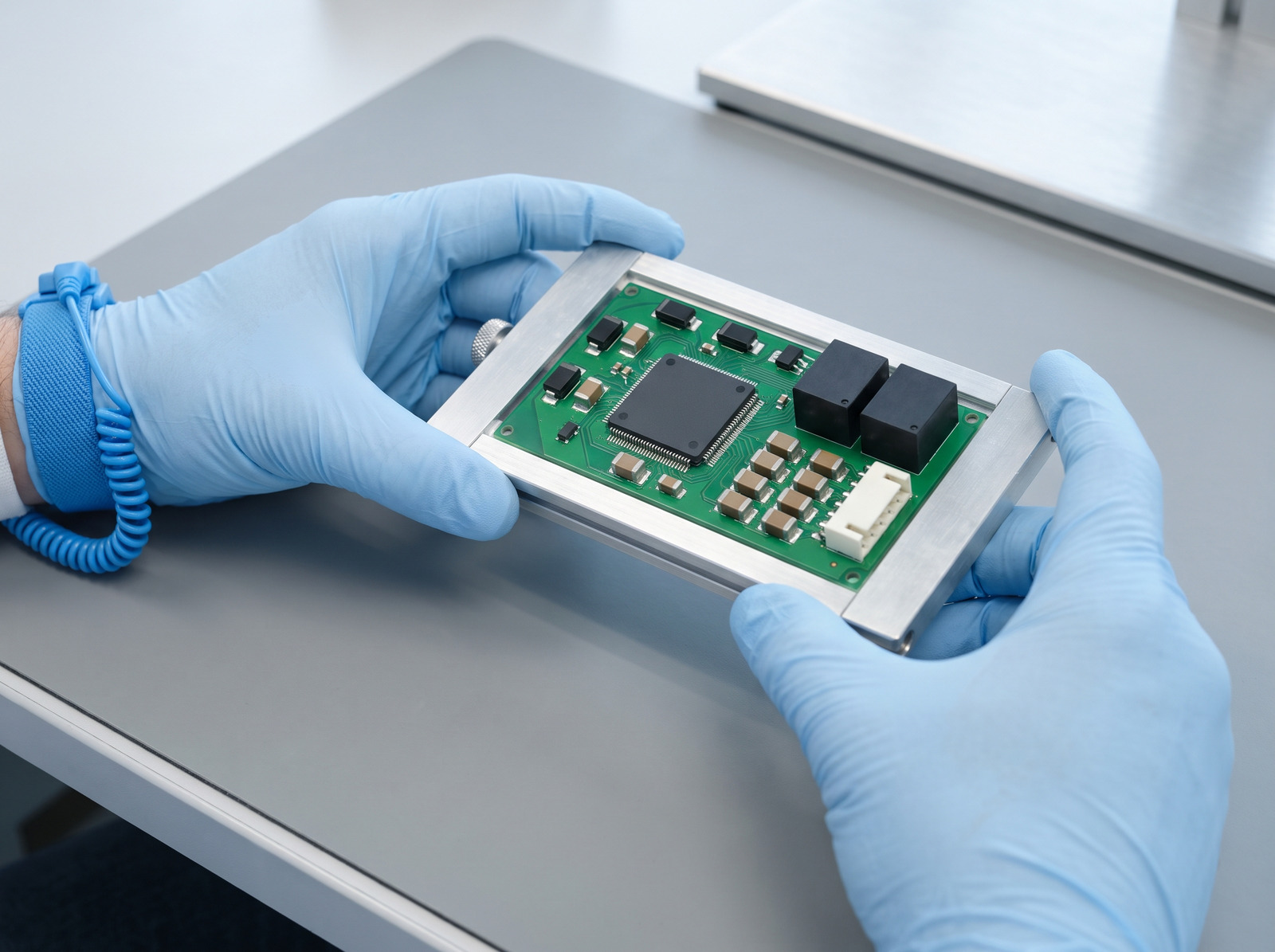
Match the Check to Your Build Stage.
First samples, transferred fixtures and recurring production runs each call for calibrated inspection and bench-test depth.
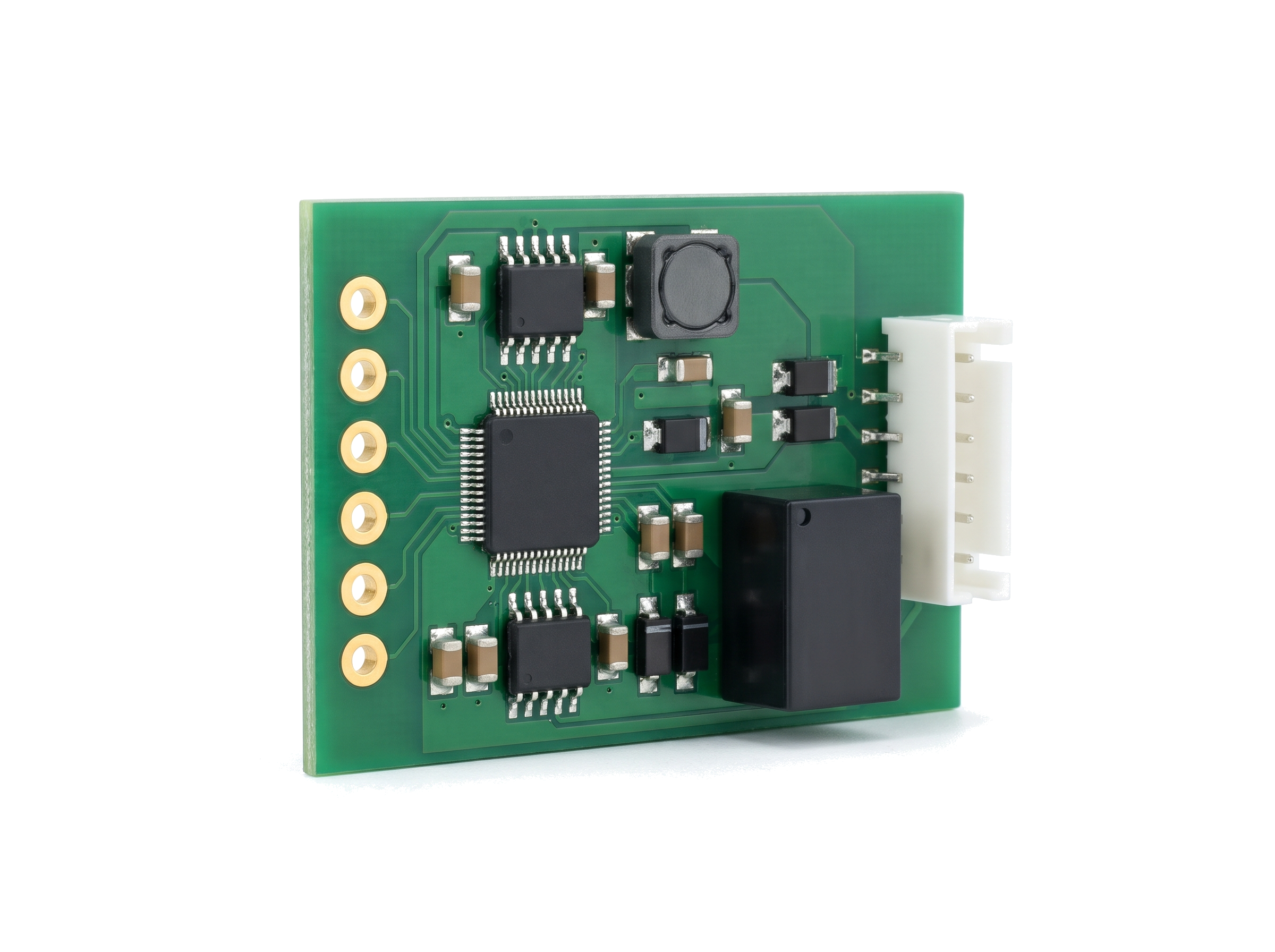
First Builds & Initial Setup
First Builds & Initial Setup
First-article inspection verifies part identity, polarity and variant population before batch completion, while early rail and power-on checks give your bring-up team immediate electrical feedback.
Supplied Procedures & Fixtures
Supplied Procedures & Fixtures
When transferring an established board with a test guide, mating harnesses or a toggle-clamp pogo jig, we align probe contact points, supply limits, stimuli and fixture upkeep before testing.
Repeat Orders & Variant Parity
Repeat Orders & Variant Parity
Recurring lots tie each SKU’s PCB revision and firmware checksum to its matching test script so prior variant limits are never misapplied to an updated assembly.
Component & Firmware Updates
Component & Firmware Updates
Approved alternates, layout edits or new firmware can shift startup timing, sleep draw or output polarity without changing connectors. Flag changes early so affected test bounds update cleanly.
Compare the Verification Layers.
First-article review, optical AOI, power/rail checks and stimulus-response functional testing observe distinct layers of an assembled board.
Initial Assembly Reference
Accessible Optical Inspection
Rails, Current & Bus Replies
Stimulus & Driven-Load FCT
Four Controls Behind Meaningful Board Checks.
Reliable bench evidence pairs line-of-sight optical inspection with accurate board-sense supply rails, explicit duty-cycle stimuli and repeatable probe contact.
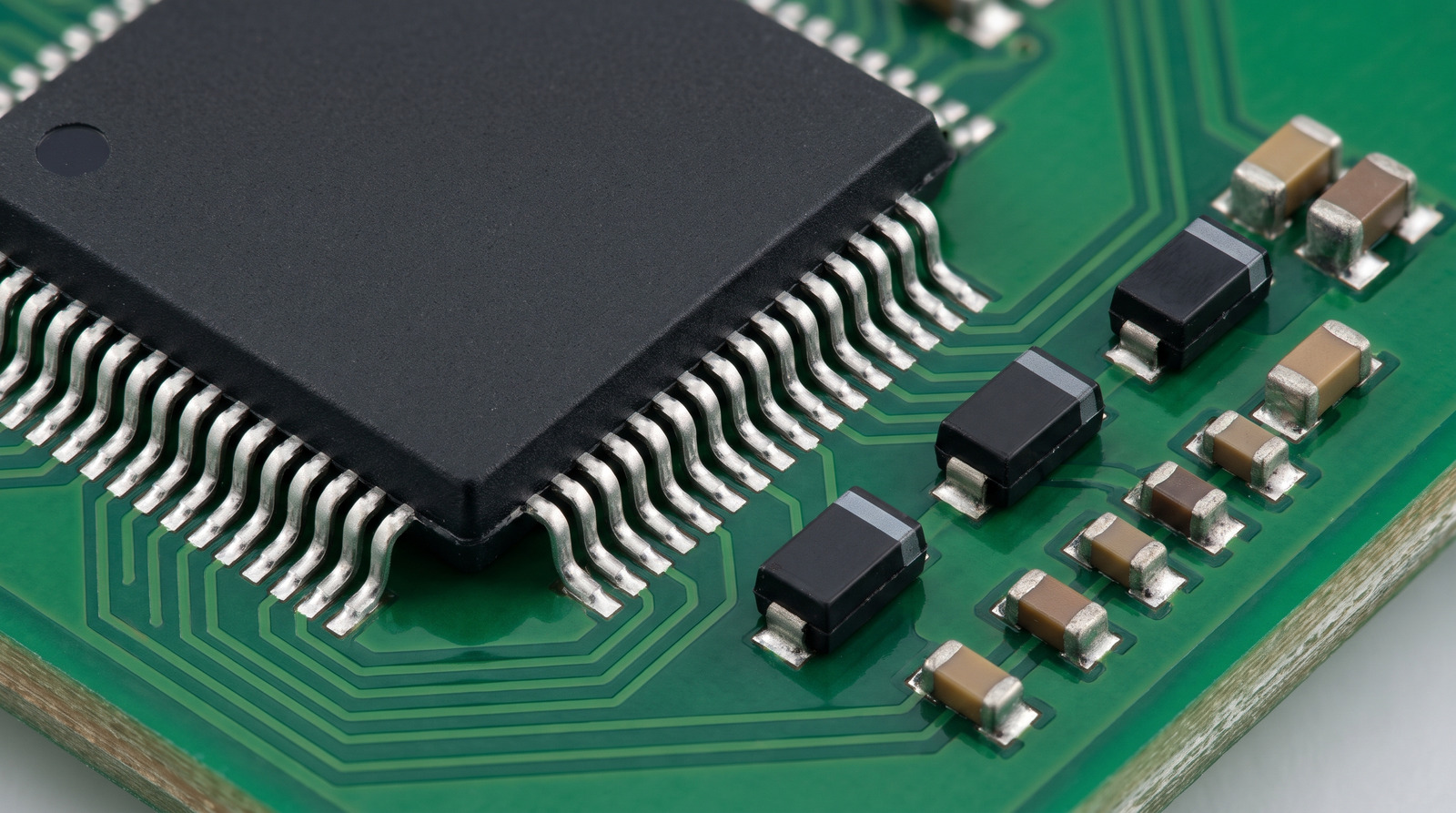
Visible Workmanship & Polarity
Populated boards are checked against the released BOM, CPL angles and polarity drawings. Catching tombstoning, bridges or reversed diodes on accessible joints isolates process drift before powered fixtures engage.
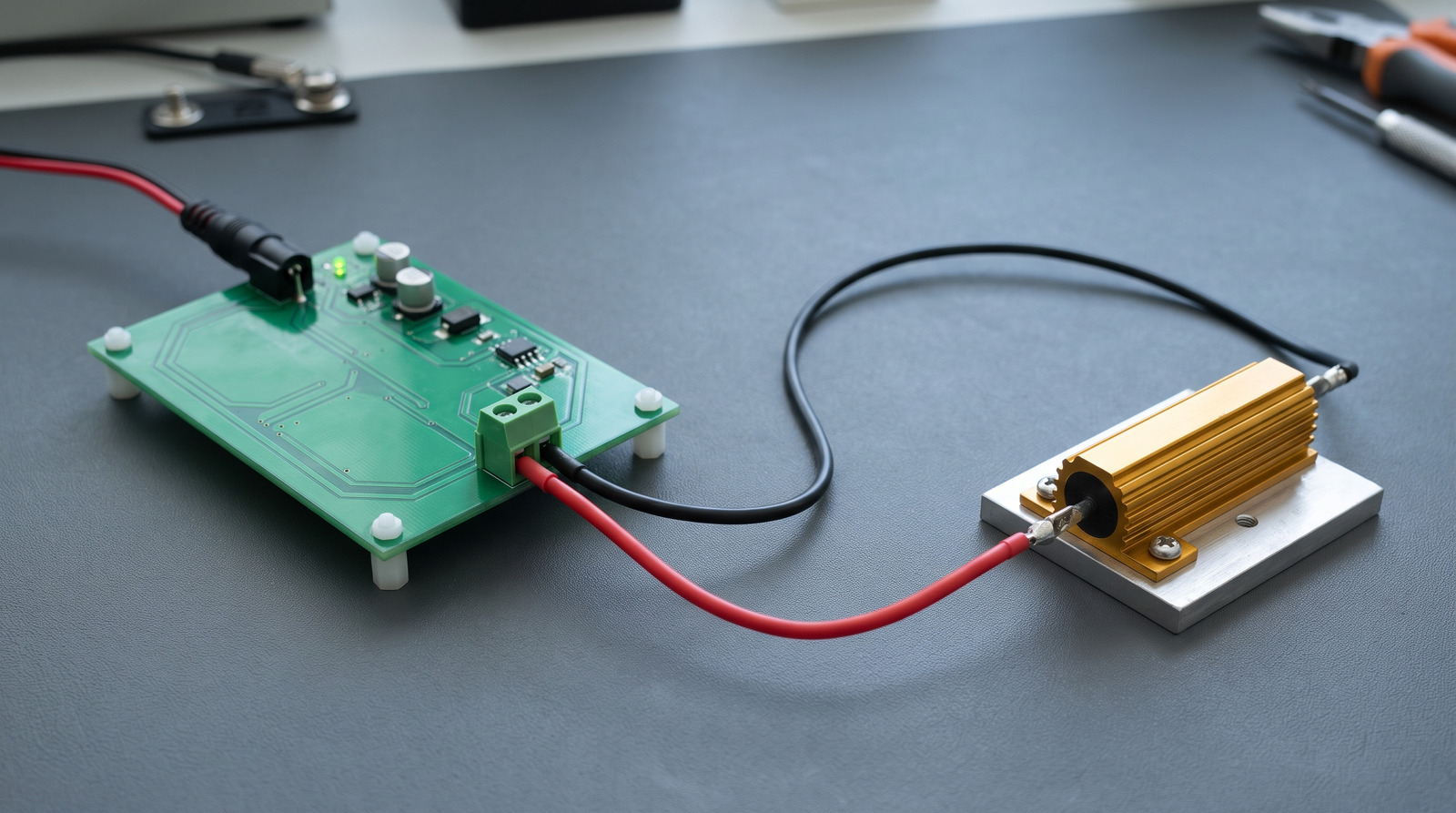
Board Supply, Sense & Load State
Harness resistance drops voltage under load, and a current-limited bench supply can fold back rail voltage silently. Define board-side measurement points, active operating mode and dummy load impedance together.
Deliberate Stimulus & Output Timing
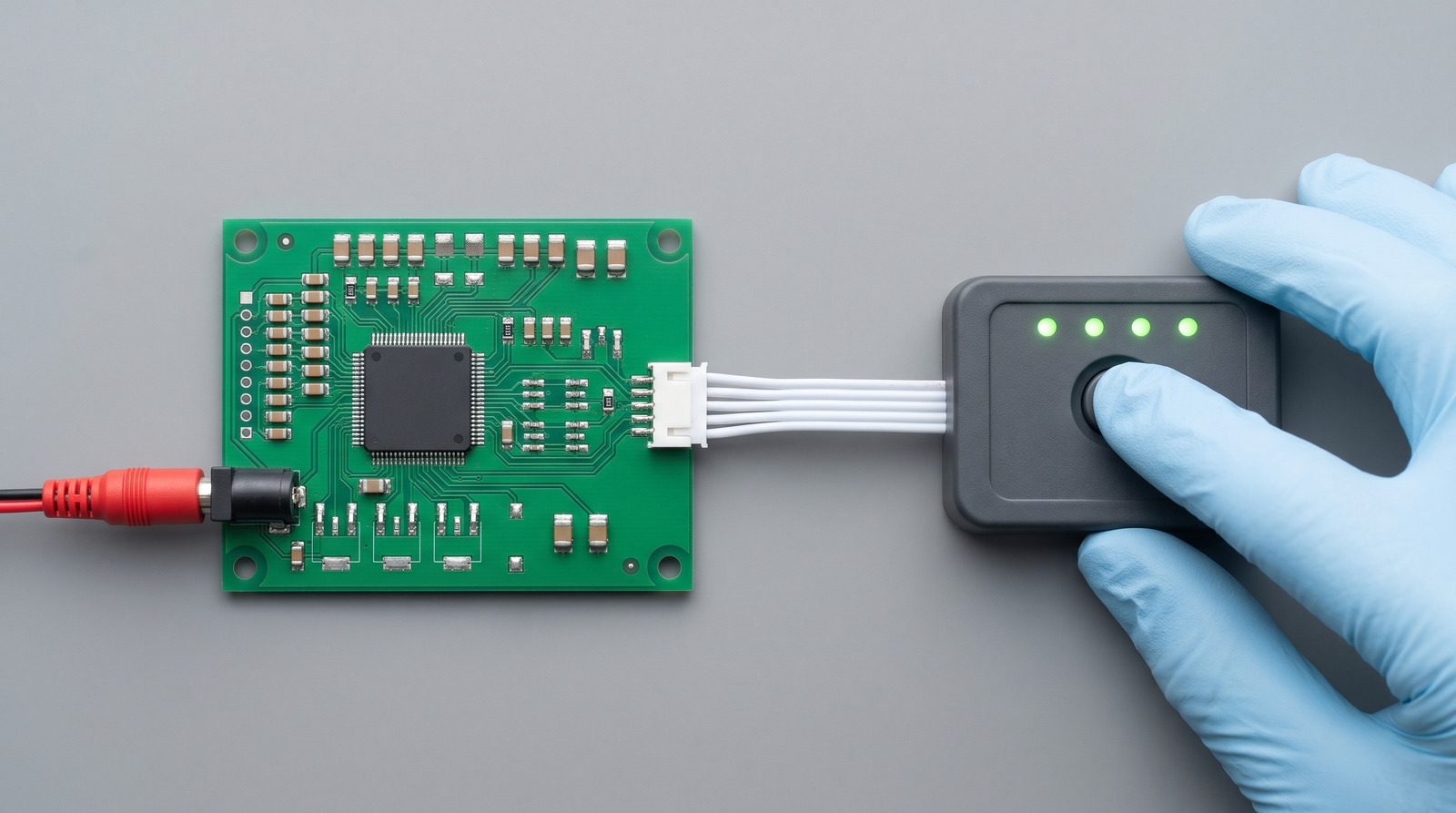
Functional checks pair a known input with a measured output. For periodic signals of period T and active pulse width Ton in matching units, frequency f = 1/T and duty D = Ton/T (100 × D%), distinguishing logic PWM from driven-load waveforms.
Probe Access & Exception Discipline
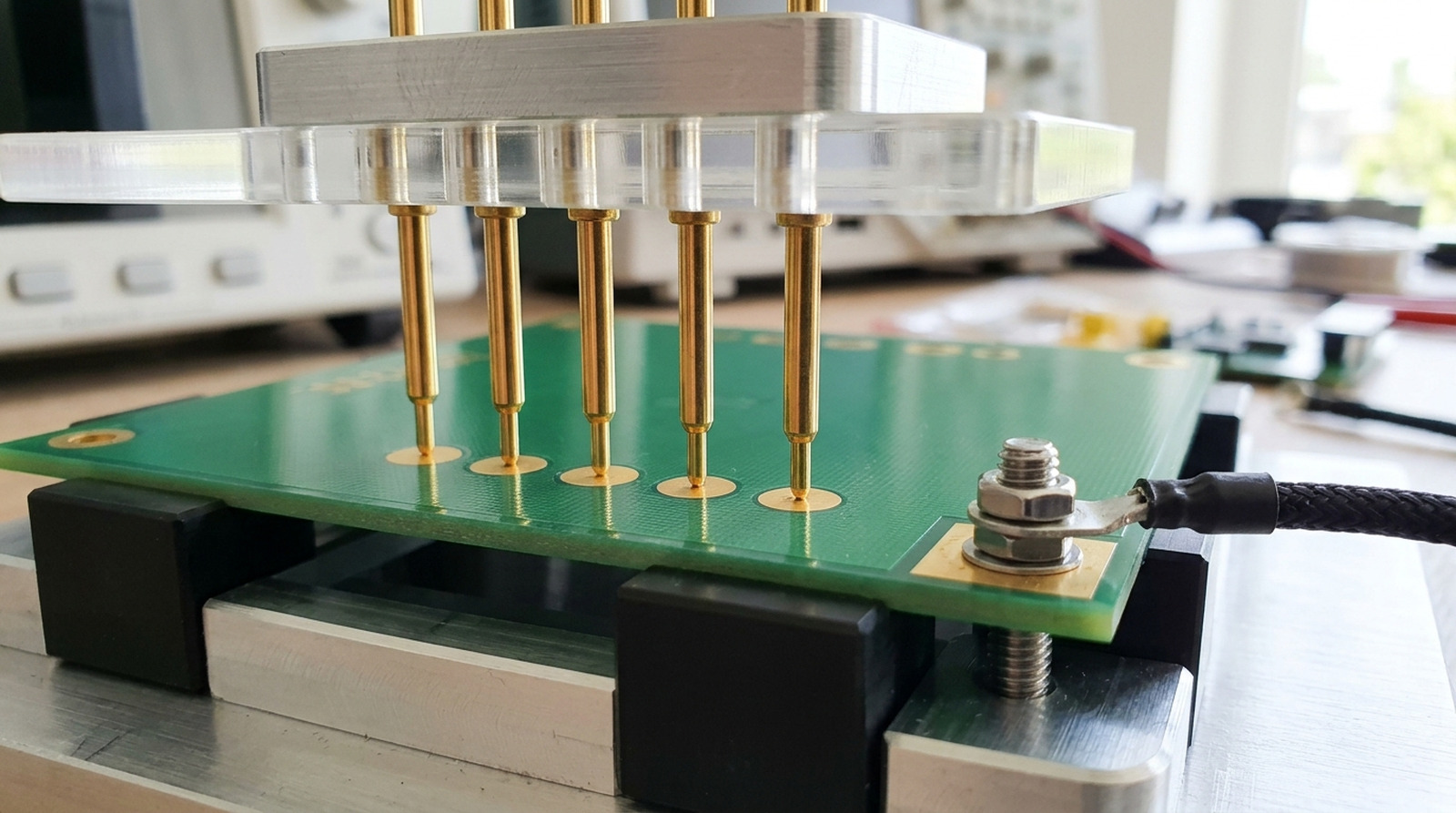
Repeatable pogo-pin or header checks require clean bare-gold test pads, solid return paths and topology-aware resistance limits. Failed units are logged with their setup state rather than re-probed blindly until passing.
Board Checks for Your Product Electronics.
Lighting drivers, sensor-probe hosts and industrial relay cards illustrate how dry bench checks match specific circuit interfaces.

LED & Driver Controls
Channels · PWM Dimming · Loads
LED & Driver Controls
Agreed bench checks verify constant-current channel regulation and PWM dimming steps into specified dummy loads prior to luminaire photometry.
Sensor & Probe Controllers
I²C Bus · Reference Sim · Alarms
Sensor & Probe Controllers
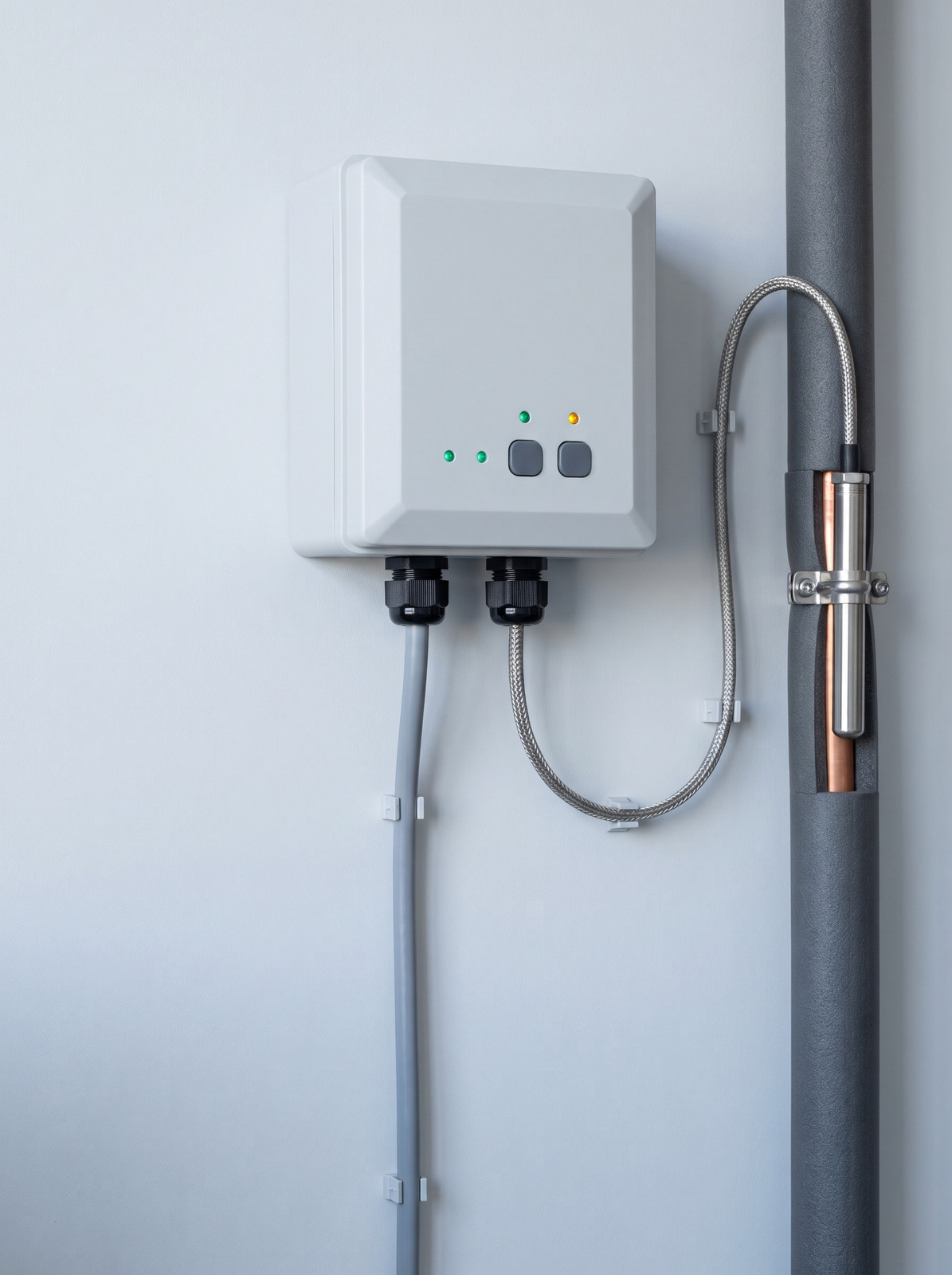
Dry checks inject reference resistance or bus queries to verify controller ADC paths and alarm outputs, separate from wet or physical probe calibration.
Relay & Switching Cards
Coil Drive · Contact State · Loads
Relay & Switching Cards
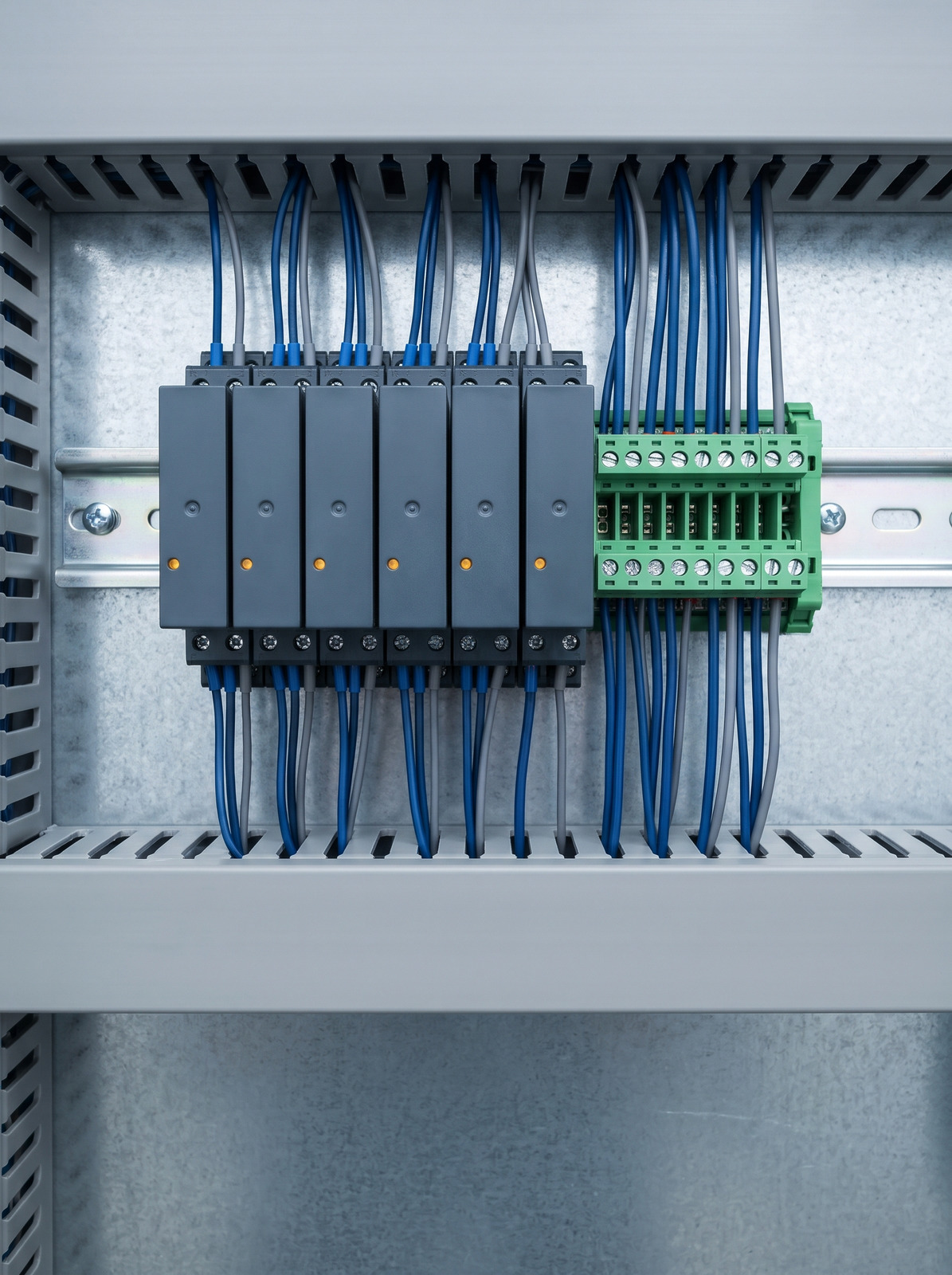
Bench sequences command each channel and verify actual NO/NC contact closure across terminal pins rather than relying on coil-LED indicators alone.
From Check Definition to Board Handover.
Define test-pad access, fixtures and pass windows before assembly begins so inspection and bench checks run smoothly.
Scope the Verification
Share your schematic, test notes or sample board to separate optical AOI coverage from powered electrical or functional checks.
Lock Setup & Pass Limits
Confirm test points, supply voltage/current limits, dummy loads, stimuli, pass/fail windows and supplied harnesses or pogo fixtures.
Inspect & Test in Sequence
Execute first-article review, optical AOI, approved firmware flashing and agreed bench FCT in step with your locked revision.
Log Exceptions & Ship
Segregate and document any non-conforming unit with its observed state before shipping verified boards and updating repeat records.
Common Questions.
Direct answers on flash CRC vs. functional testing, 100% batch screening, I²C / 4–20 mA sensor checks and failure handling.
How does functional testing differ from IC programming verification?
Programming verification checks via read-back or CRC that flash memory matches your binary file. Functional testing powers the board under defined supply, stimulus and load conditions to confirm regulators, buses and output stages actually operate.
Does testing 100% of boards guarantee complete product qualification?
No. Testing every board in a lot eliminates sampling gaps for the specific rails and I/O states exercised by the script, but it never substitutes for untested modes, thermal burn-in, EMC, safety or enclosure qualification.
Does a passing I²C ACK or 4–20 mA loop check prove physical sensor accuracy?
No. On a bidirectional I²C bus, ninth-clock ACK/NACK confirms digital communication across SDA/SCL, and a 4–20 mA live-zero loop check confirms analog drive and compliance headroom; neither calibrates the physical sensing element.
How are failed checks and retest requests handled during production?
A failed step flags an out-of-window reading or setup fault without proving root cause on its own. Units are quarantined with observed readings so fixture contact, supply foldback or board defects are reviewed before agreed retesting.
Manufacturing Experience. Direct Cooperation.
Long-term supplier relationships with Fortune Global 500 customers and demanding factory audits ground our inspection and functional-test discipline.
Long-term supplier to Fortune Global 500 customers.
Sustained enterprise supply shapes how we tie every inspection step and bench fixture directly to your locked PCB and firmware revision.
Passed demanding supplier audits and customer reviews.
Passing demanding supplier audits supports clear alignment on workmanship criteria, test-limit documentation and non-conformance handling.
First-article, AOI, and board checks.
First-article review, Maker-ray optical AOI and agreed bench functional checks provide layered verification before boards leave our floor.
Long-term relationships.
Global brands.




Start with
what you have.
Share your Gerbers, schematic, test procedure or sample board alongside intended quantity to align inspection and bench checks.
Planning first-build checks?
Review pogo-pad access, header pinouts and practical rail or I/O checks before locking layout.
Transferring an FCT setup?
Share your existing fixture details, test script and pass limits to align repeatable batch testing.
 Korean
 English
 German
 Arabic
 French
 Spanish
 Portuguese (Portugal)
 Indonesian
 Chinese
 Russian
 Italian
 Dutch
 Polish
 Hindi
 Thai
 Portuguese (Brazil)