

Automatic Paper-Towel
Dispenser PCBA.
Populated main control and optical-sensor PCBAs for commercial touchless roll paper-towel dispensers and modular electronic dispensing cassettes. Built with single-sided component mounting across SMT, through-hole and mixed assembly, customer-approved firmware loading, masked conformal coating and agreed dry-bench checks.
Control Electronics Inside
the Dispenser Module.
Commercial hands-free roll-towel dispensers separate outer cabinets and mechanical drive rollers from the internal electronic control board, often placing hand-wave sensing on a harness-connected sensor sub-board. We provide SMT, through-hole and mixed assembly on FR-4 boards—and aluminum-core boards where specified—with single-sided component mounting, lead-free reflow, first-article review, AOI, approved customer firmware loading, masked conformal coating and agreed dry-bench electrical checks. Single-sided component mounting does not define copper-layer count, and one SMT reflow face does not confirm fit if through-hole parts sit on the reverse face; both Top and Bottom Gerbers and the full BOM package list are reviewed before quoting.
Start with released Gerbers and firmware, or share a draft BOM, schematic or reference module sample for an early manufacturability review before locking production files, approved alternates, coating drawings and bench-test limits. Mechanical lever or crank dispensers, plastic or stainless cabinets, molded cassettes, feed rollers, gearboxes, tear bars, captive refill-lease platforms, custom anti-jam firmware R&D and paper-roll endurance or wet-washdown lab testing remain outside board assembly scope.
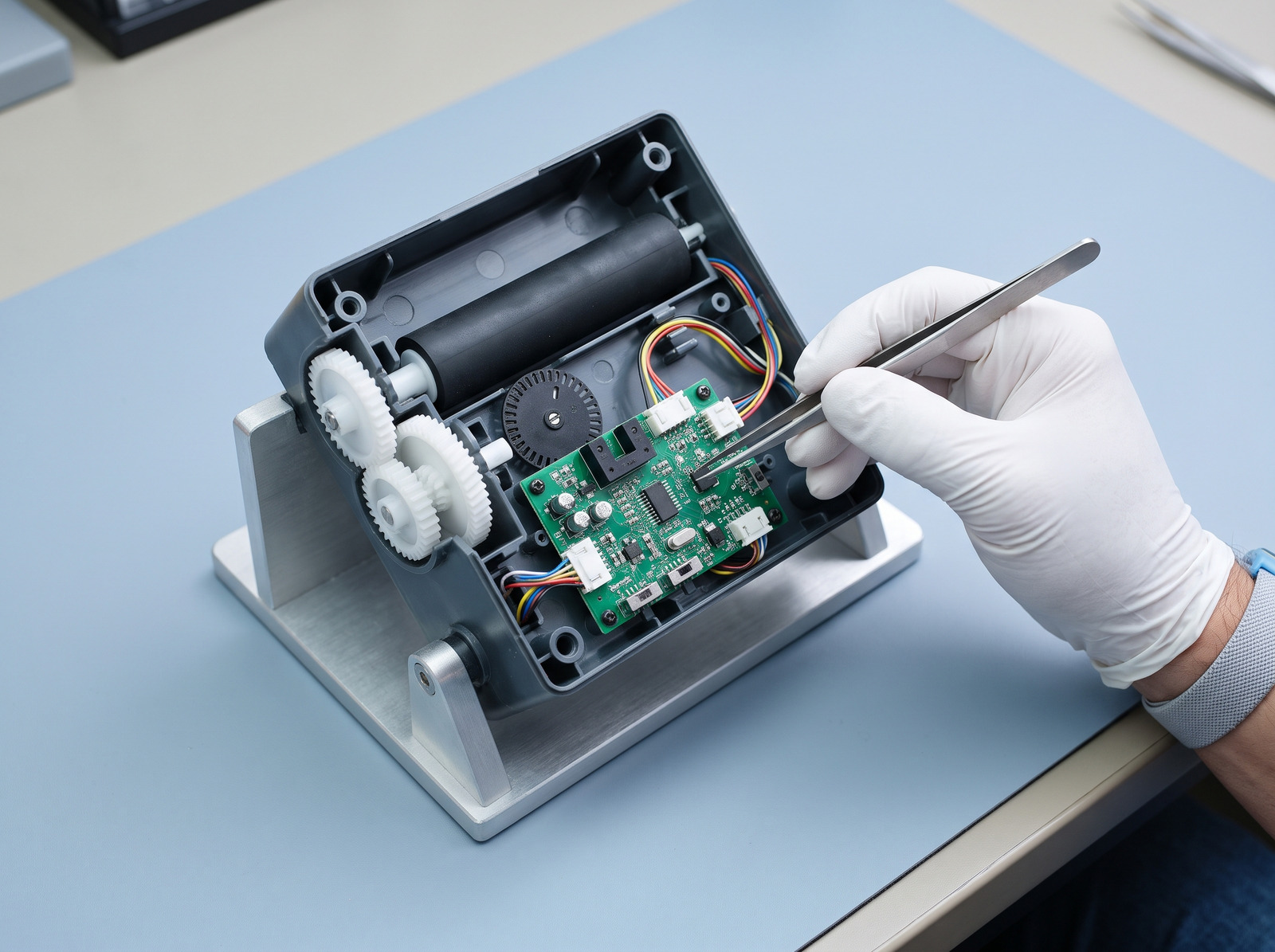
Match Board Fit Before Committing Tooling.
Roll-towel dispenser electronics combine motor drive, optical paths and cabinet-mounted switches inside compact modules. Checking mounting faces, component packages and scope boundaries early aligns assembly with your cassette hardware.
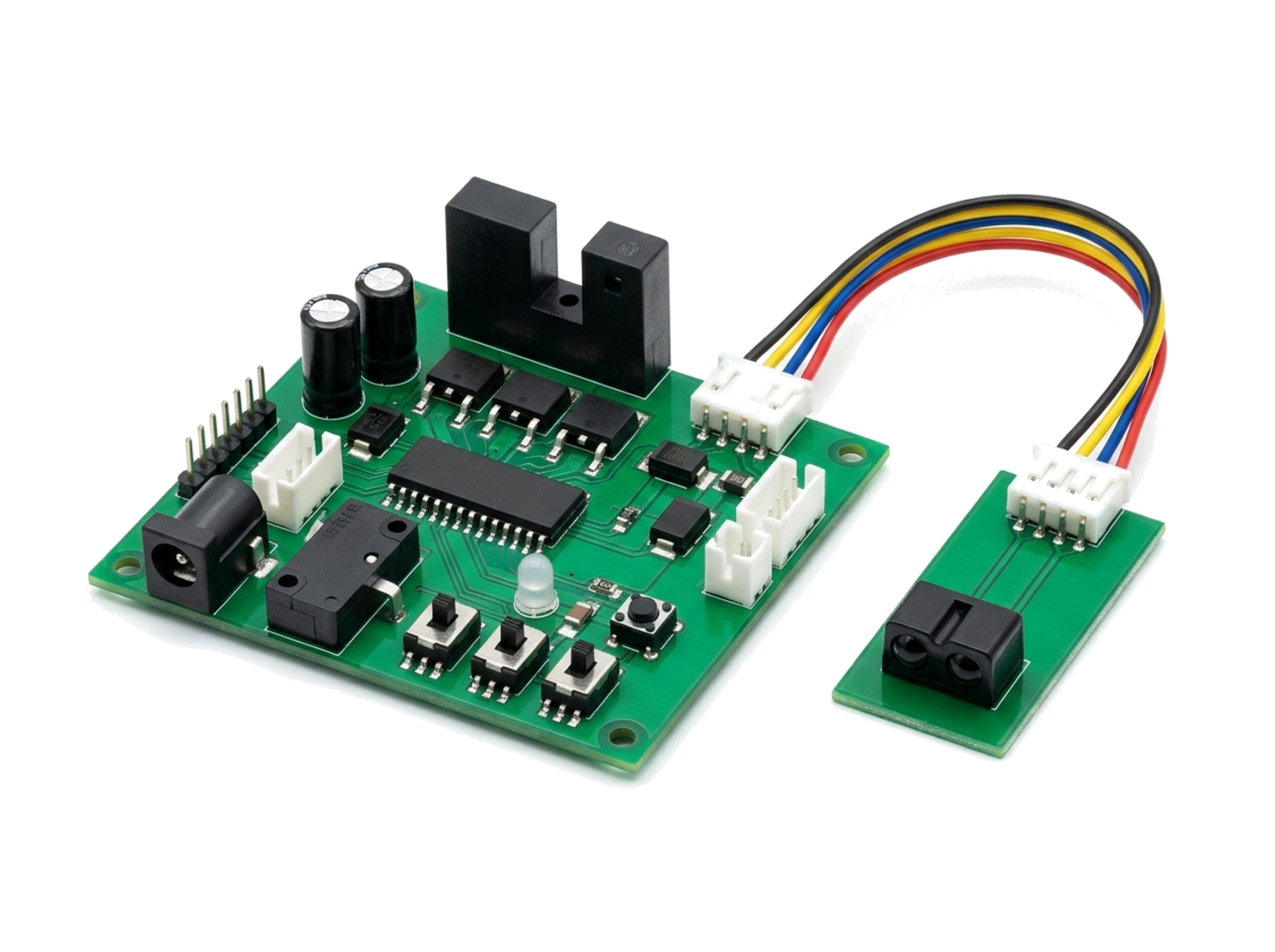
Single-Sided & Two-Board Split Fit
Single-Sided & Two-Board Split Fit
Compact roll-towel modules frequently place outward configuration switches or status LEDs opposite inward optical encoders or mechanical tear triggers. Because our baseline covers single-sided component mounting per board, we check Top and Bottom Gerbers alongside full BOM footprints up front to confirm single-face fit or clean harness-connected two-board splits before quoting.
Leaded Packages vs. X-Ray-Gated Drivers
Leaded Packages vs. X-Ray-Gated Drivers
Typical commercial dispenser boards rely on leaded microcontrollers, discrete MOSFETs or relays, and through-hole optical interrupters suited to standard mixed assembly and AOI. If a design uses hidden-joint BGA or WCSP packages—or leadless bottom-pad QFN or WSON motor drivers requiring X-ray thermal-pad void inspection—identify them early, as X-ray inspection and heavy-copper stages sit outside scope.
Customer-Owned Firmware & Cassette Mechanics
Customer-Owned Firmware & Cassette Mechanics
Sheet-length overshoot compensation, irregular tear recovery, startup inrush blanking and stub-roll transfer timing depend directly on each cassette’s rollers, reduction gearbox and tear bar. We flash your approved production firmware via on-board programming headers and execute agreed dry-bench checks, while firmware development, mechanical cassette engineering and paper-roll endurance qualification stay with your team.
Early Review for Universal & Retrofit Modules
Early Review for Universal & Retrofit Modules
Bring a draft BOM, schematic, preliminary Gerbers or reference cassette board while your hardware is still settling. Early review flags opposite-face switches, connector seating heights, coating keep-out zones and package alternates before tooling commits. Final production files, approved alternates, conformal-coating drawings and bench-test acceptance criteria are locked before material release.
Compare Roll-Towel Dispenser Board Architectures.
Commercial automatic roll paper-towel dispensers use distinct board layouts, sensing splits and power configurations depending on cabinet depth and module format. Compare four in-scope build-to-print PCBA architectures before locking your production files.
Compact Roll-Towel Control PCBA
Main Control + Downward Sensor PCBAs
Battery & External DC-Adapter Variants
Electronic Retrofit Cassette Mainboards
Four Control Areas Governing Dispenser PCBA Quality.
Automatic commercial roll-towel boards use familiar low-voltage building blocks, yet field reliability hinges on four coupled board-level domains where optical geometry, motor transients, cabinet interfaces and humidity masking meet assembly discipline.
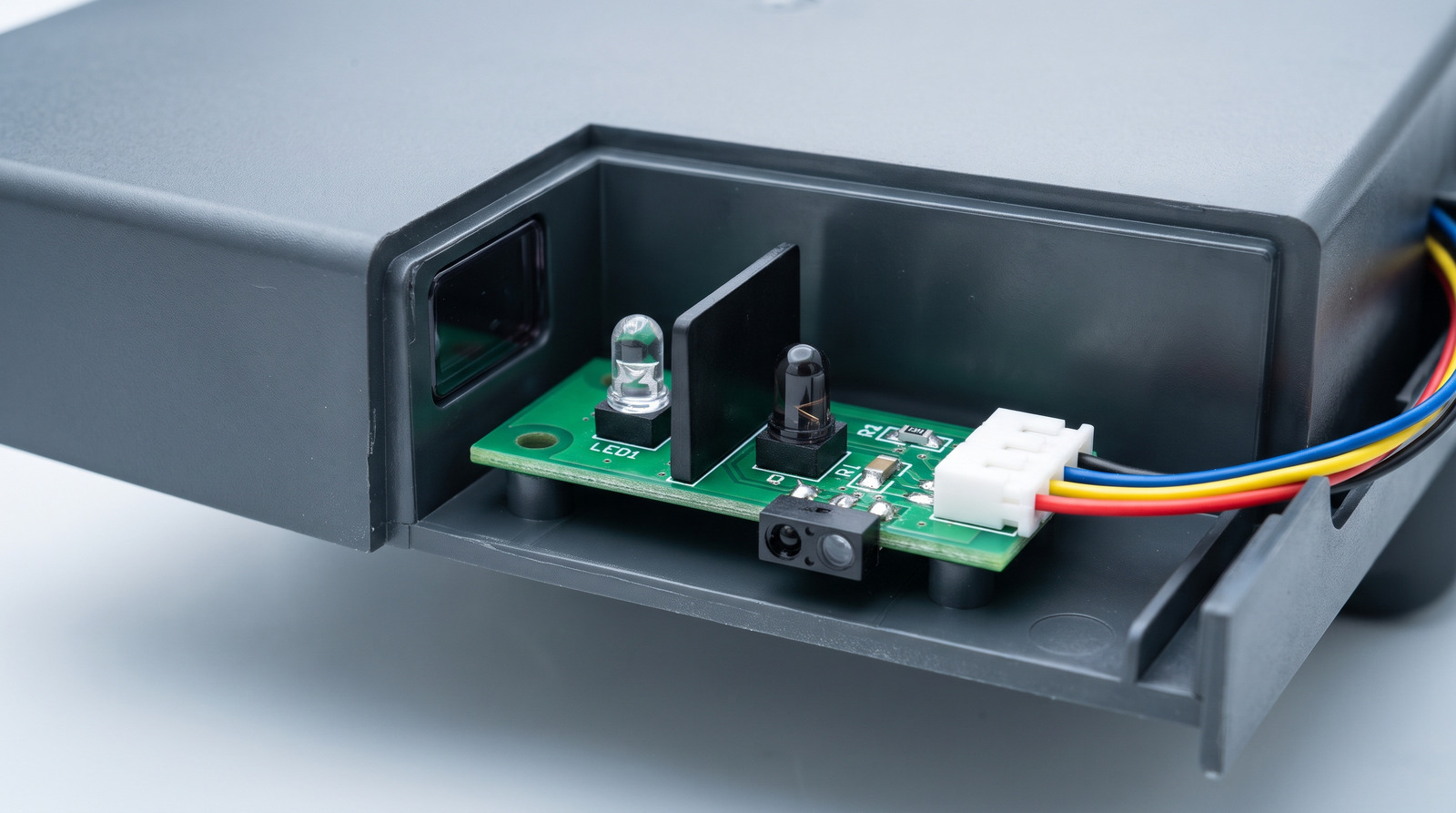
Dual Optical Sensing & Window Alignment
Commercial dispensers routinely support both hand-wave on-demand actuation and hanging-sheet auto-supply on the same hardware platform, combining active modulated IR proximity sensing, chute-edge paper-presence detectors and optional ambient-light wake circuits. Because optical sensors experience current-transfer drift and window crosstalk from nearby housing walls, paper lint or moisture droplets, we hold emitter/detector lead height, optical-axis alignment, light-barrier seating and clean optical apertures in assembly—while housing-level optical crosstalk testing stays your system validation.
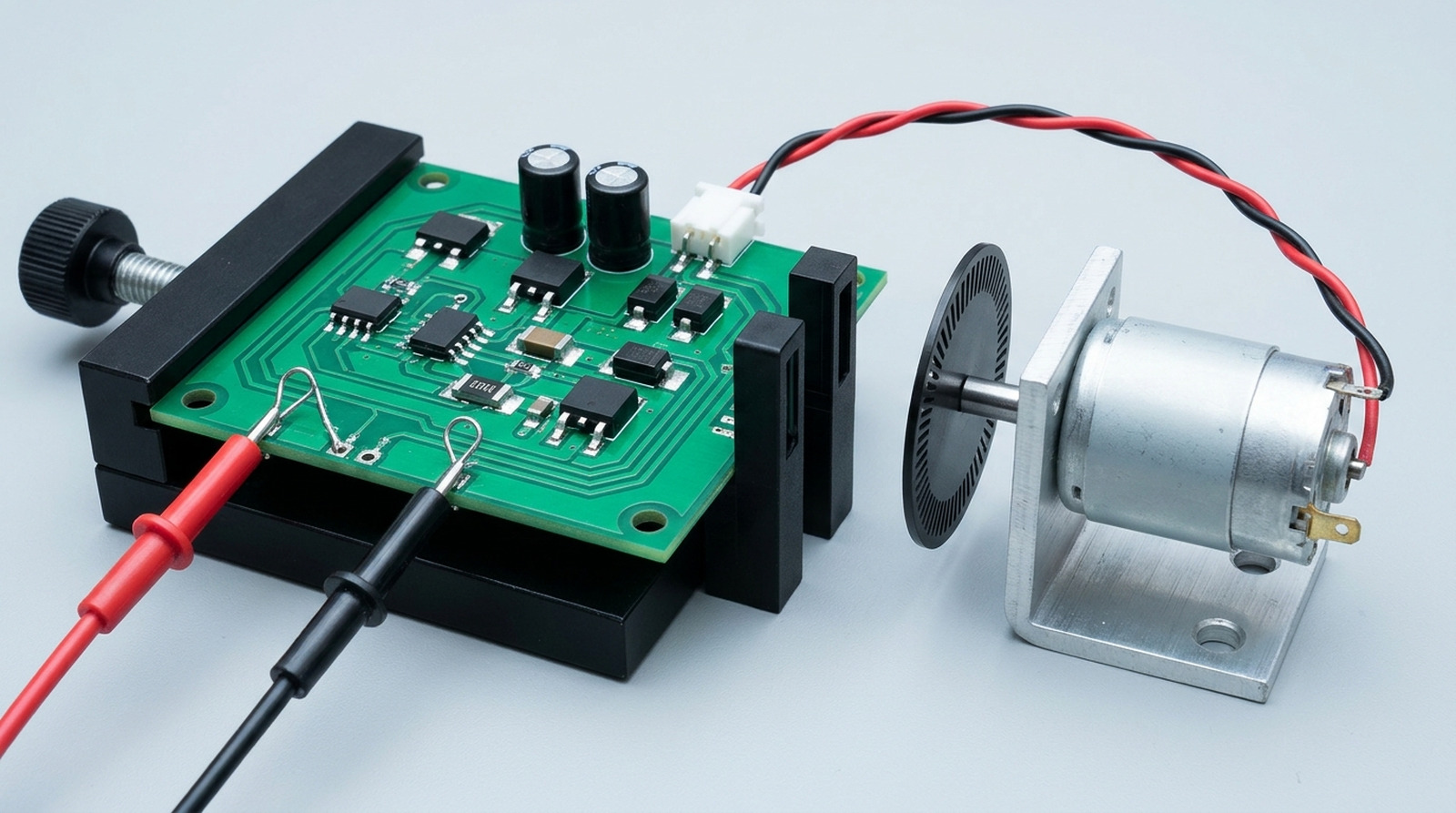
Roll-Feed Motor Drive, Metering & Stall Cutoff
Advancing a heavy commercial hard-wound roll through spring-biased feed rollers requires high transient torque and consistent sheet-length stopping. Supported customer drive patterns span low-side MOSFETs with flyback diodes, discrete H-bridges with TVS clamps, relays with low-side current shunts and leaded integrated current-mirror H-bridge drivers, paired with slotted optical shaft encoders for closed-loop metering and jam protection via encoder pulse-loss watchdogs and startup-inrush-blanked stall cutoff. We verify solder-joint quality, leaded package fit and dummy-load stall cutoff behavior.
Switches, Interlocks, Stub-Roll & HMI Fit
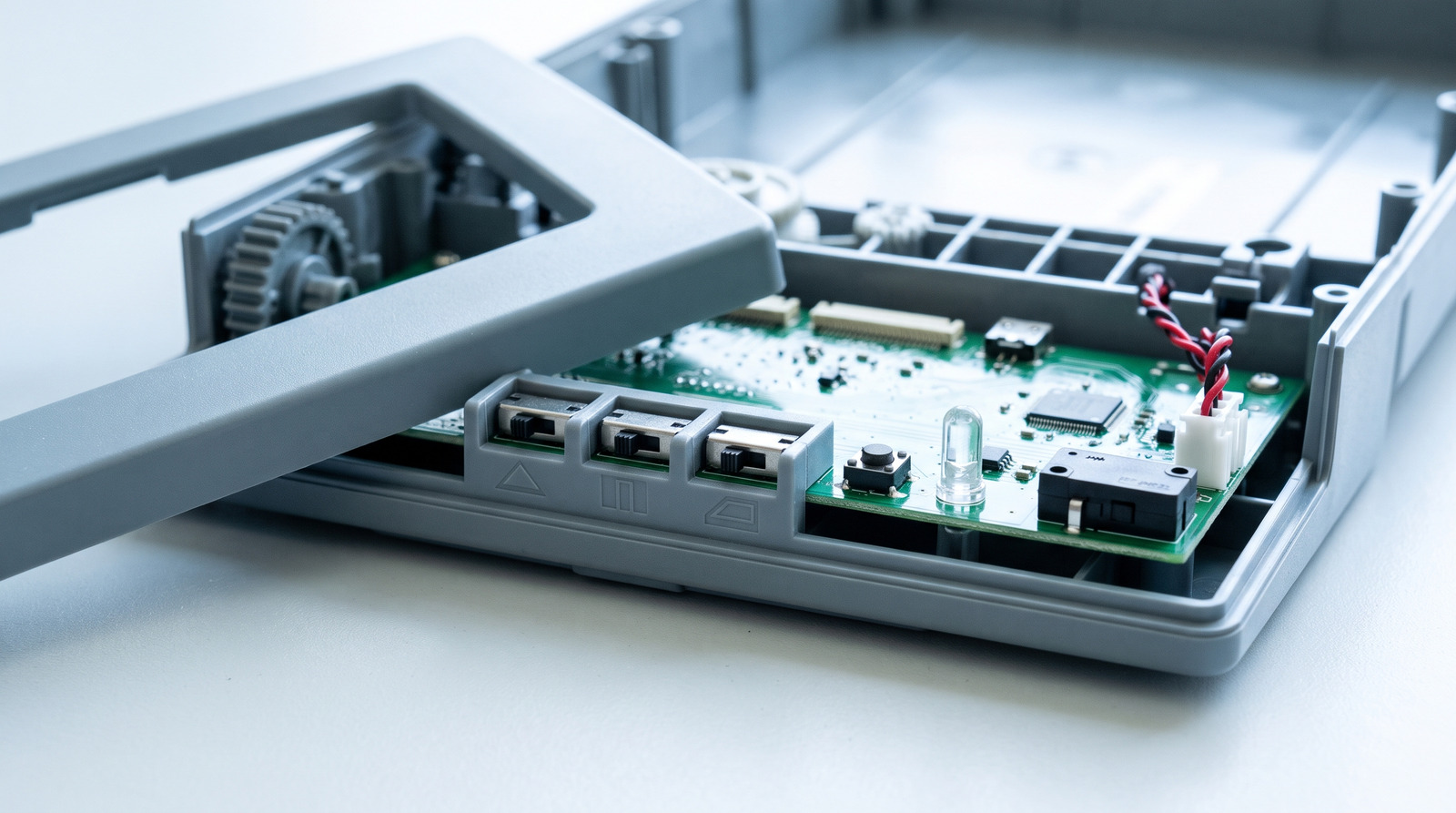
Inside locked washroom cabinets, control boards interface directly with multi-position slide switches, tactile pushbuttons or trimpots setting sheet length, dispense delay, paper-saver shortening, operating mode and sensor sensitivity, alongside manual-advance buttons, multi-color fault LEDs, cover-open safety interlocks or door sensors and stub-roll switches. Because switch actuators, LEDs, light pipes and lever microswitches must align tightly with bezel cutouts and internal levers, assembly drawings govern seating height, orientation and mechanical registration before cassette integration.
Dual Power Switching & Coating Keep-Outs
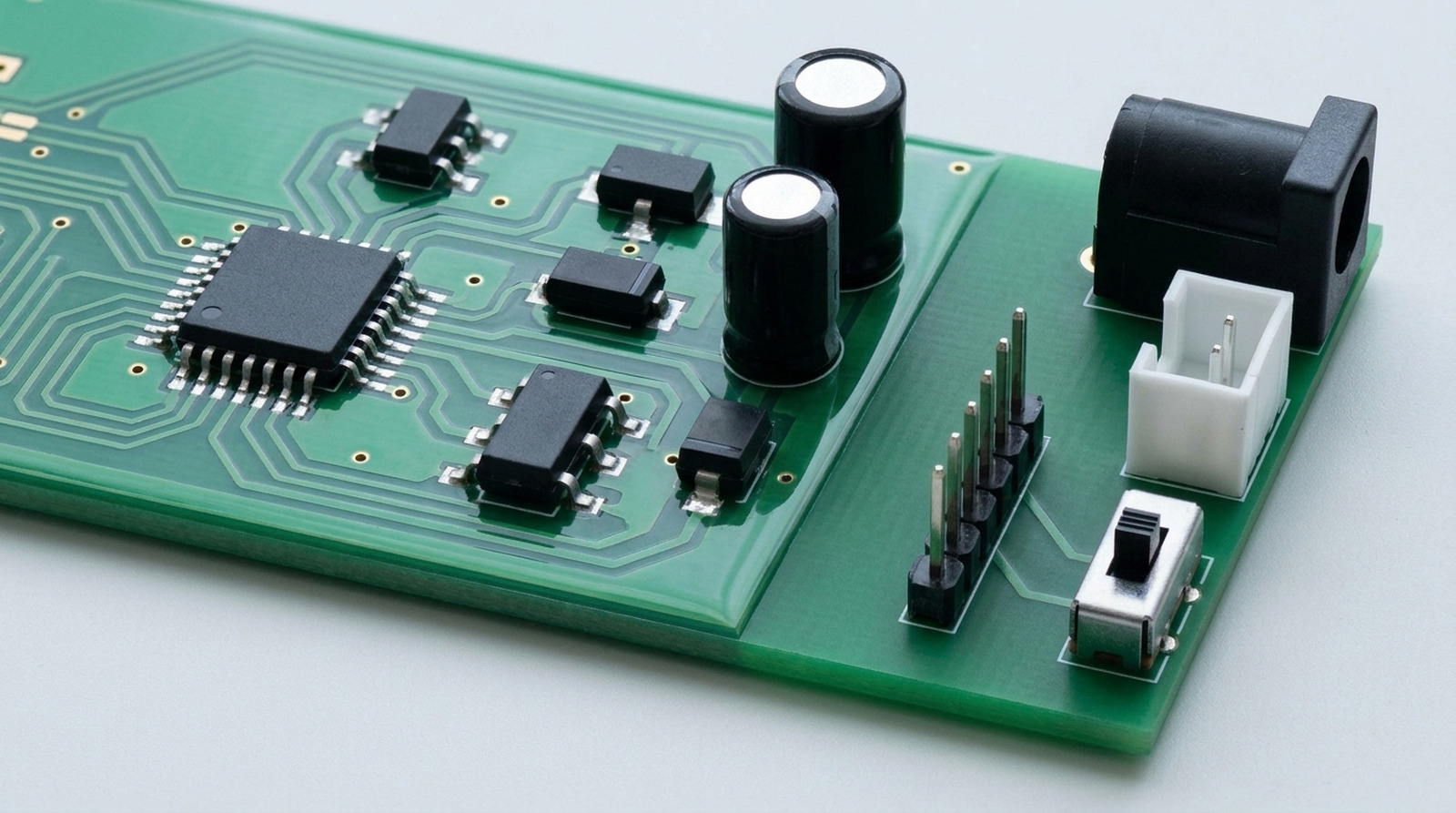
Commercial units run on multi-cell alkaline D-cell packs or optional external low-voltage DC adapters through a battery-disconnecting jack—keeping mains AC outside the module—with bulk capacitance buffering startup inrush and gated transistors maintaining low standby drain. For humid restrooms, conformal coating follows your specified chemistry and keep-out drawing, checking flux compatibility and masking open-bottom headers, unsealed switches, trimpots, battery contacts and optical apertures against capillary wicking; coating is distinct from enclosure washdown ratings and out-of-scope potting.
Where Dispenser Control Boards Are Built.
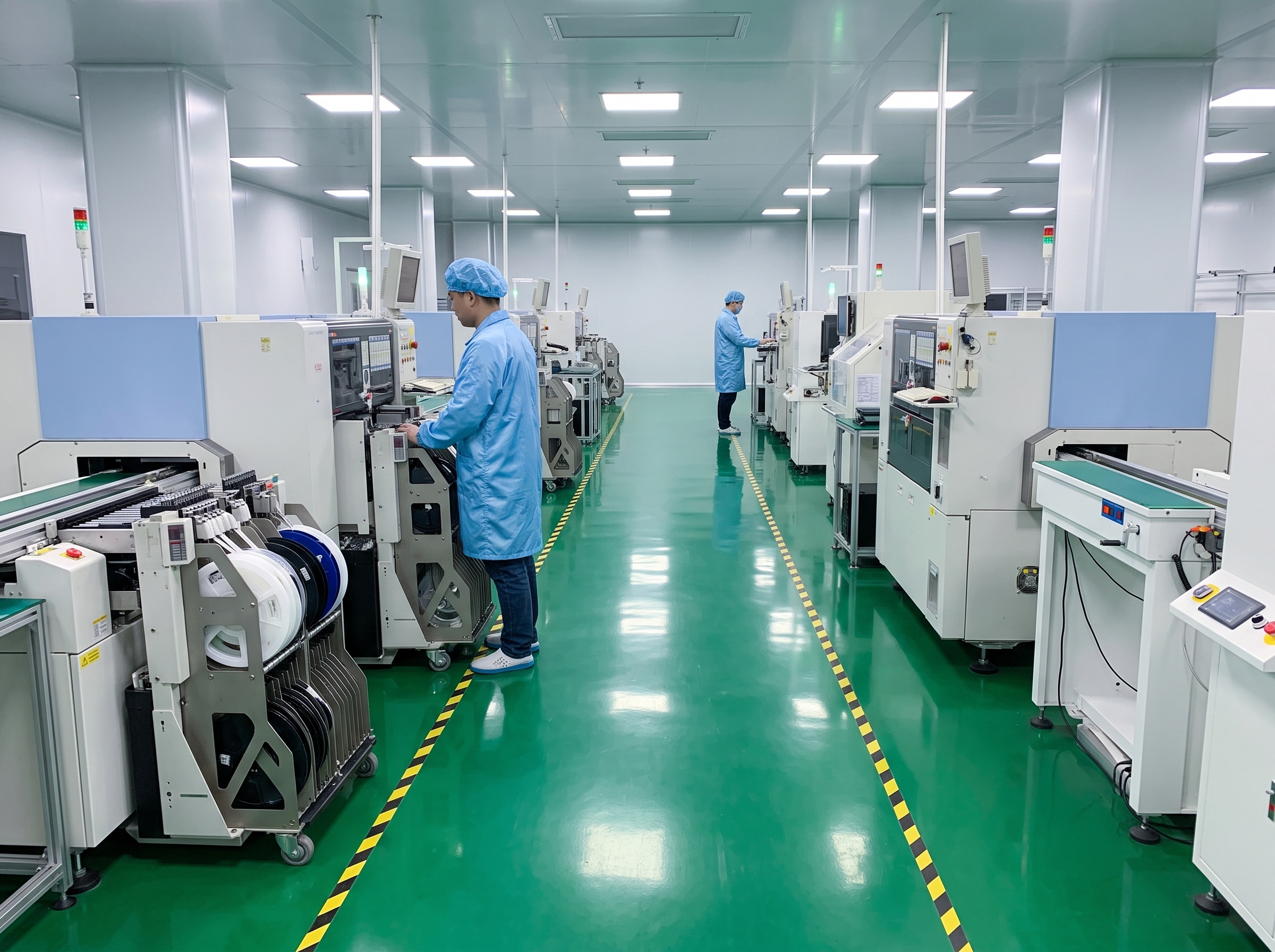
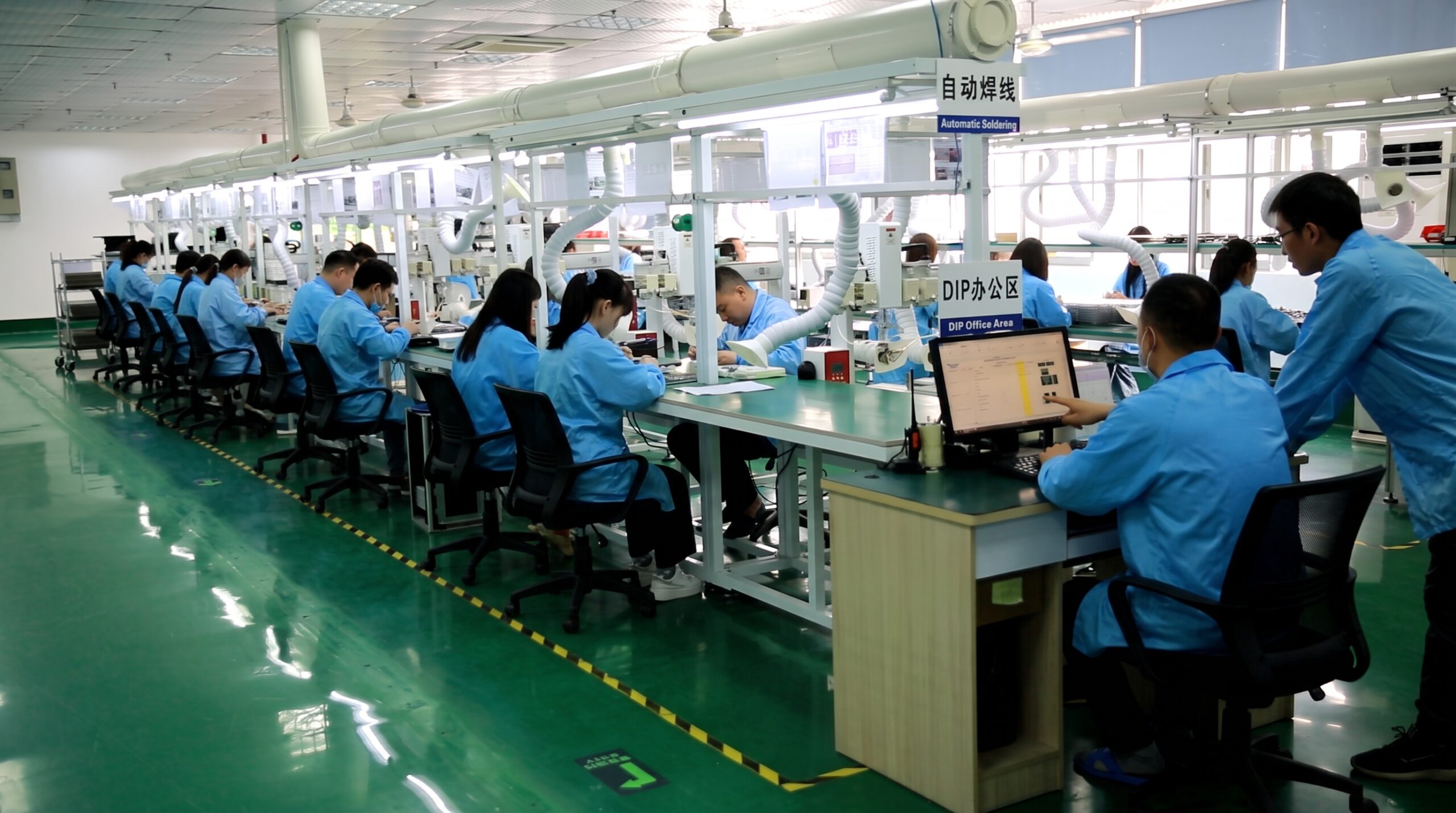
Once Gerbers, BOM footprints and coating keep-out drawings are aligned, the assembly floor brings bare boards and components together. These production stations show the setting for single-sided SMT placement, through-hole seating, lead-free SMT reflow with masked coating, and first-article plus dry-bench checks governed by your released revision.
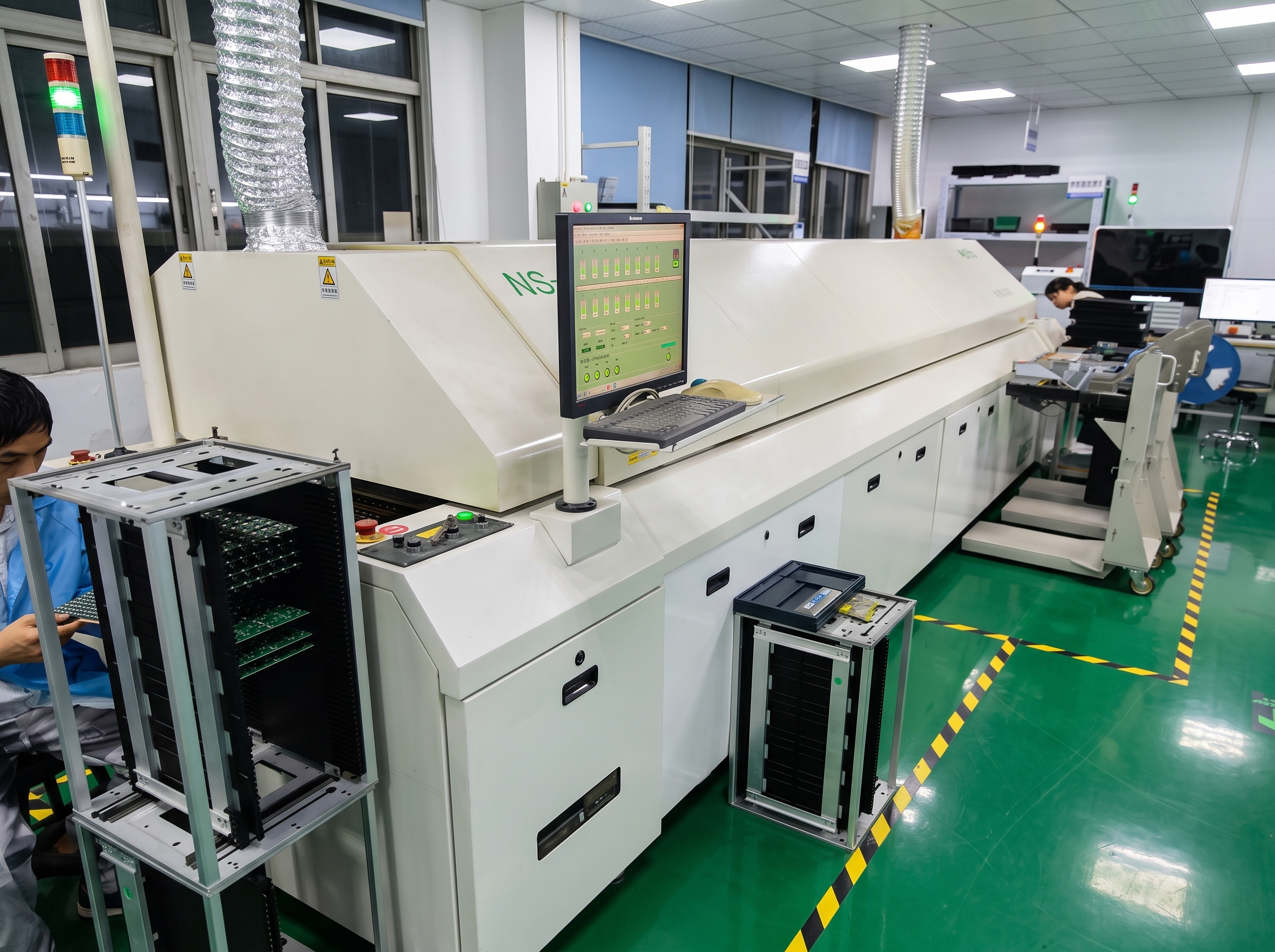
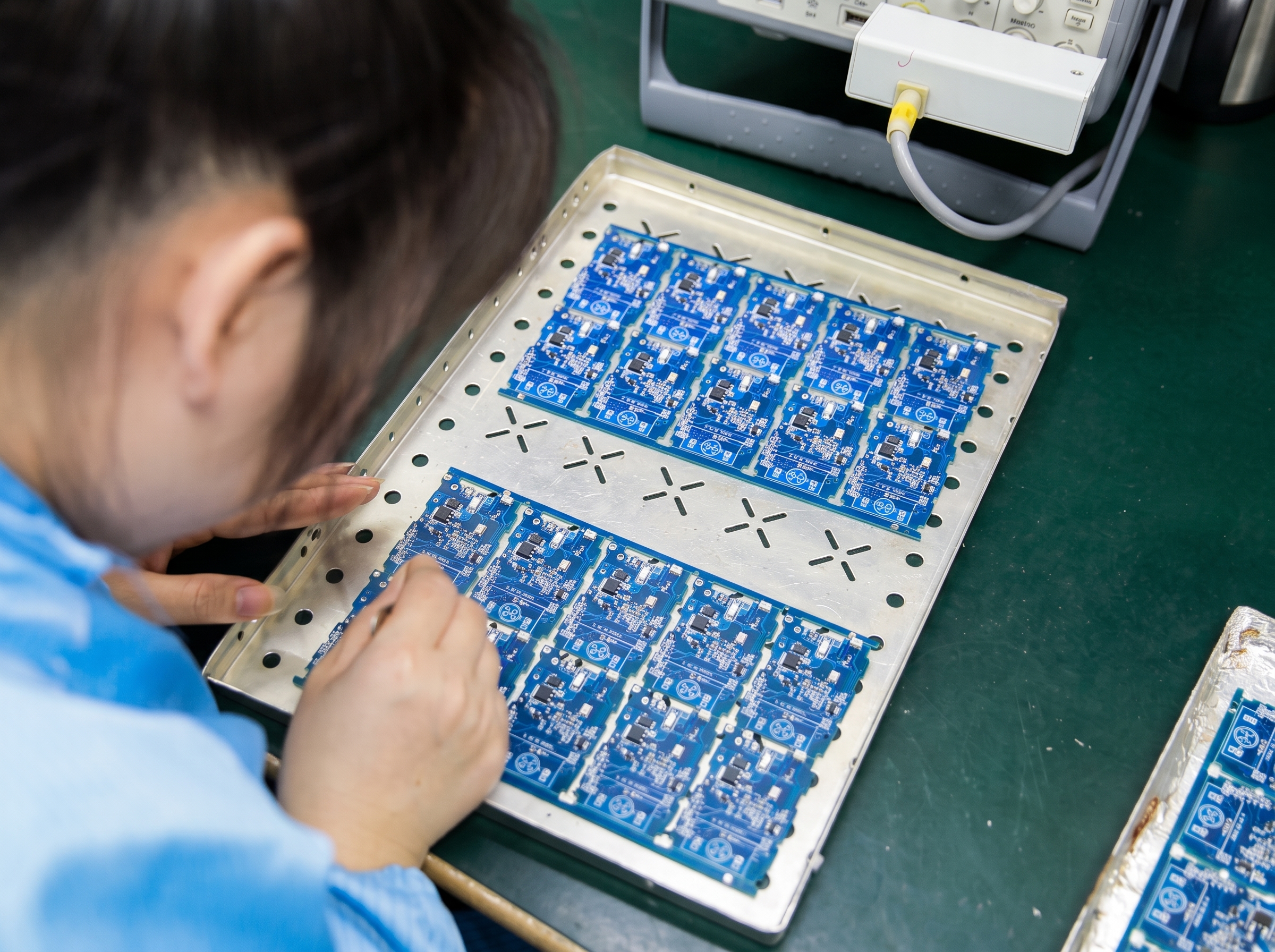
Single-Sided SMT Placement
Leaded microcontrollers, discrete MOSFETs, current-sense resistors, TVS clamps and power-gating transistors populate one component face of FR-4 main control and split optical sensor boards against verified placement coordinates and variant DNP rules.
Through-Hole & Mechanical Seating
Following SMT reflow, mixed assemblies receive slotted optical encoders, IR emitters and phototransistors, multi-position slide switches, interlock microswitches, switched DC jacks, bulk electrolytics and wire-to-board headers held to drawing orientation and seating height.
Lead-Free Reflow & Masked Coating
Populated single-face SMT boards pass through lead-free reflow matched to substrate and component thermal needs. Where conformal coating is specified, flux compatibility is verified and customer-defined coating is masked cleanly around optical apertures, switches and wire headers.
First-Article, AOI & Dry-Bench FCT
The initial build is reviewed against the released BOM and placement reference before continuing the run, combining AOI, approved firmware loading and agreed dry-bench checks before dispatch to cassette assembly.
Control PCBAs Across Commercial Roll-Towel Dispensers.
Different commercial washroom formats shape board geometry, power paths and optical placement. These in-scope roll-towel dispenser builds show how board-level assembly supports complete cassette and dispenser programs.

Wall-Mount Roll Dispensers
Compact Single-Face · IR · Motor
Wall-Mount Roll Dispensers
Single-face mounted control PCBAs for commercial wall-mount roll-towel dispensers, uniting IR hand sensing, encoder sheet metering, slide switches and low-drain battery power with masked coating.

Recessed Cabinet Modules
Two-Board Split · Downward Sensor
Recessed Cabinet Modules
Main control and harness-linked downward-sensor PCBAs for swappable modules inside recessed stainless cabinets, supporting dual battery or DC-adapter switching, cover interlocks and stub-roll inputs.
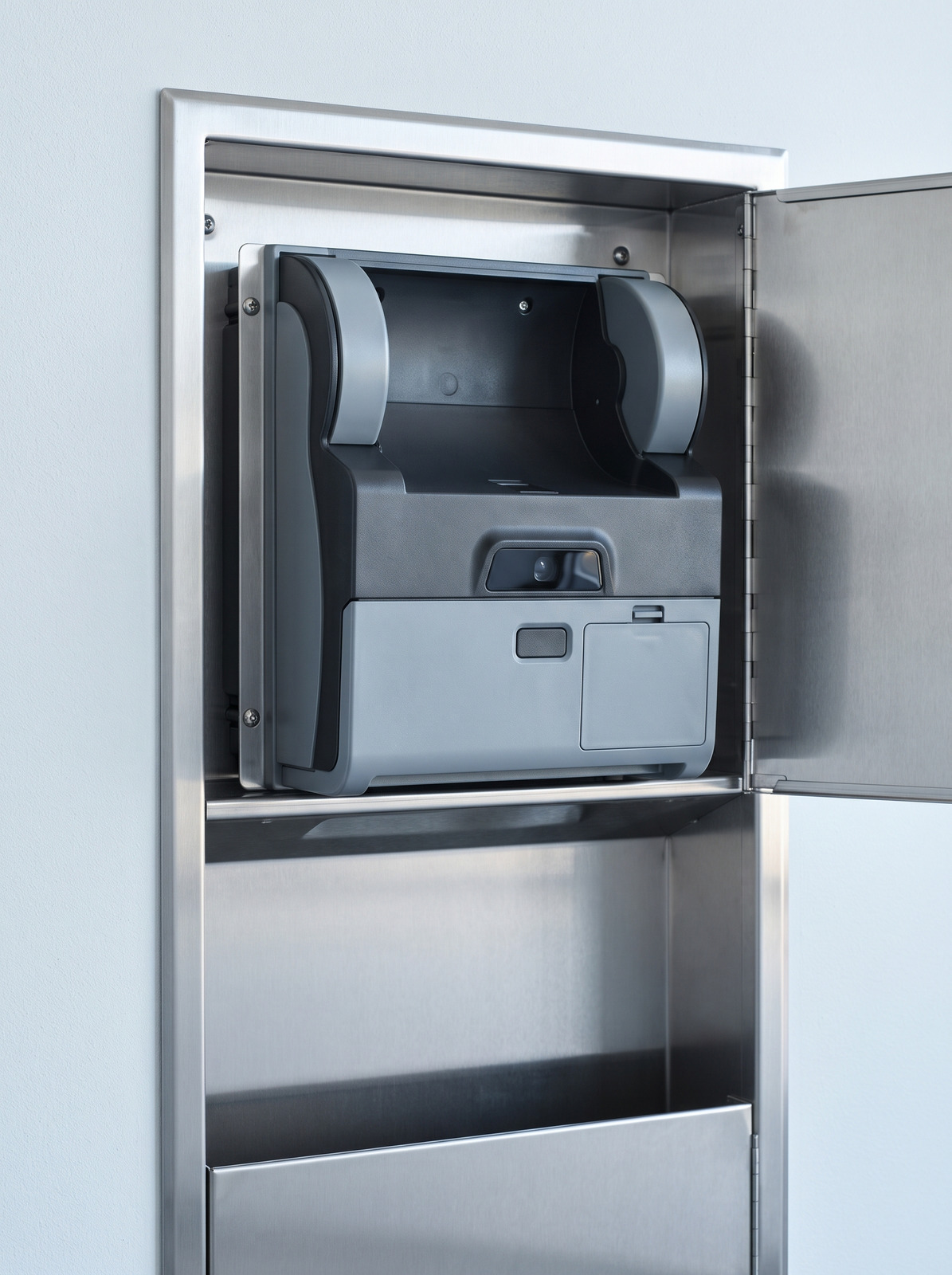
Universal Retrofit Cassettes
Retrofit Module · Dual-Power
Universal Retrofit Cassettes
Build-to-print main control and optical boards for field-swappable retrofit cassettes upgrading manual mechanisms, combining through-hole switch seating, approved firmware loading and dummy-load stall checks.
From Board Files to Ready Cassette PCBAs.
A reliable dispenser-board build settles mounting faces, package fit, coating keep-outs and dry-bench checks before component purchasing begins, then carries the locked revision consistently into repeat cassette runs.
Share Files or a Reference Module
Send released Gerbers, BOM and firmware, or start early with a draft BOM, schematic or reference cassette sample plus your intended power variant and project stage.
Confirm Mounting, Packages & Keep-Outs
Review Top and Bottom Gerbers and full BOM footprints for single-face or split-board fit, verify no X-ray-gated packages sit in scope, and lock alternates, coating drawings and dry-bench FCT limits.
Assemble, Load Firmware & Coat
Kit bare boards and approved parts, complete single-face SMT and through-hole assembly with first-article review, flash customer-approved firmware via programming headers and apply masked conformal coating where specified.
Verify on Dry Bench & Hand Over
Complete AOI and agreed dry-bench electrical and functional checks—covering power switchover, simulated optical triggers, encoder counting and dummy-load stall cutoff—before dispatch into your cassette assembly and system qualification.
Common Questions.
Direct answers on mounting-face constraints, dry-bench testing boundaries, conformal-coating masking, firmware ownership and module-level cooperation for automatic paper-towel dispenser boards.
Can you assemble an automatic towel-dispenser PCB with components on both faces?
No—our confirmed process covers single-sided component mounting per board. Because roll-towel modules often place outward buttons or LEDs opposite inward optical encoders or tear triggers, one SMT reflow side alone does not confirm fit if through-hole parts sit on the reverse face. Send both Top and Bottom Gerbers and the full BOM package list; harness-connected two-board splits keep both the main control board and sensor sub-board cleanly single-face mounted.
What dry-bench functional checks can you run without paper rolls or a dispenser housing?
Agreed dry-bench FCT can check power-rail regulation, battery-to-external DC-adapter switchover, quiescent standby current, simulated hand-wave and chute-edge optical inputs, simulated encoder pulse counting, configuration-switch and cover-interlock states, LED fault codes and dummy-load motor drive with stall-cutoff tripping. Paper-roll friction, tear-bar cutting, stub-roll transfer mechanics, housing optical-window crosstalk and washroom AC-surge immunity remain module- and system-level qualifications on your side.
How do you protect optical sensors, slide switches and connectors during conformal coating?
Conformal coating follows your specified chemistry and keep-out drawing, with pre-coating flux compatibility verified before application. Low-viscosity coatings can wick by capillary action into open-bottom headers, unsealed slide switches, trimpots, battery contacts and optical apertures unless masked per your keep-out drawing. Coating mitigates humid restroom exposure on defined PCB zones; it does not create an enclosure washdown rating, and potting sits outside scope.
Do you develop anti-jam dispensing firmware or supply the mechanical roller cassette?
No. Sheet-length overshoot compensation, irregular-tear recovery, startup inrush blanking thresholds and stub-roll transfer timing are tightly coupled to each dispenser’s rollers, gearbox and tear bar, so firmware engineering and mechanical cassette hardware stay customer-owned. We load your approved production firmware image via on-board programming headers, verify the released firmware revision at assembly and support bounded DFM or alternate-component reviews alongside populated board production.
Do you work with universal dispenser OEMs and cassette makers, or supply bare-board field spares?
Commercial washroom service normally swaps complete electromechanical drive modules rather than individual field-repair PCBs, and captive refill-lease programs typically control hardware and module supply internally. Our build-to-print PCBA service is built for non-proprietary universal dispenser OEMs, architectural washroom-module integrators and hardware factories assembling complete roll-towel cassettes that want an assembly partner for populated main control and split optical-sensor boards.
Manufacturing Experience. Direct Cooperation.
Our factory’s experience includes long-term supplier relationships with Fortune Global 500 customers and demanding supplier audits. We apply that manufacturing discipline to sample builds, small batches and repeat orders for commercial dispenser control and sensor boards, aligning quality expectations around the electronics your cassette requires.
Long-term supplier to Fortune Global 500 customers.
Sustained enterprise supply is part of our manufacturing background. We bring that operational discipline to recurring dispenser-module PCBA coordination, keeping material responsibilities, board revisions and build details clearly agreed.
Passed demanding supplier audits and customer reviews.
Our factory has passed demanding supplier audits. That experience supports straightforward discussion of the BOM controls, coating keep-outs, revision checks and acceptance criteria relevant to your control boards.
First-article, الهيئة العربية للتصنيع, and board checks.
First-article review, AOI, approved firmware revision verification and agreed dry-bench electrical checks examine distinct aspects of each populated board before it moves into mechanical cassette integration.
Long-term relationships.
Global brands.



Start with
what you have.
Tell us about your automatic roll paper-towel dispenser board project. Top and Bottom Gerbers, a draft or released BOM, a schematic or a reference cassette sample is enough to start a practical fit review; share your layout, power variant, coating needs and the open questions you want to resolve.
Starting a new dispenser board?
Share early Gerbers, a draft BOM or a sample module to confirm single-face or split-board fit, coating keep-outs and dry-bench checks before production release.
Transferring an active module PCBA?
Share the released revision, full BOM package list, firmware image and any switch, optical or power-variant updates so the next run stays aligned.
 Arabic
 English
 German
 French
 Spanish
 Portuguese (Portugal)
 Korean
 Indonesian
 Chinese
 Russian
 Italian
 Dutch
 Polish
 Hindi
 Thai
 Portuguese (Brazil)