

Water Softener & Backwash
Valve Controller PCBA.
Build-to-print PCB assembly for point-of-entry water softener control valves, locating and flow-meter sub-boards, and automatic backwash prefilter timers. Align single-face board fit, customer firmware loading, conformal coating keep-outs and agreed bench checks.
Built for Customer-Owned
Valve & Prefilter Electronics.
Point-of-entry water treatment valves depend on reliable motor drive, position homing, flow counting and timekeeping boards built to match proprietary mechanical hardware. We provide SMT, through-hole and mixed PCB assembly on FR-4 and aluminum-core boards with single-sided component mounting, paired with lead-free reflow, first-article review, AOI, customer-approved firmware loading, masked conformal coating where specified and agreed dry-bench electrical checks.
This build-to-print scope serves valve OEMs, automatic backwash prefilter manufacturers and controller teams that own their board layouts and firmware—particularly split main and UI boards, sensor sub-boards and single-actuator prefilter timers. Single-sided component mounting does not define copper-layer count, and one SMT reflow face does not confirm fit if through-hole parts sit on the opposite face; both Top and Bottom Gerbers and the full BOM package list are reviewed before quoting. Start from released files, a draft BOM or a sample board; complete valve powerheads, plumbing or salt-tank hardware, potting, full firmware development and system-level NSF/ANSI 44 certification remain separate scopes.
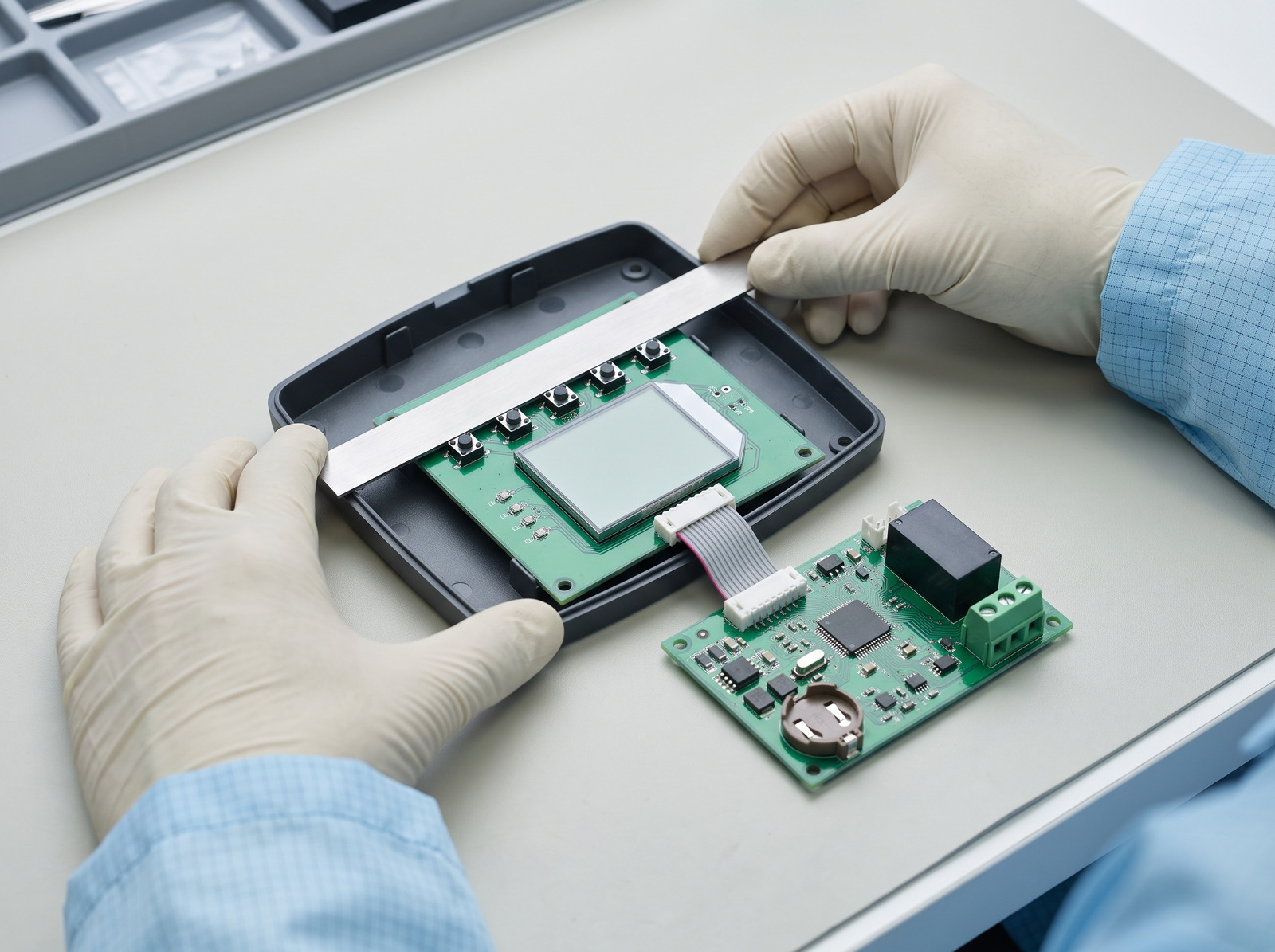
Match Your Valve Board Architecture to the Build.
Whole-house softener valves and automatic prefilters split sharply in mounting geometry, firmware ownership and mechanical integration. Start from the situation that matches your electronics package.
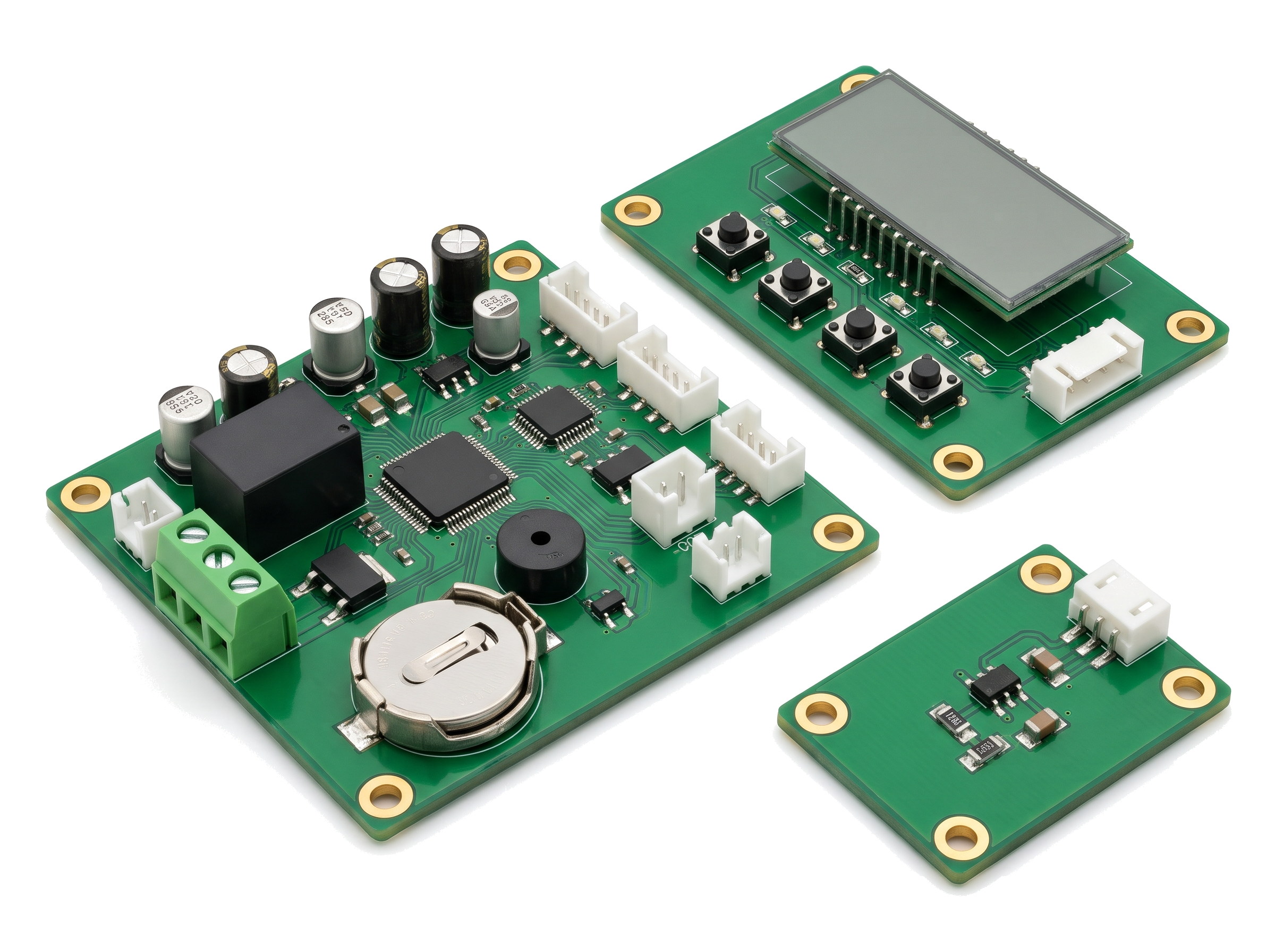
Split-Board Valve Platforms & Sensor Sub-Boards
Split-Board Valve Platforms & Sensor Sub-Boards
Separating the main control board from the display keypad and optical or Hall-effect locating and flow sub-boards avoids front-UI versus rear-connector conflicts. We assemble customer-owned split control boards, display boards and single-face sensor PCBs with keyed harness headers and dry-contact relays, verifying both Top and Bottom Gerbers and BOM packages before quoting.
Automatic Backwash Prefilter Timer Boards
Automatic Backwash Prefilter Timer Boards
Automatic self-cleaning prefilters typically drive a single flush actuator on a programmable interval or differential-pressure input, avoiding complex multi-cycle softener indexing. We assemble customer-owned timer, actuator-drive and primary-battery fail-safe closure boards once single-face component layout, moisture keep-out zones and non-potted construction are confirmed against the released files.
Shared-Hardware Firmware Variants & Repeat Runs
Shared-Hardware Firmware Variants & Repeat Runs
One valve control board often supports downflow softeners, upflow softeners and media-filter backwash valves through selectable valve-model firmware or variant population options. We load your released binary image with checksum verification, align populated and Do Not Populate (DNP) differences across SKUs, and review any part, relay or connector changes before repeating or transferring a run.
Early Fit Review Before Layout Freeze
Early Fit Review Before Layout Freeze
If you are converting a compact dual-face valve controller into a single-face or split layout or preparing a new prefilter board, share a draft BOM, schematic, preliminary Gerbers or a reference sample early. Review catches opposite-face through-hole conflicts, hidden-joint packages outside our non-X-ray inspection scope and coating keep-out clearances before production files and checks are locked.
Compare Valve & Prefilter Board Fit.
Point-of-entry valve platforms split control logic, front displays, position or flow sensors and prefilter timers into distinct build-to-print boards. Use these four profiles to align mounting geometry, coating masking and review gates before quoting.
Valve Logic & Motor-Drive Mainboard
Decoupled Keypad & Display Panel PCB
Optical/Hall Position & Turbine Flow Sub-Boards
Automatic Backwash Prefilter Timer Boards
Four Engineering Controls for Valve Controller Builds.
Whole-house valve boards sit inside damp mechanical housings and drive geared pistons, cams or ceramic discs on metered schedules. Consistent builds depend on aligning drive and homing interfaces, flow-pulse conditioning, outage-resilient power circuits and conformal coating keep-outs.
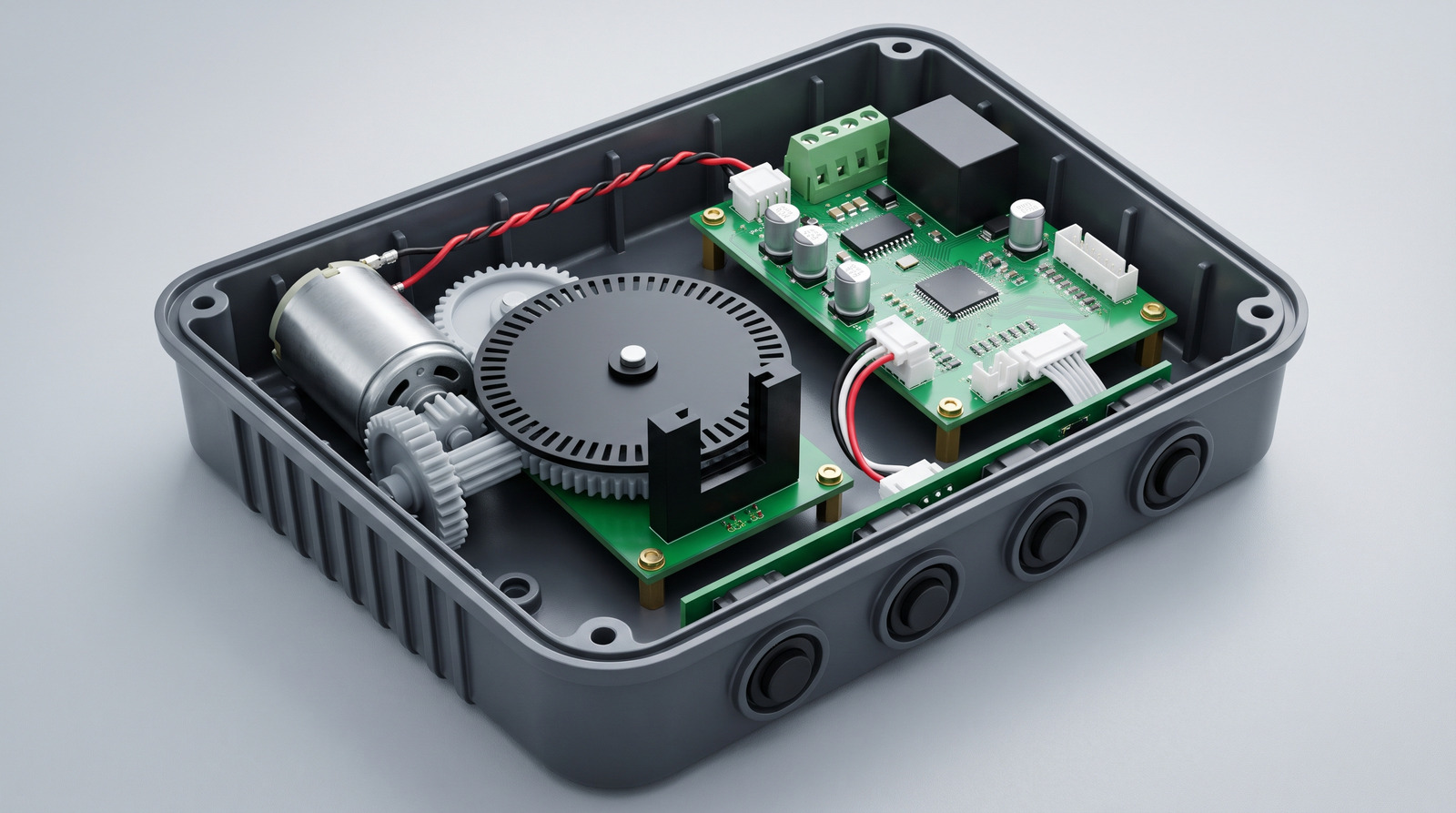
Valve-Drive, Homing & Mechanical Alignment
Valve controllers index cycles through reversible DC gear motors with reflective optical encoders and current-sense stall homing, low-voltage AC motors with slotted camshaft interrupters, cam microswitches or separate ceramic-disc locating boards. Current-sense stall homing relies on customer-tuned startup inrush blanking and load thresholds. During assembly, we keep optical paths free of flux residue or oils, verify keyed harness headers, and hold seating height and alignment on tactile switches, LEDs and display headers mating to molded valve covers.
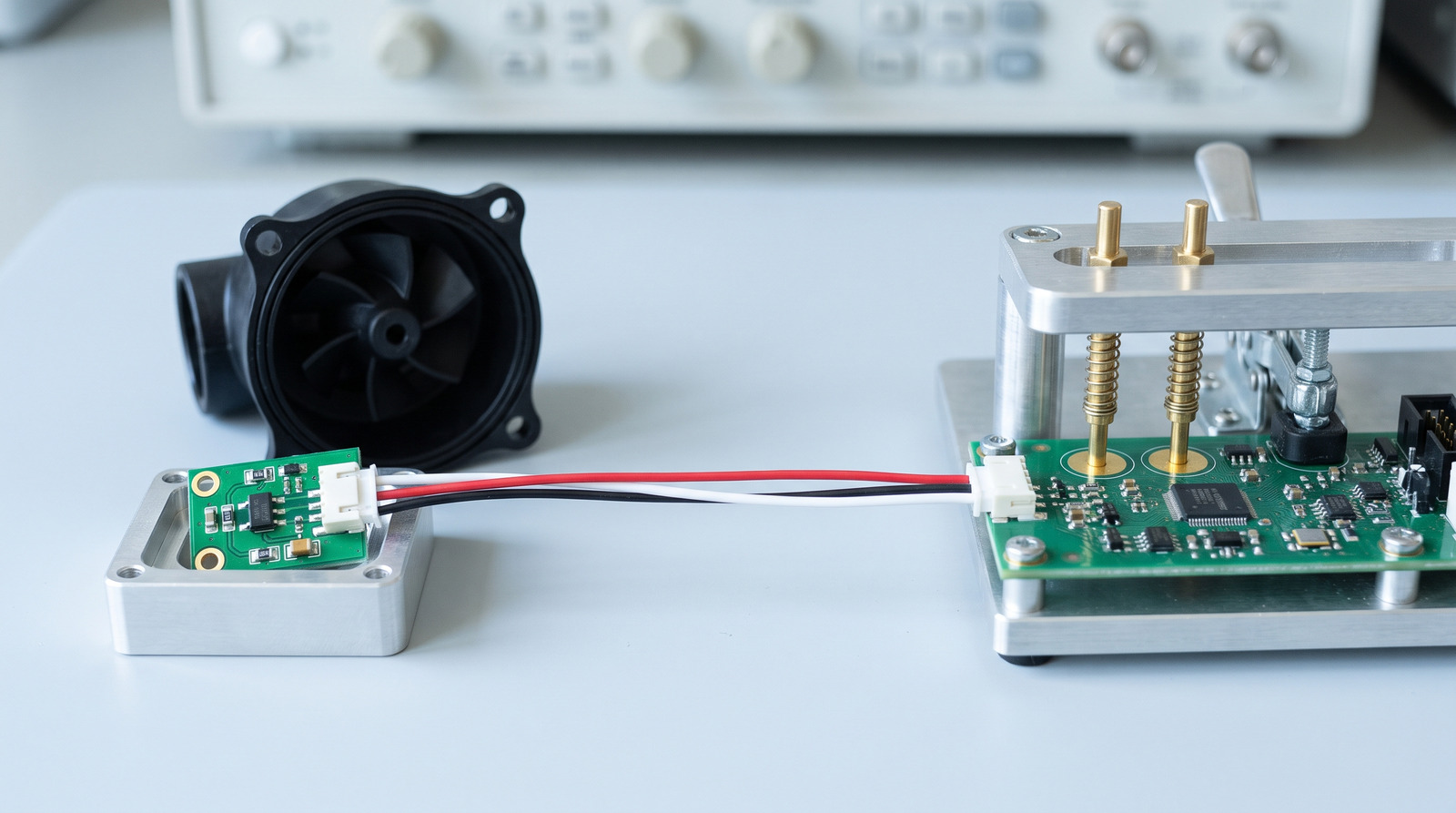
Flow Sensing & Metered Regeneration (DIR)
Public U.S. federal summaries of NSF/ANSI 44 (Section 7) and WQA S-100 voluntary residential softener efficiency ratings exclude fixed time clocks in favor of demand-initiated regeneration (DIR), citing system benchmarks of at least 3,350 grains of hardness exchange per pound of salt and at most 5.0 gallons of water per 1,000 grains removed. We assemble open-drain Hall-effect flow interfaces with specified pull-ups and decoupling, and run simulated dry-bench pulse checks; mechanical impeller calibration and system-level NSF/ANSI 44 certification remain OEM-owned.
Power Isolation & Outage Resilience
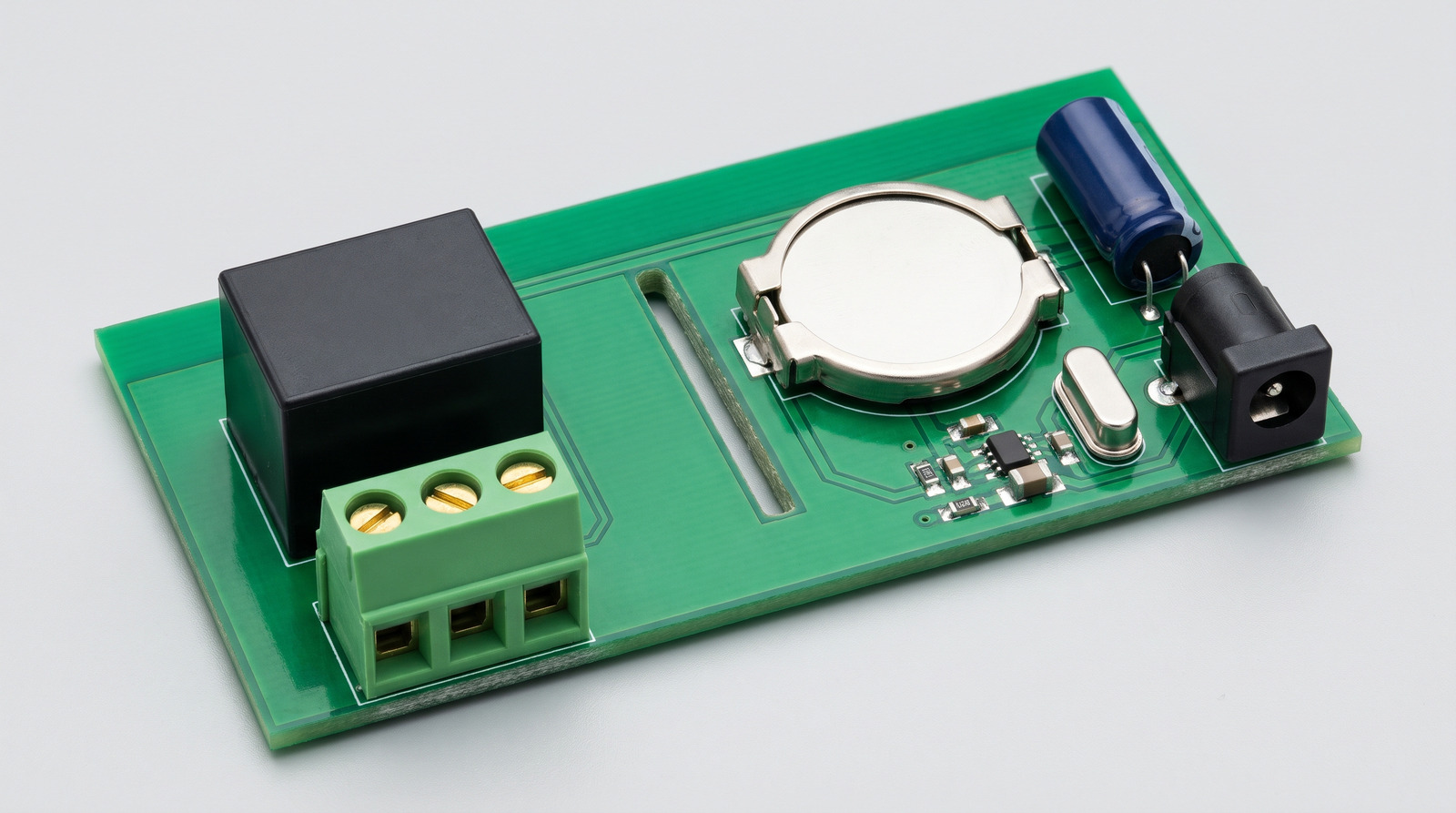
Many residential valve boards keep mains voltage off the logic PCB via an external low-voltage wall adapter while using onboard dry-contact relays (COM, NC, NO) to isolate external pumps or bypass solenoids. Softeners pair nonvolatile parameter memory with coin-cell or supercapacitor real-time-clock backup and firmware mains-recovery checks, whereas some automatic backwash prefilters add an active primary battery (and where designed, a pre-flush self-test) for fail-safe closure. We verify relay, holder and supercapacitor orientation, soldering and agreed switchover checks.
Salt-Mist Conformal Coating Keep-Outs
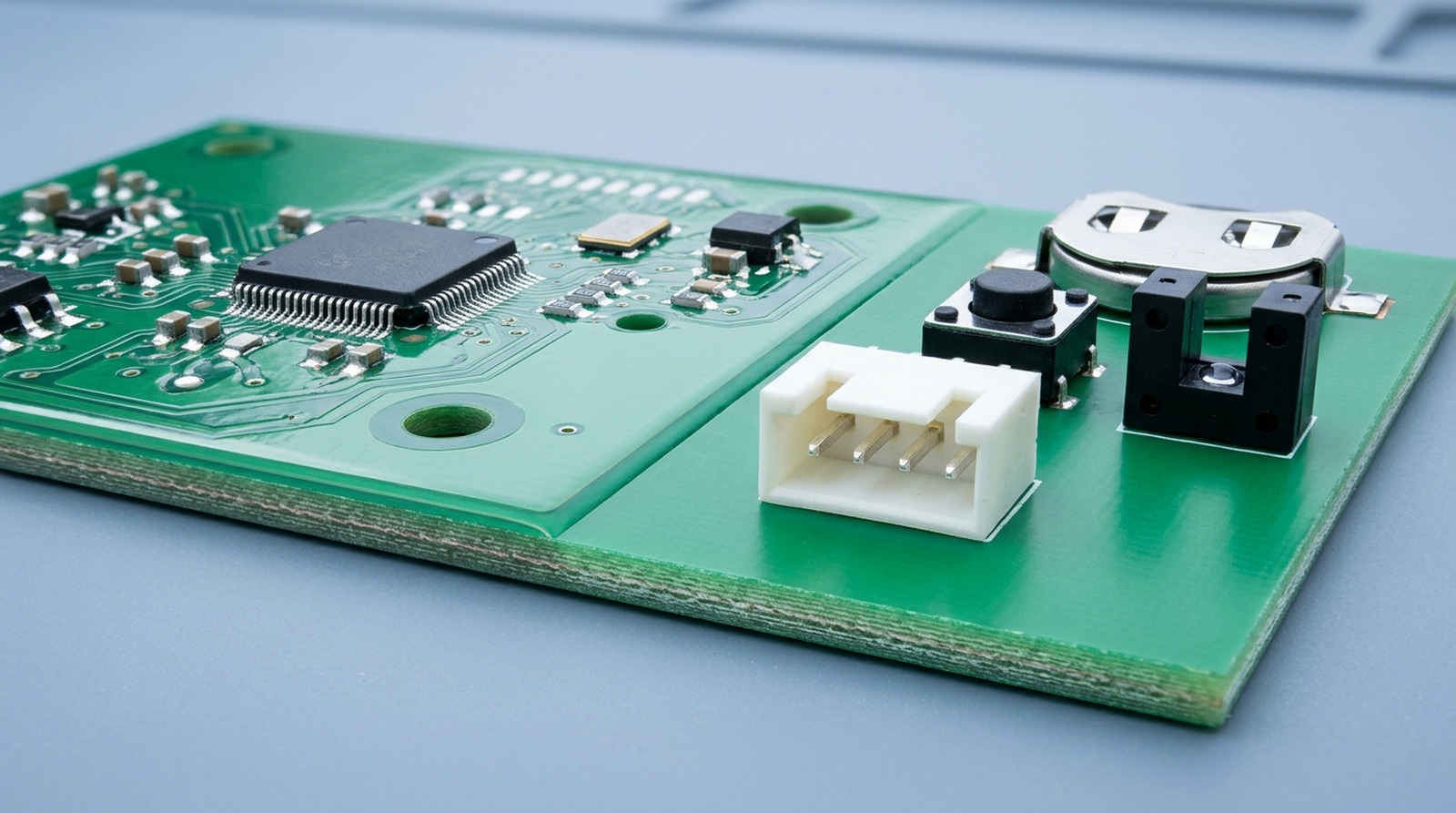
Utility rooms and nearby brine tanks expose valve electronics to humidity and crystalline salt mist, yet liquid conformal coatings can wick by capillary action into open-bottom wire headers, tactile switches, coin-cell holders, relay terminals, LCD contacts and optical lenses, or bleed through untented vias. Where conformal coating is specified, customer-defined chemistry, an explicit CAD keep-out drawing and job-agreed masking or damming methods (avoiding incompatible silicone adhesives) protect circuitry without substituting for enclosure ingress ratings or out-of-scope potting.
Where Valve Controller Boards Come Together.
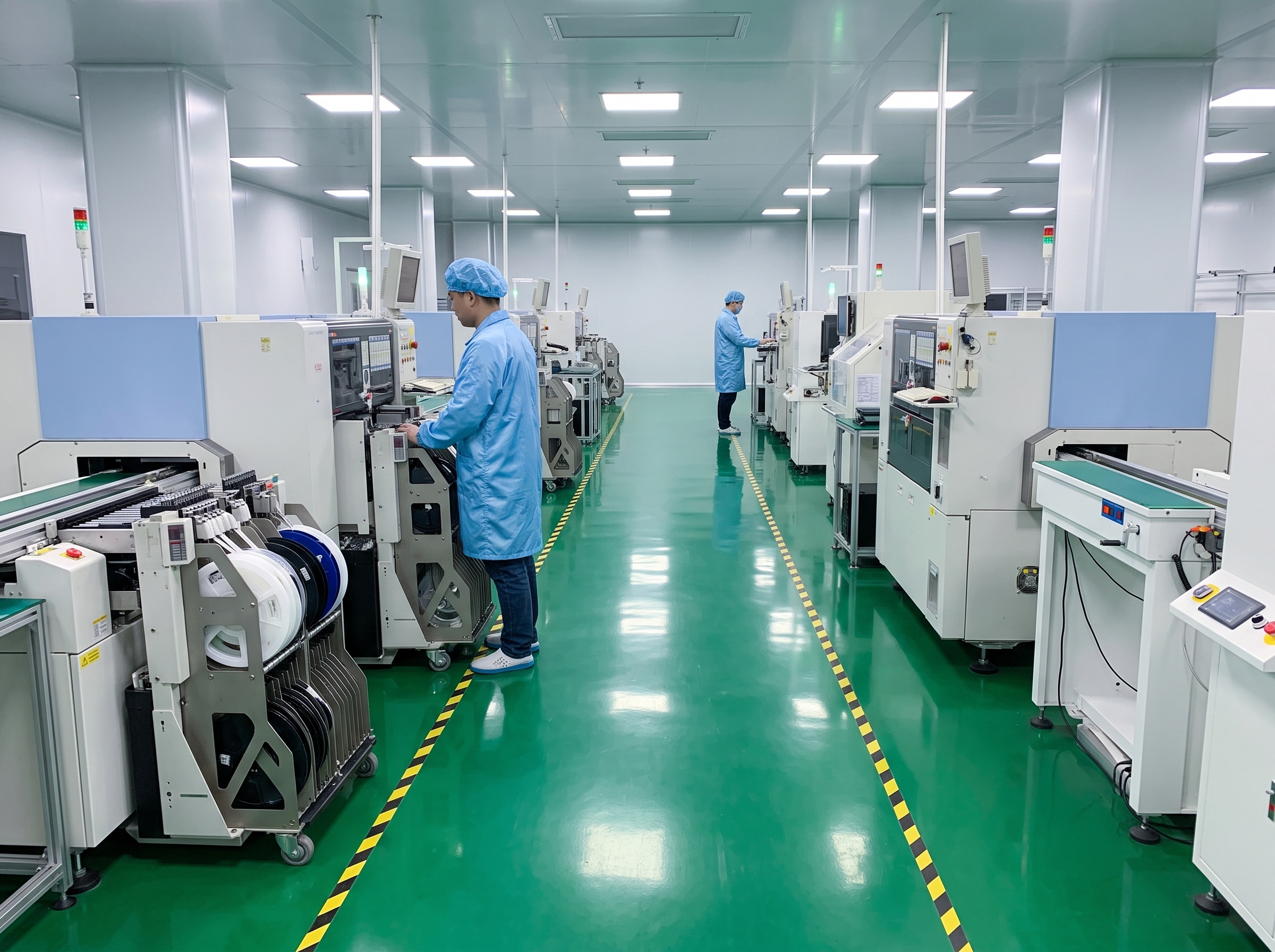
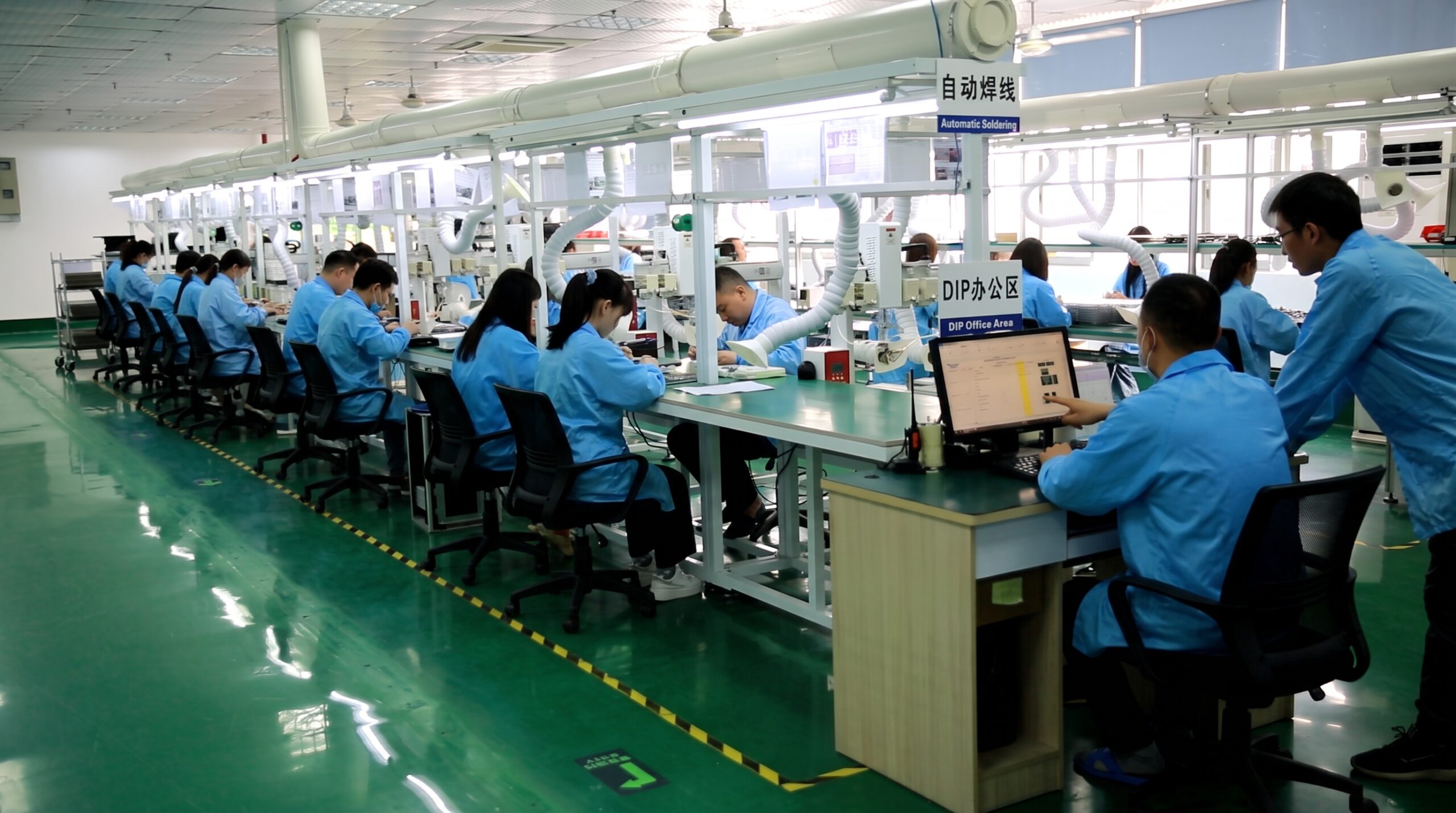
Once single-face board geometry, approved components and keep-out drawings are settled, the assembly floor carries control, display and sensor boards through repeatable production. These stations show the workflow from placement to dry-bench review; your released BOM, firmware file and check plan govern the run.
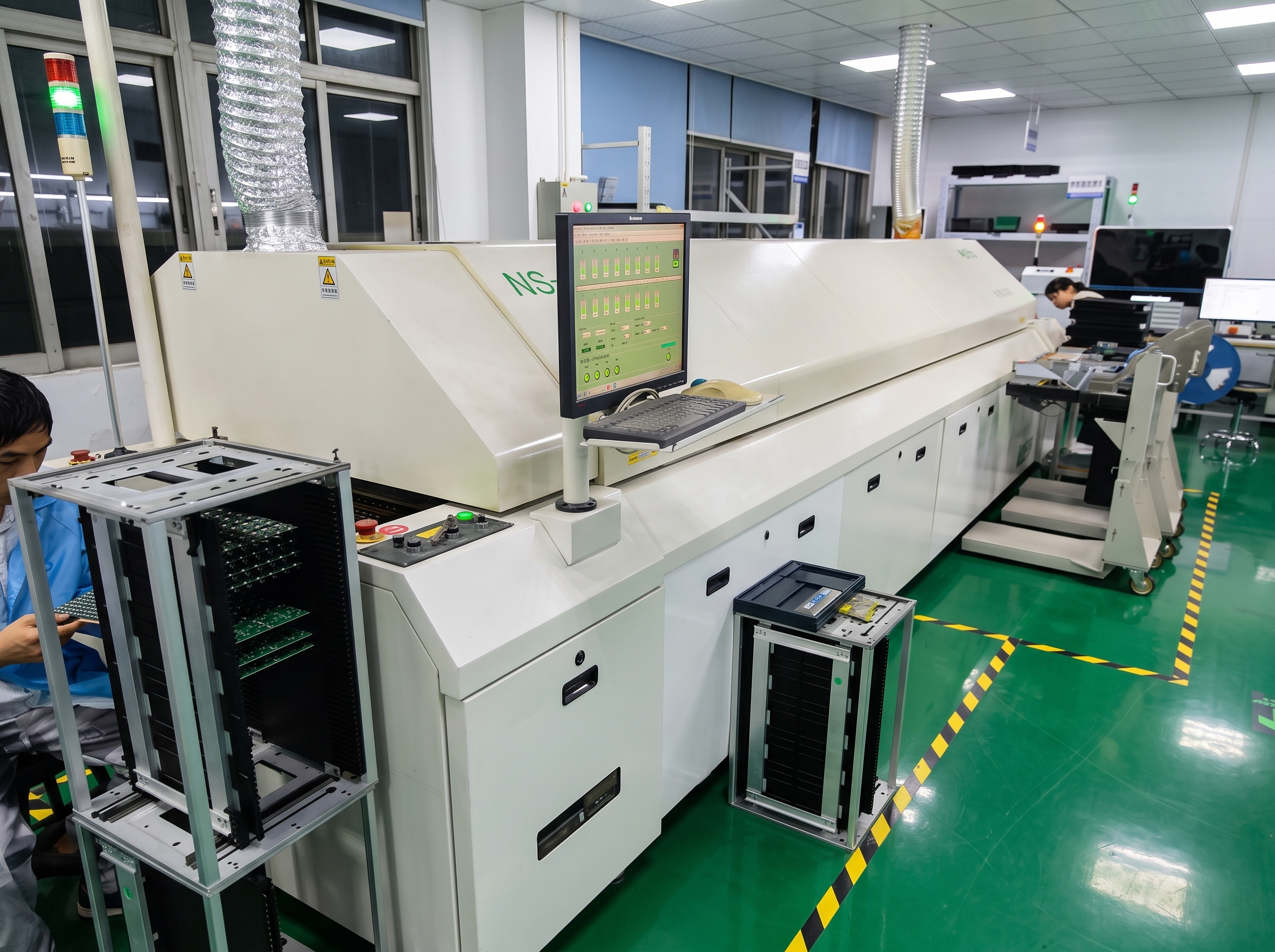
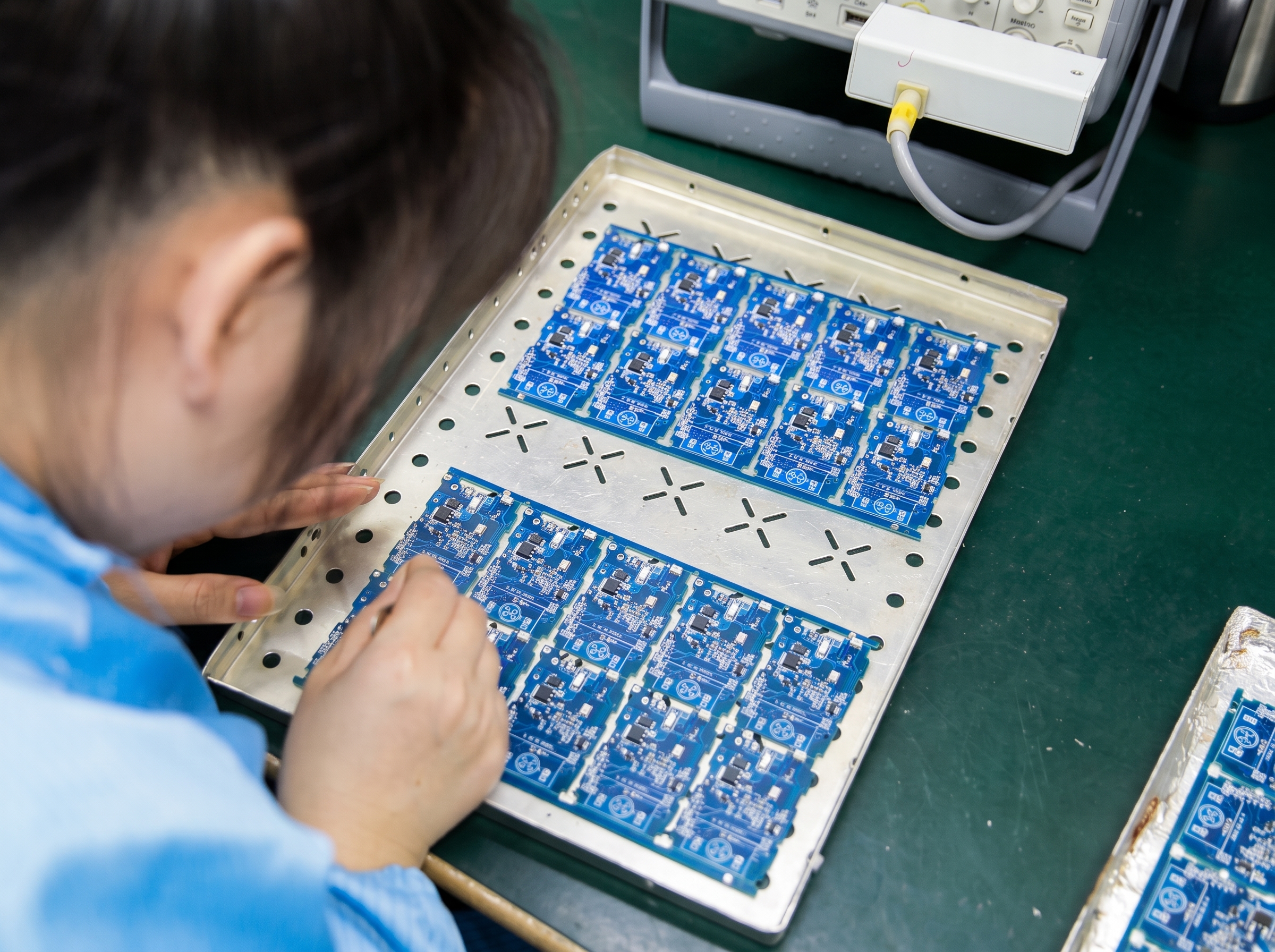
Single-Face SMT Assembly
Microcontrollers, Hall-effect sensors, pull-up networks, voltage regulators and surface-mount motor drivers populate the designated top face of FR-4 or aluminum-core boards. Matching approved part identities and variant population maps keeps shared valve-controller hardware aligned across softener and media-filter SKUs.
Relays, Headers & UI Hardware
Boxed dry-contact relays, screw terminal blocks, keyed motor and encoder headers, buzzers, coin-cell holders, supercapacitors and front-panel tactile switches complete mixed assemblies on the confirmed mounting face. Assembly drawings control orientation and seating height so finished boards align cleanly with customer brackets and covers.
Lead-Free Reflow & Masked Coating
Surface-mount assemblies move through lead-free reflow matched to substrate thermal mass and component profiles, with through-hole soldering and targeted cleaning around optical or battery-backup sections handled per the build package. Where conformal coating is ordered, agreed masking and keep-out drawings protect connectors, switches and optical lenses before curing.
First-Article, AOI & Dry-Bench Checks
First-article review checks polarity, solder joints and BOM parity before the run proceeds, backed by automated optical inspection, customer-approved firmware loading and agreed dry-bench electrical checks using simulated sensor and motor-load inputs. Mechanical valve-head homing and hydraulic testing remain with the OEM.
Point-of-Entry Valve & Prefilter Assemblies.
Split-board softeners, sensor sub-boards and automatic prefilters place different demands on board layout, moisture protection and bench checks. Each deliverable stays strictly within customer-owned electronics scope.
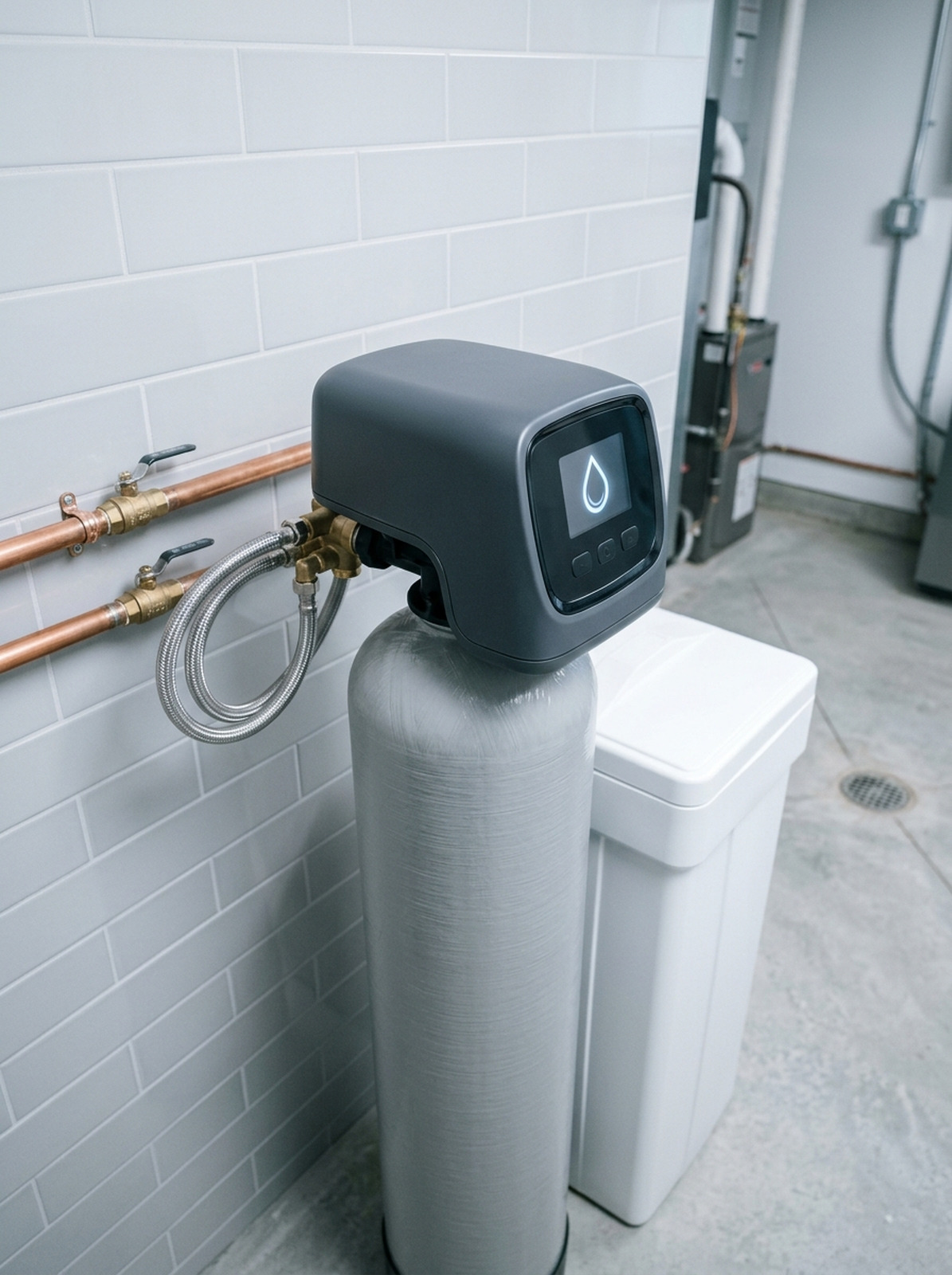
Split Main & UI Boards
Split Main · UI · Valve Motor
Split Main & UI Boards
Separate main control and display boards avoid opposite-face relay conflicts on softener valves. We assemble single-face boards, load released model firmware and verify dry-contact relay outputs.
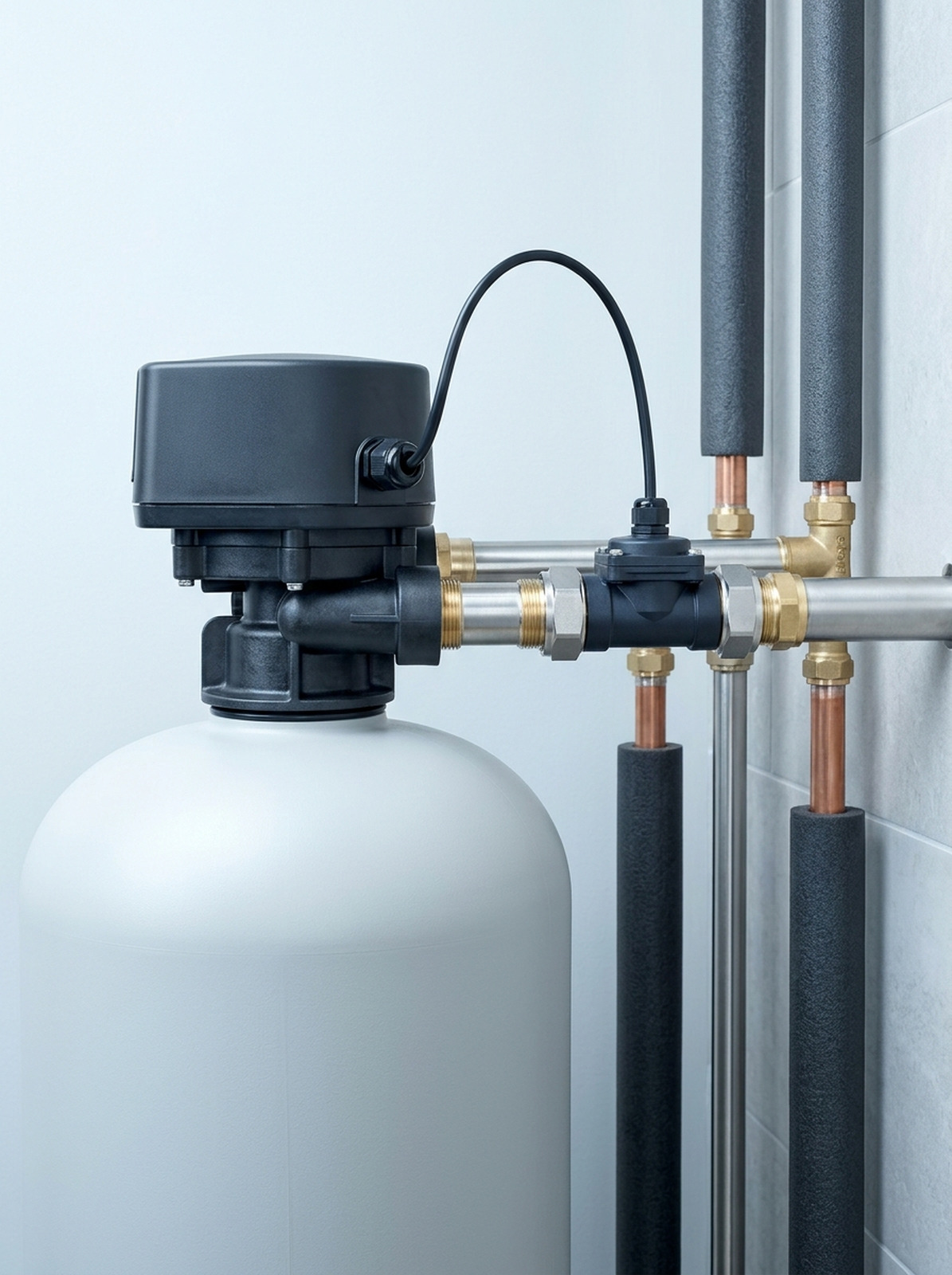
Locating & Flow Sub-Boards
Optical · Hall-Flow · Locating
Locating & Flow Sub-Boards
Ceramic-disc locating boards and Hall-effect flow PCBs suit single-face SMD with same-side headers. We protect optical and header keep-outs on non-potted boards; hydraulic calibration stays OEM-owned.
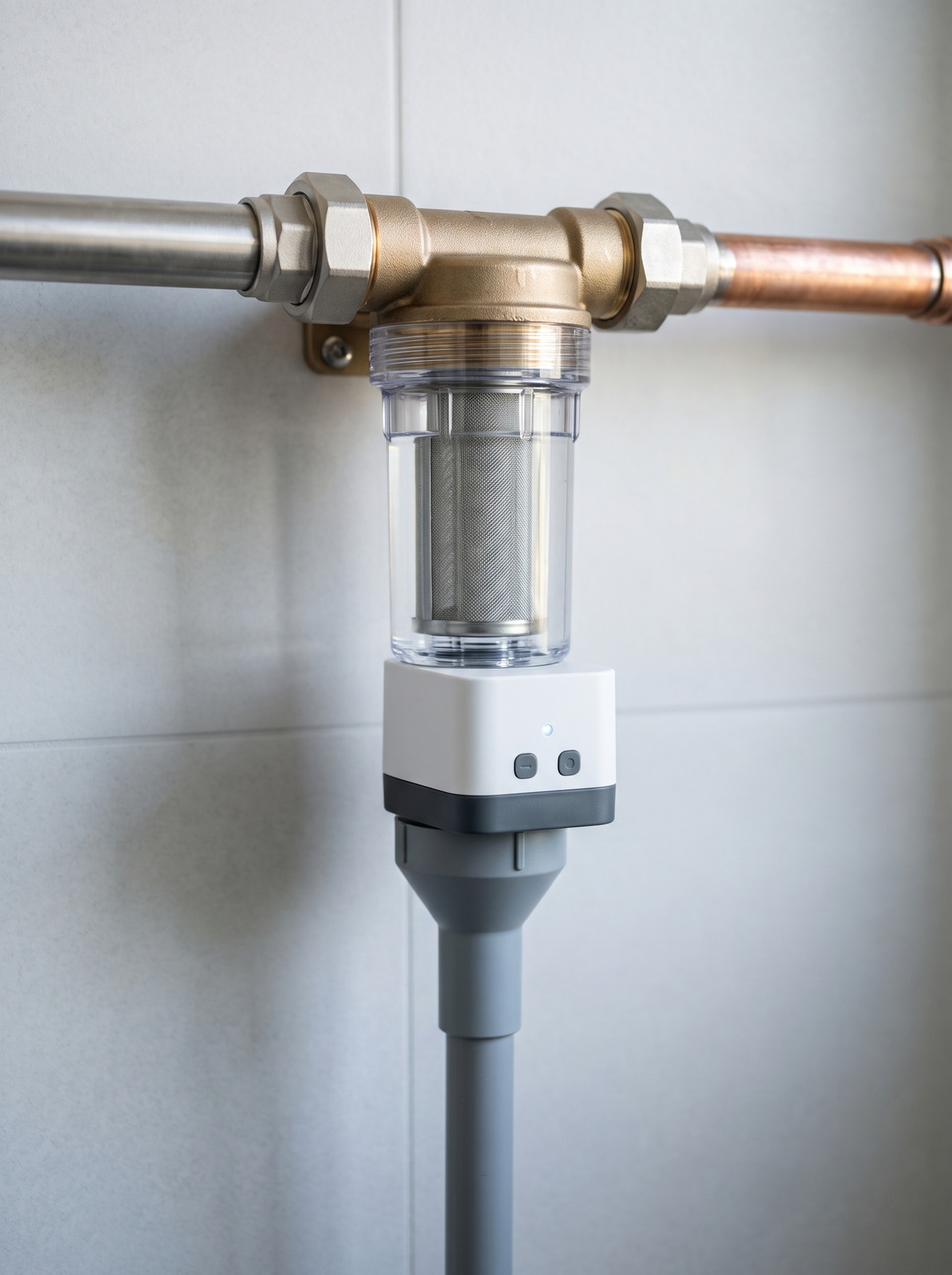
Backwash Prefilter Timers
Flush Timer · Fail-Safe Return
Backwash Prefilter Timers
Automatic backwash prefilters combine interval timers and flush drives with alarm inputs or battery fail-safe closure. We assemble customer-owned single-face timer boards with optional coating and dry checks.
From Board Package to Verified Valve PCBAs.
Valve-controller assembly runs cleanly when board faces, firmware variants, coating masks and dry-bench acceptance criteria are agreed before materials move. Review fit early, then carry one locked build package through production.
Share Files & Mounting Layout
Send Top and Bottom Gerbers, a draft or released BOM with package details, assembly drawings or a reference board. Early files are enough to check single-face feasibility, package inspectability and scope boundaries.
Confirm Coating, Firmware & Test Scope
Lock approved alternates, customer-supplied firmware binaries with checksums, model-variant DNP rules, conformal-coating chemistry and keep-out drawings, and the dry-bench check plan—including any customer-provided test jig or simulated I/O script.
Assemble, Program & Coat
Complete single-face SMT, lead-free reflow, same-side through-hole soldering for relays, headers and UI hardware, and first-article review. Load released firmware and apply masked conformal coating per the approved keep-out drawing where specified.
Inspect & Hand Over for Valve Integration
Finish AOI and agreed dry-bench electrical or functional checks before dispatch. Your engineering team completes mechanical valve-head homing, hydraulic flow calibration and system-level compliance on the finished valve assembly.
Common Questions.
Direct answers on board-face limits, firmware and calibration ownership, conformal coating boundaries and what falls outside valve-controller PCBA scope.
Why can a compact valve controller fail single-sided assembly if SMT is on one side?
Compact residential valve powerheads often mount an LCD and tactile buttons on the front face while placing boxed relays, screw terminals or right-angle harness headers on the opposite rear face. Even when SMT reflow runs on one side, opposite-face through-hole parts violate single-sided component mounting. Reviewing both Top and Bottom Gerbers alongside the full BOM package list confirms whether the layout fits directly or needs single-face consolidation or a split-board layout.
Do you supply complete softener valve heads or replacement boards for third-party brands?
No. We manufacture build-to-print populated control, UI, locating and flow-meter PCBAs for valve OEMs, automatic prefilter builders and controller teams that own their design files and firmware. Complete molded valve bodies, pistons, ceramic discs, brine-tank plumbing, and reverse-engineered aftermarket replacement boards for proprietary third-party valve heads are outside our offering.
Who owns regeneration firmware, stall thresholds and hydraulic flow-meter calibration?
Your team owns regeneration state machines, motor stall-current blanking and threshold settings, impeller pulse-to-volume calibration ratios and any mobile-app or cloud software. We load your released binary firmware with checksum and model-variant control and run agreed dry-bench checks using simulated Hall-effect or optical pulses and motor-load states. Actual hydraulic flow calibration and mechanical valve-head torque or homing validation stay with the valve OEM.
Does conformal coating waterproof a valve controller or replace potting and enclosure ratings?
No. Conformal coating adds a thin protective film against utility-room humidity and salt-mist residue when specified with customer-defined chemistry and a CAD keep-out drawing protecting open headers, tactile switches, optical sensors, LCD contacts and battery clips. It does not waterproof a board, is distinct from enclosure ingress ratings, and never substitutes for potting or encapsulation, which remain outside our assembly scope.
Can this service build connected Wi-Fi or BLE valve boards or verify NSF/ANSI 44 compliance?
Board assembly can include a customer-specified, pre-certified wireless module when package type and single-face layout fit ordinary SMT assembly without hidden-joint BGA packages requiring X-ray inspection. However, RF or EMC laboratory testing, app and cloud development, wet hydraulic testing, and system-level certifications such as NSF/ANSI 44 or WQA S-100 efficiency ratings belong to the complete valve system and remain outside PCB assembly scope.
Manufacturing Experience. Direct Cooperation.
Our factory’s experience includes long-term supplier relationships with Fortune Global 500 customers and demanding supplier audits. We apply that disciplined manufacturing background to first builds, pilot runs and repeat valve-controller orders, aligning assembly checks with the reliability point-of-entry hardware expects.
Long-term supplier to Fortune Global 500 customers.
Sustained enterprise supply is part of our manufacturing experience. We carry that discipline into customer-owned valve control, UI and sensor board runs, keeping revision control, BOM parity and build responsibilities clearly defined.
Passed demanding supplier audits and customer reviews.
Our factory has passed demanding supplier audits. That background supports direct engineering conversations around board-face feasibility, coating keep-outs, firmware revision handoff and acceptance expectations relevant to your valve electronics.
First-article, الهيئة العربية للتصنيع, and board checks.
First-article review, AOI and agreed dry-bench electrical or functional checks examine distinct layers of board workmanship before shipment. Released BOMs, keep-out drawings and checksum-verified firmware link inspection directly to each valve SKU.
Long-term relationships.
Global brands.



Start with
what you have.
Tell us about your water softener valve controller, sensor sub-board or automatic backwash prefilter PCBA project. Top and Bottom Gerbers, a draft BOM, schematic or reference sample is enough to start a practical fit review; share your available files, coating or firmware needs and intended quantity.
Starting a new valve or prefilter board?
Share preliminary Gerbers, a draft BOM or a reference board early to check single-face fit, keep-outs and bench checks before release.
Planning a repeat run or transfer?
Identify the released revision, firmware SKU matrix and any relay, header or BOM updates so we can review what the next run requires.
 Arabic
 English
 German
 French
 Spanish
 Portuguese (Portugal)
 Korean
 Indonesian
 Chinese
 Russian
 Italian
 Dutch
 Polish
 Hindi
 Thai
 Portuguese (Brazil)