

Water Purifier &
RO Control PCBA.
PCB assembly for SELV water purifier and point-of-use reverse osmosis control boards powered from external Class II adapters. Coordinate single-sided SMT or mixed assembly, customer firmware loading, masked conformal coating and dry bench checks for main control, touch UI, faucet and flow boards.
Built Around Modular
SELV Purifier Electronics.
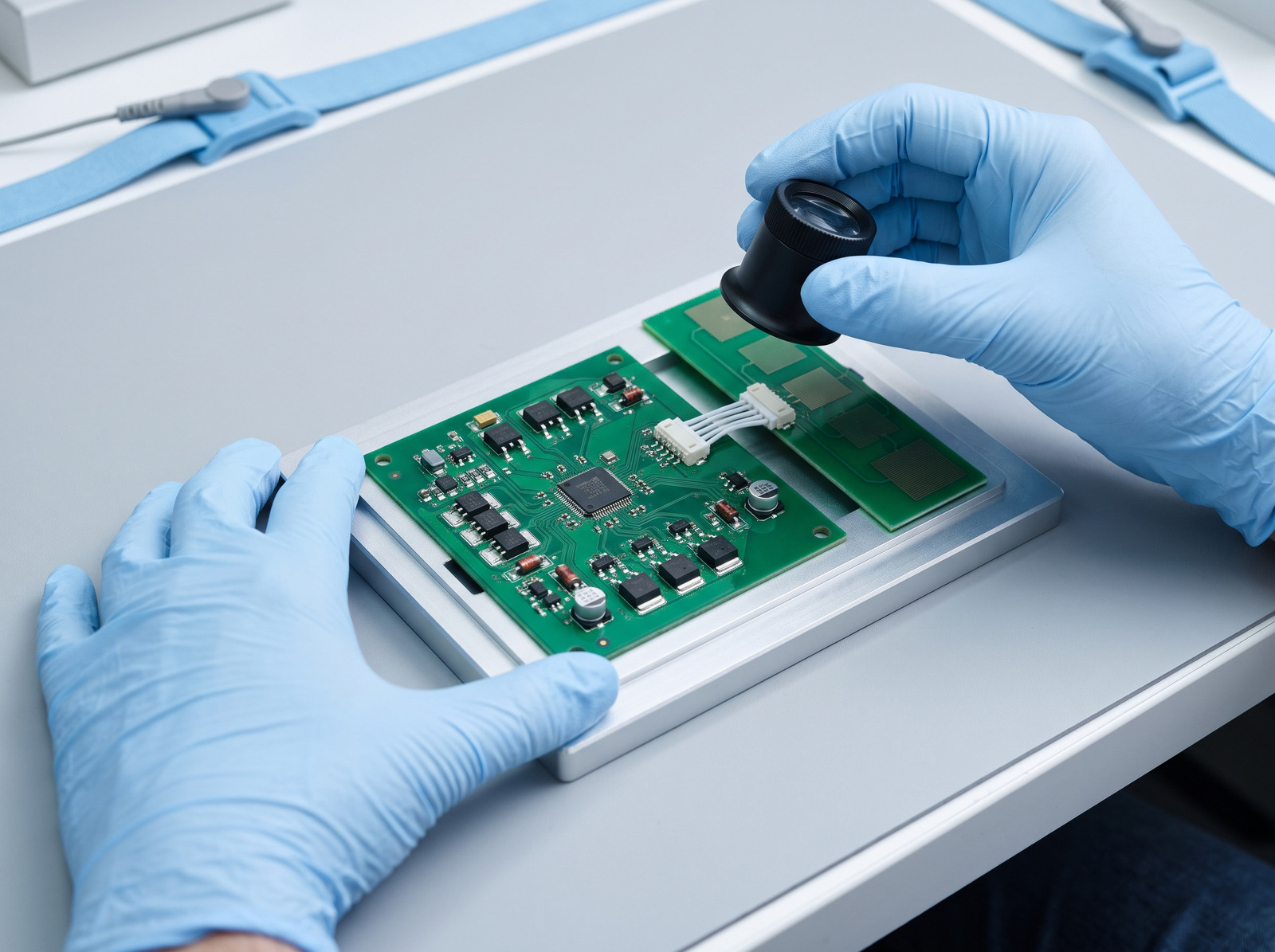
Many under-sink and tankless reverse osmosis purifiers separate external Class II AC-to-DC power conversion from the internal low-voltage DC control electronics. We assemble these SELV main control, front touch and LED UI, filter-reset, smart faucet-display and Hall-flow PCBAs on FR-4 and aluminum-core boards with single-sided component mounting. Production covers SMT, through-hole and mixed assembly, lead-free reflow, first-article review, AOI, customer-approved firmware loading, drawing-defined conformal coating and agreed dry bench checks.
Single-sided component mounting does not define copper-layer count, and one SMT reflow face alone does not confirm fit if through-hole parts sit on the opposite side; both Top and Bottom Gerbers and the full BOM package list are reviewed before quoting. Start from a draft BOM, schematic, Gerbers or reference sample, while final production files, masking drawings and test agreements lock before build release. Onboard-mains, instant-heating or heated-tank power boards, booster pumps, hydraulic valves, wet fluid calibration, wireless app development and finished-system certifications remain separate scopes.
Align Board Assembly With Your Purifier Build.
Water-purifier programs vary widely in how electronics are partitioned, owned and verified. Match your design stage and board arrangement to the manufacturing route that fits before locking production.
Build-to-Print OEM Purifier Programs
Build-to-Print OEM Purifier Programs
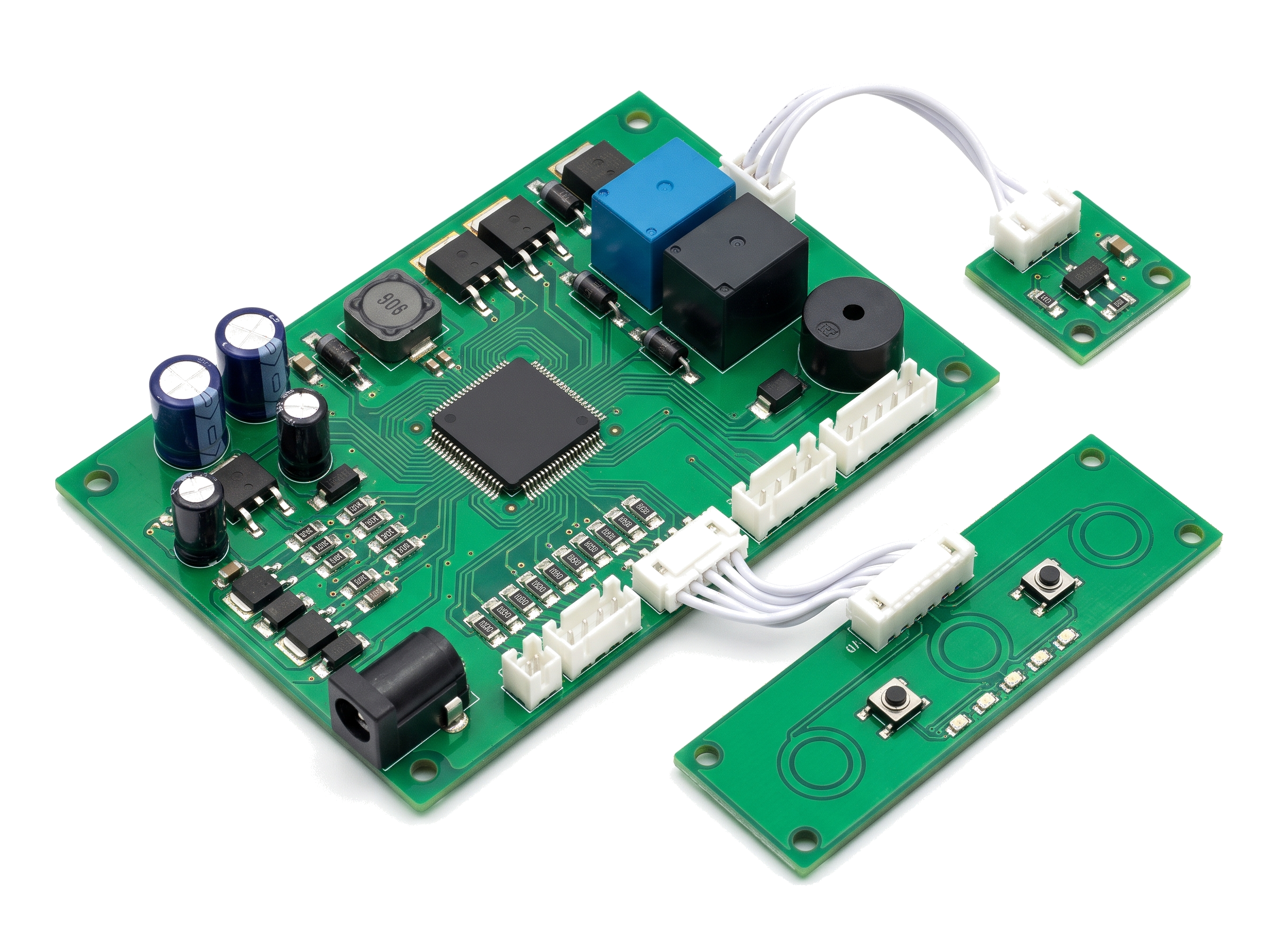
Designed for hydraulic, plastics and export purifier manufacturers or overseas brands that own their circuit design and approved firmware. We execute bare-board coordination, component sourcing or kitting, single-sided SMT and mixed assembly, IC flashing of customer-released binaries, masked conformal coating and agreed dry functional checks while keeping control IP with your team.
Modular Multi-Board SKU Families
Modular Multi-Board SKU Families
Under-sink and tankless RO platforms often pair a shared main control board with optional front touch, filter-reset or wired smart faucet display sub-boards across tiered models. Managing populated variants and sub-board releases together keeps connector keying, harness pinouts, approved firmware binaries and assembly drawings synchronized across the product family.
Single-Sided Fit & Opposite-Face Review
Single-Sided Fit & Opposite-Face Review
Compact RO display panels and plug-in TDS sensing modules often place surface-mount devices on one side and through-hole switches, terminals or headers on the reverse side. Checking both Top and Bottom Gerbers and every BOM package early confirms single-sided mounting compatibility—or identifies parts needing layout adjustment before production release.
Early Assessment & Bounded Adjustments
Early Assessment & Bounded Adjustments
You do not need fully released manufacturing files to begin a buildability discussion. A draft BOM, schematic or reference sample can surface opposite-face components, conformal-coating keep-out areas or dry-test fixture needs early. Bounded BOM-alternate reviews or limited layout adjustments can be evaluated on mature designs, while full firmware or wireless-app R&D stays separate.
Compare Purifier & RO Board Architectures.
Point-of-use water purifiers partition low-voltage power switching, front user interfaces, faucet displays and sensing across compact SELV boards. Review the four in-scope board families and their assembly, masking and dry-check gates before locking your build.
Main Control & Driver Board
Front Touch, LED & Reset UI Board
Wired Faucet Display & Status Board
Hall-Flow, Pressure & Leak Sub-Boards
Four Engineering Controls for RO Control Builds.
Reliable point-of-use purifier electronics depend on matching assembly controls to the real inductive, sensing, moisture and electrical-safety boundaries inside an under-sink cabinet. These four controls separate predictable builds from field failures and test mismatches.
Inductive Pump & Solenoid Switching
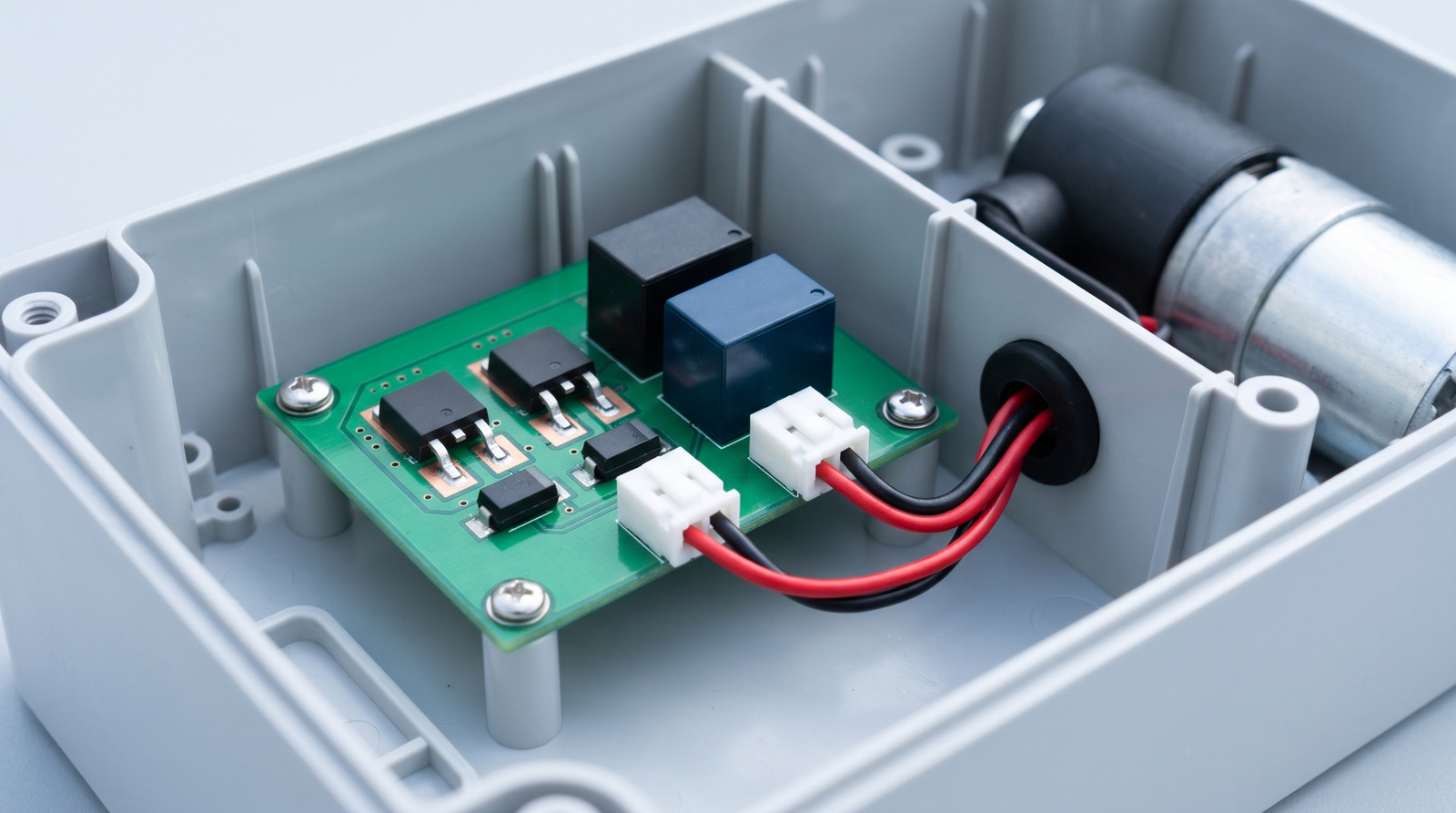
Booster pumps and inlet or flush solenoids store magnetic energy that creates destructive turn-off voltage spikes when switched abruptly. Designs balance slow-decay freewheeling paths—suited to PWM peak-and-hold drive that limits coil self-heating—against faster Zener, TVS or bridge clamping that speeds shutoff while dissipating transient energy. Confirm whether outputs drive DC coils directly or trigger external contactors, verify diode polarity and MOSFET orientation during AOI, and define simulated dummy loads for dry FCT.
Multi-Input Sensing & Dry TDS Verification
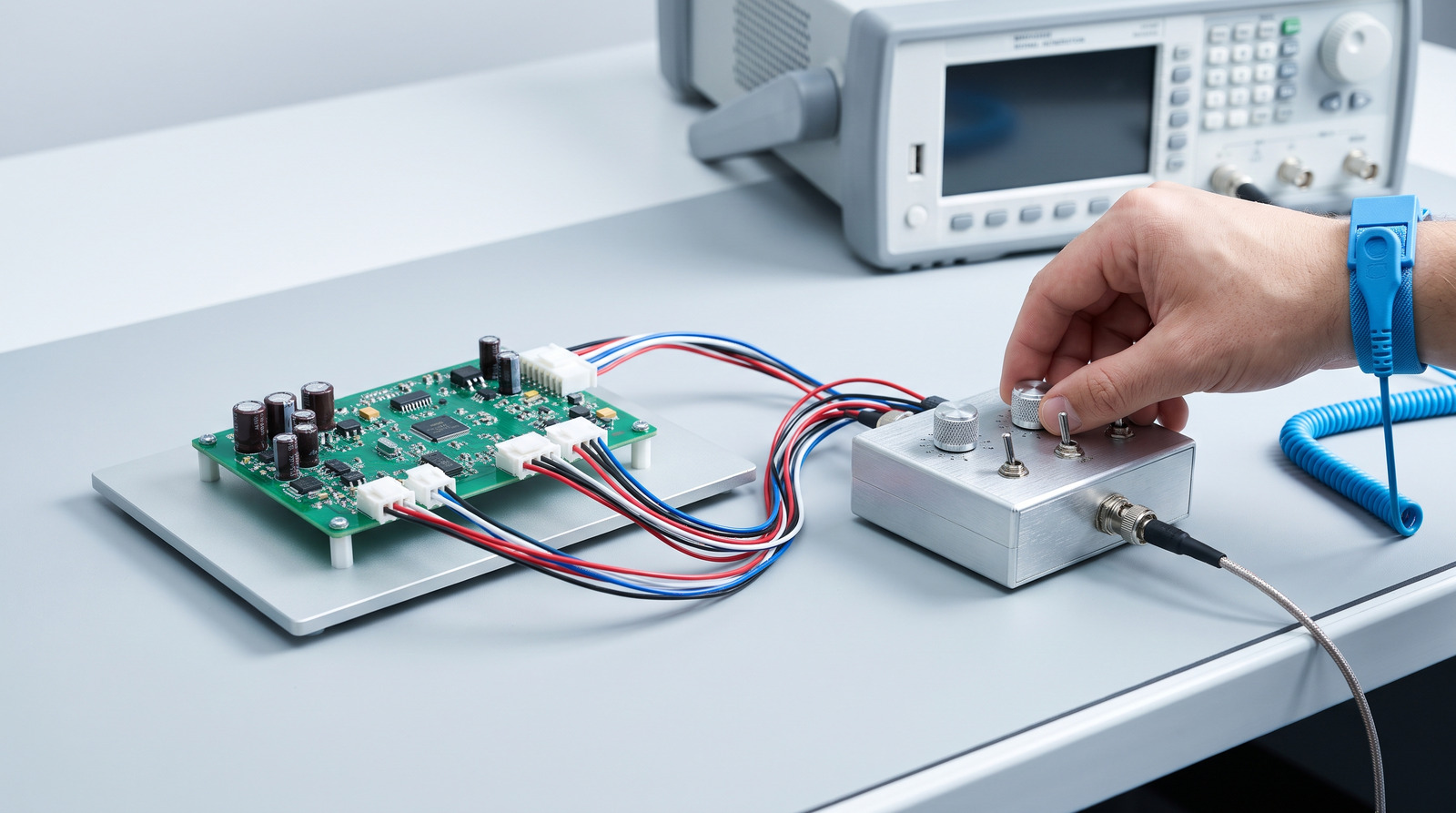
Purifier boards combine unpowered dry-contact switches (low-/high-pressure LPS/HPS, float or leak inputs—where external voltage damages the circuit), Hall-effect impeller flow pulses, NTC temperature dividers and AC-excited conductivity/total dissolved solids (TDS) probes. Alternating-polarity or oscillating AC excitation prevents DC electrolysis, while polarization, cable capacitance and temperature shift readings. Because conductivity converts to TDS via cell geometry and salt factors, factory testing checks board electronics dry with precision reference resistors and pulse injection; wet calibration stays with the OEM.
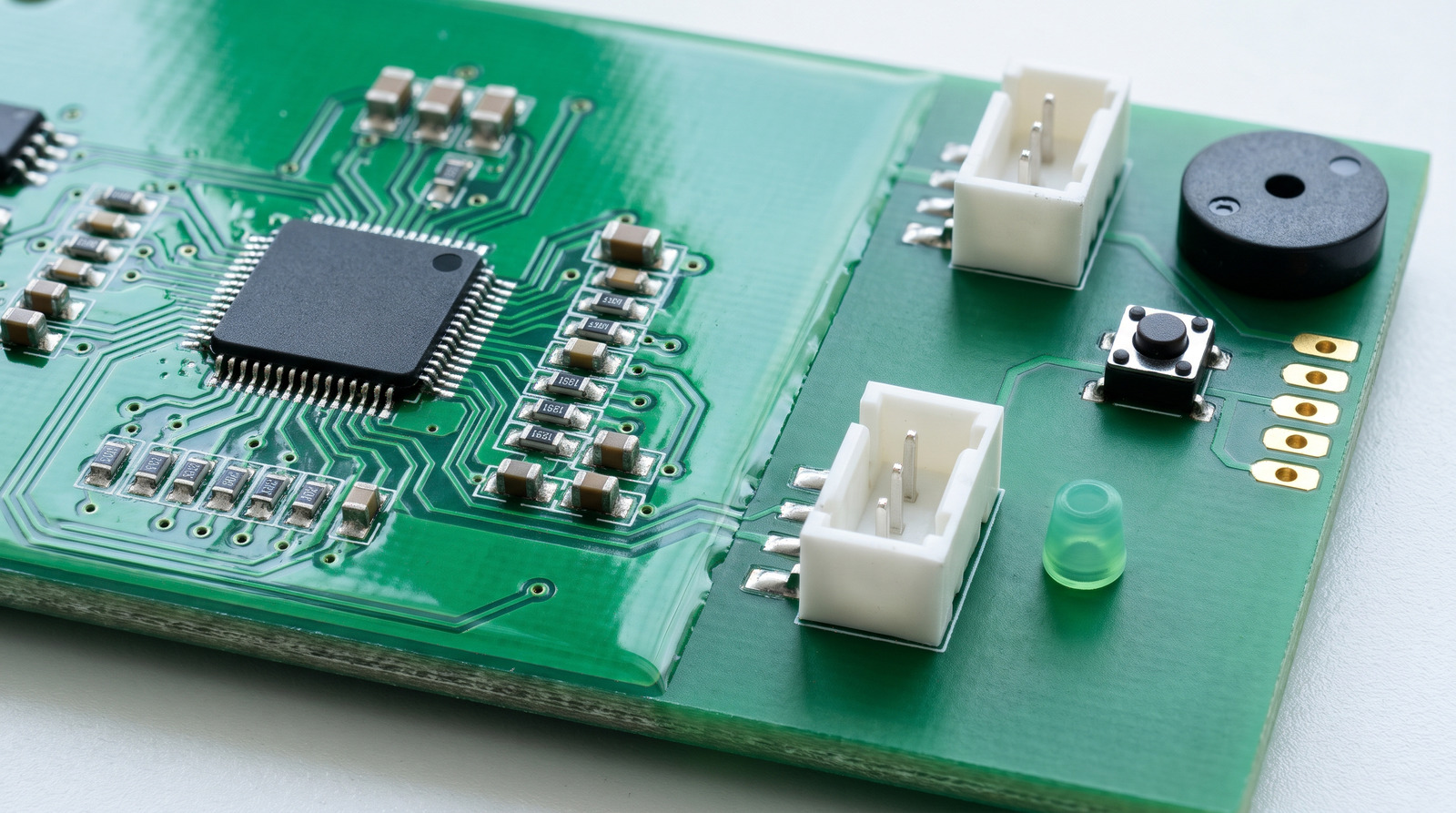
Moisture Protection & Coating Keep-Out Masking
Under-sink cabinets expose boards to condensation, maintenance drips and mineral residue that bridge biased traces and disturb high-impedance TDS or NTC nodes. Reliable conformal coating starts with clean, dry assemblies and customer drawings specifying chemistry plus non-conductive, residue-free keep-out masking over connectors, terminals, programming ports, buttons, switches, buzzer apertures and displays. Controlled coverage avoids bare gaps and stress from excessive film thickness. Conformal coating mitigates humidity and surface contaminants—it is distinct from enclosure ingress ratings and out-of-scope potting.
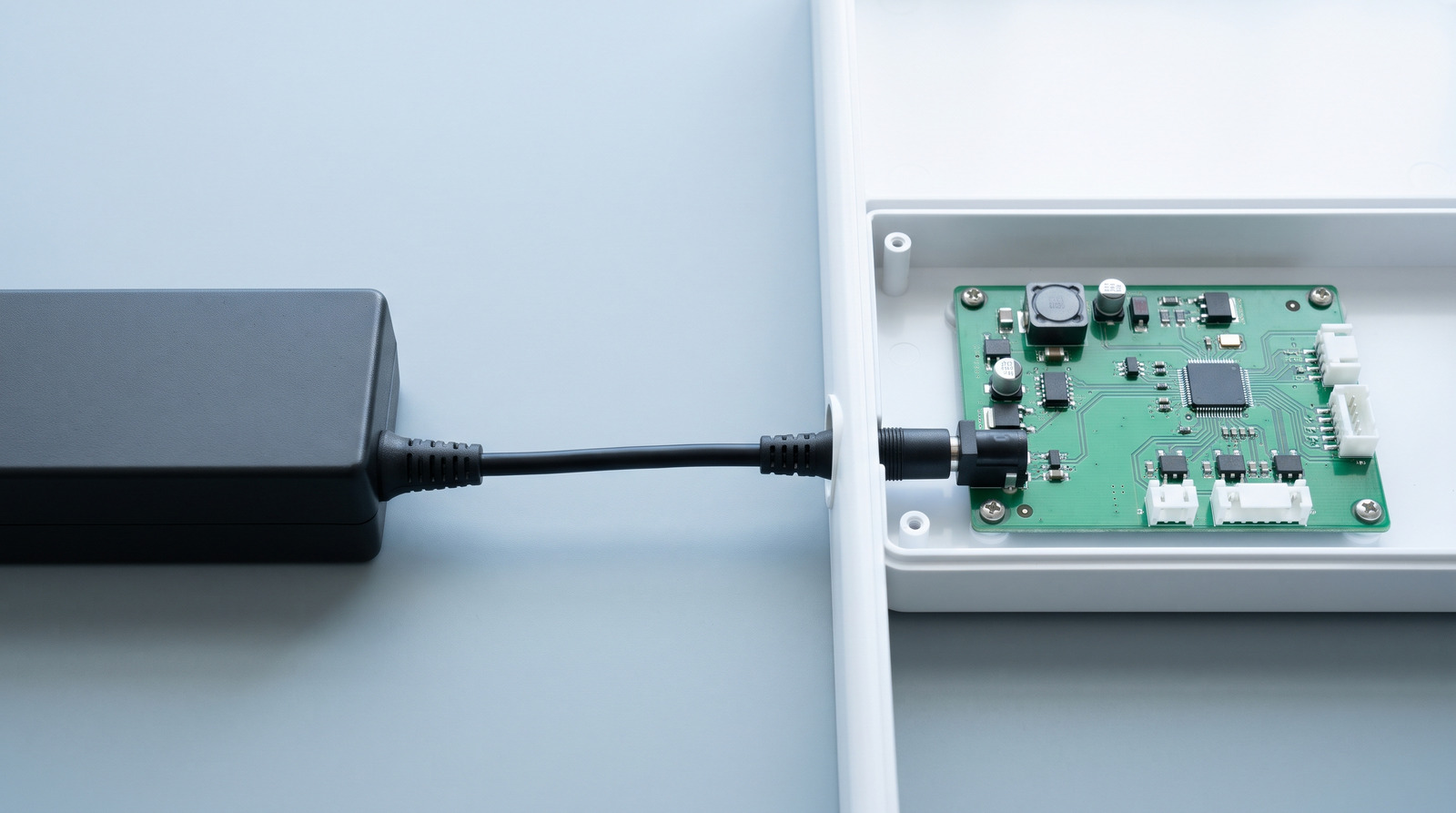
External SELV Power & Standards Ownership
An external Class II adapter supplying SELV DC keeps primary mains insulation and line-voltage switching off the control board. Even with SELV power, finished-appliance standards apply: IEC 60335-1:2020 (with the applicable Part 2) covers household and similar electrical appliances rated up to 250 V single-phase and 480 V other appliances, including DC-supplied appliances; IEC 60730-1:2022 covers inherent and functional safety of automatic electrical controls. Assembly executes your BOM and approved firmware; appliance and automatic-control safety qualification stay with the OEM.
Where Your Purifier Boards Are Built.
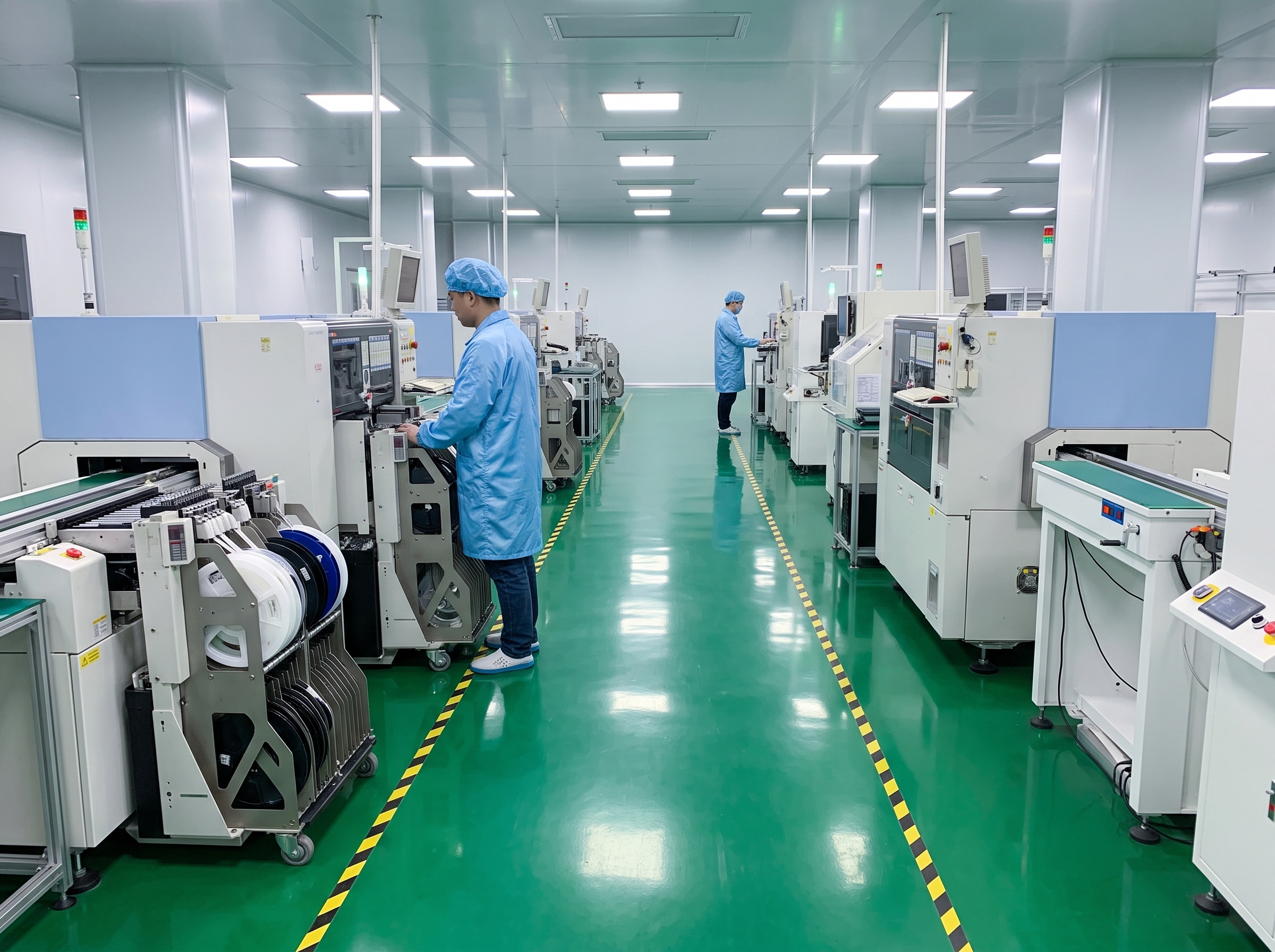
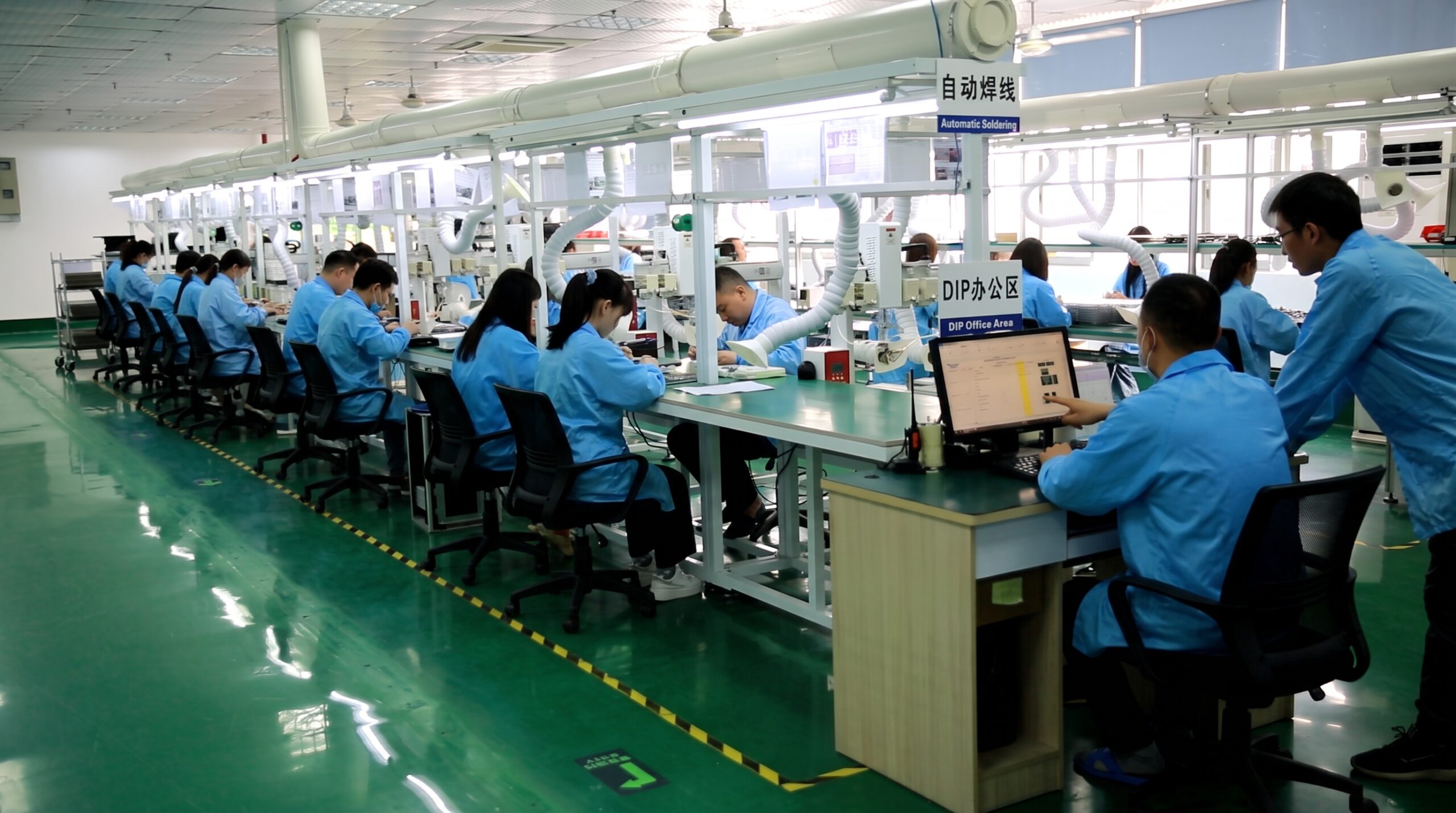
Once Gerbers, BOM packages, masking drawings and test fixtures are aligned, the assembly floor brings bare boards and approved components together. These production stations outline the setting for single-sided SMT, mixed connector assembly, lead-free reflow and dry-bench verification; your released revision governs the actual build.
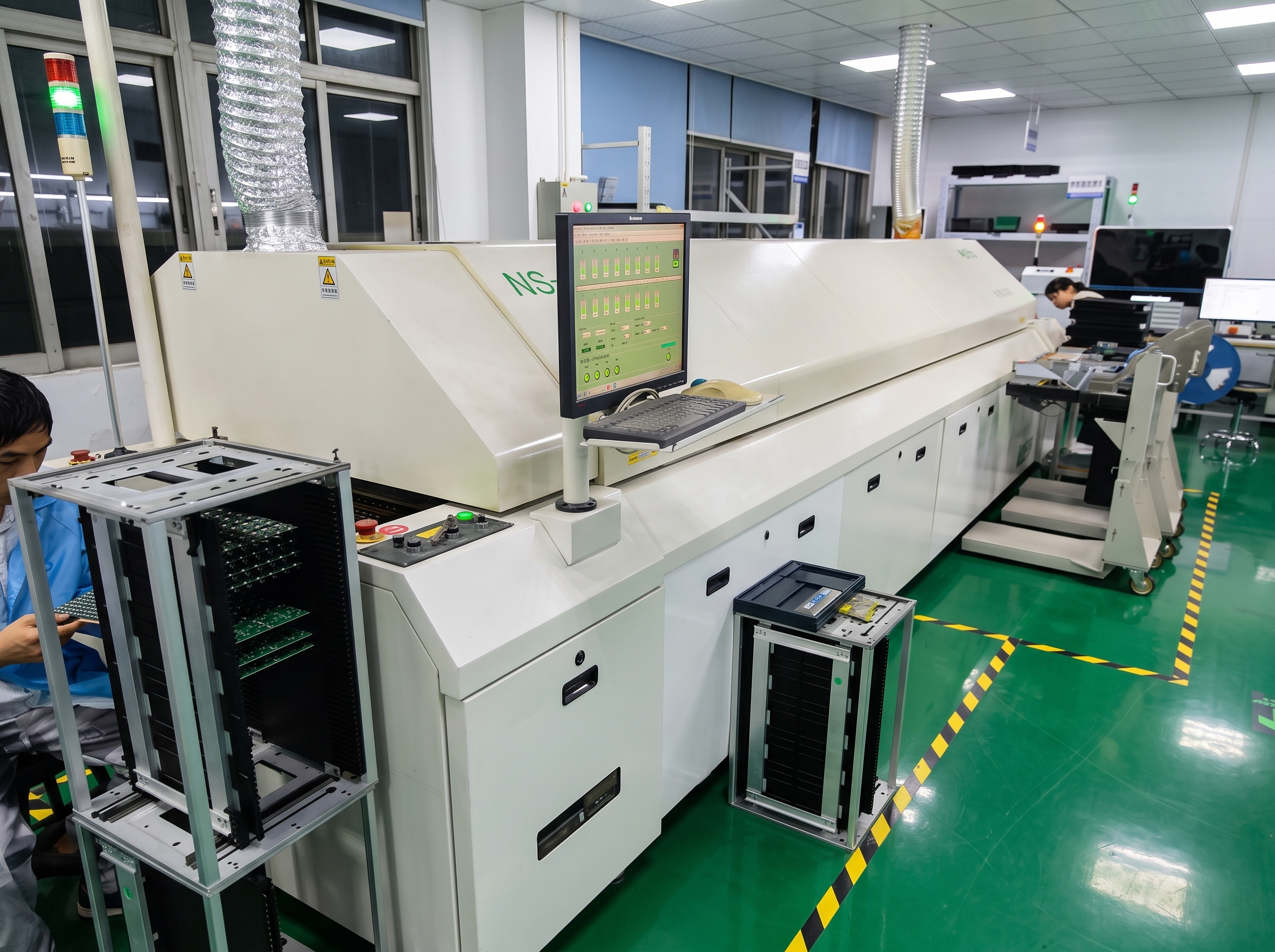
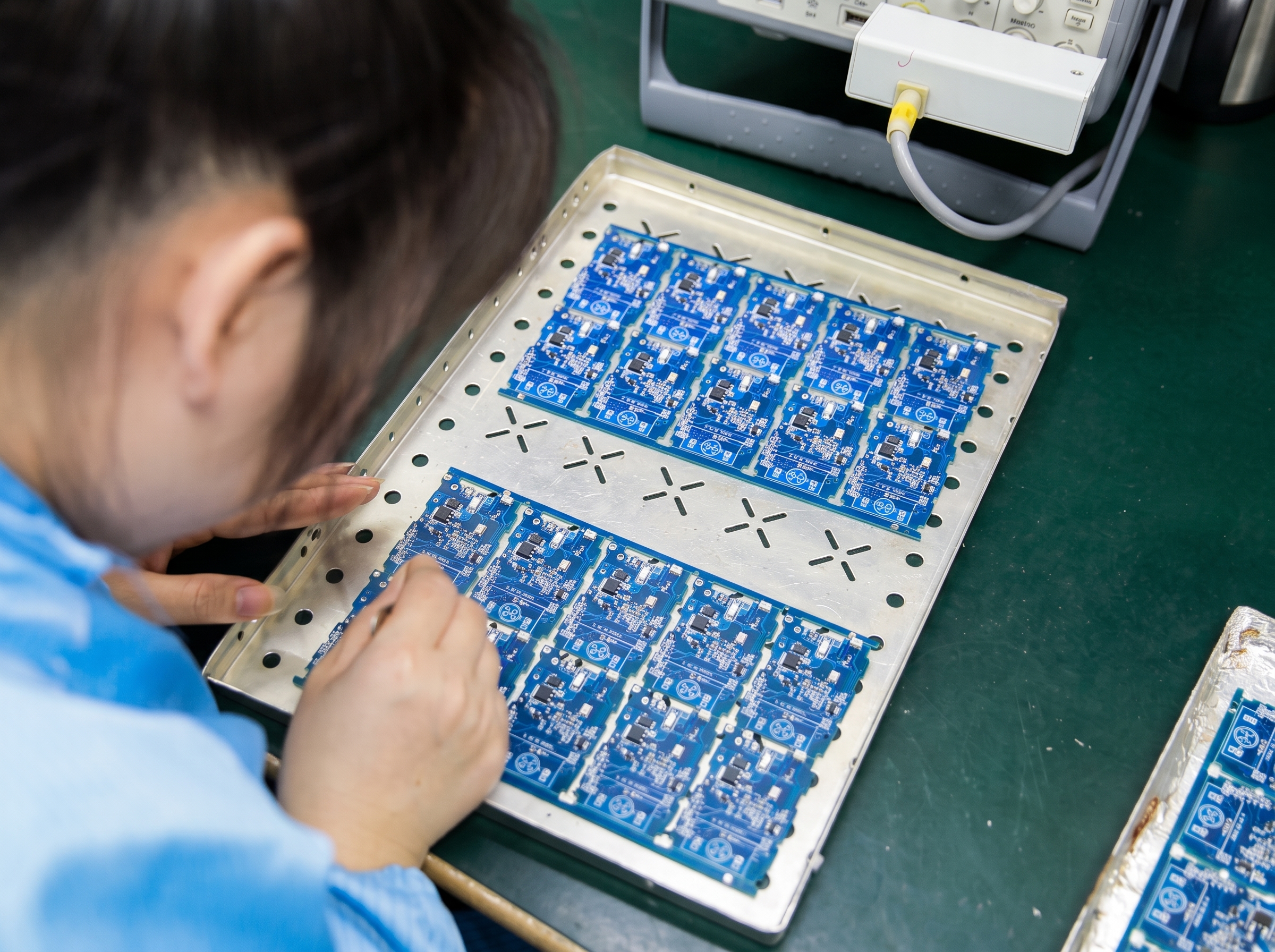
Single-Sided SMT Placement
MCUs, voltage regulators, power MOSFETs, sensing passives and surface-mount indicators are placed onto FR-4 or aluminum-core boards from the released BOM and placement file. Setup checks match part identity, populated variants and orientation before reflow.
Mixed Through-Hole Assembly
Same-side harness headers for pumps, solenoids, pressure switches, faucet cables, buzzers and low-voltage relays complete mixed purifier boards after surface-mount reflow. Assembly drawings maintain pin keying, polarity and seating height so internal harnesses mate cleanly.
Lead-Free Reflow & Conformal Coating
Populated SMT boards pass through lead-free reflow matched to the substrate and component thermal needs. When conformal coating is specified after board assembly, cleaned and dried boards are masked per customer keep-out drawings prior to thin-film application and curing.
Inspection, Flashing & Dry Bench FCT
First-article review and AOI inspect component placement, polarity and solder joints against the released reference. Customer-approved firmware loading and agreed dry electrical checks verify power rails, switch inputs, simulated sensing and output switching before dispatch.
Board Families Across Point-of-Use RO Systems.
Point-of-use water purifiers divide actuator switching, user interaction and sensing across compact low-voltage boards. Each sub-assembly carries distinct connector, masking and dry-bench verification needs into production.
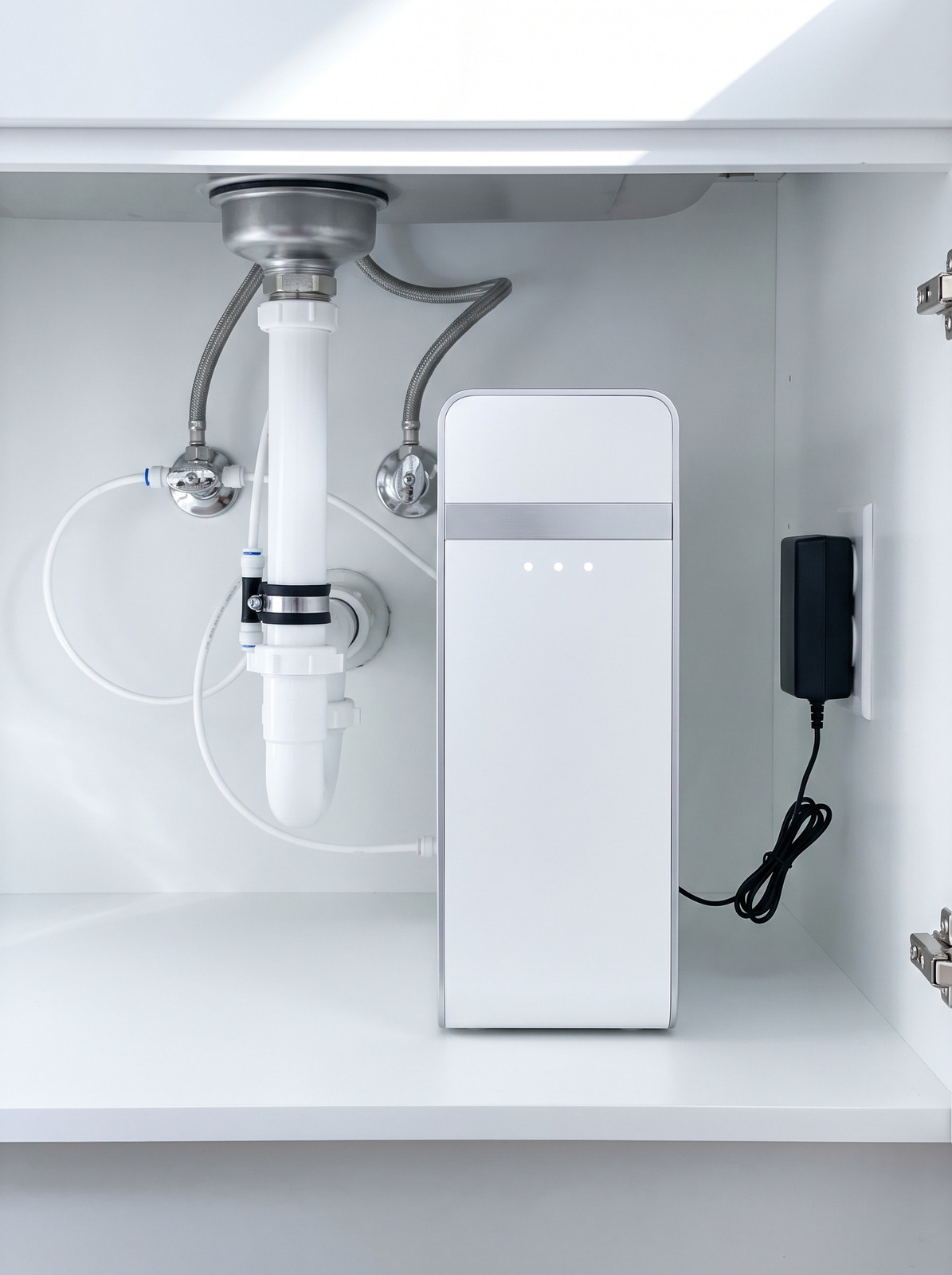
Tankless RO Main Control
Pump · Solenoid · SELV Main
Tankless RO Main Control
SELV tankless RO mainboards drive booster pumps, inlet and flush solenoids, pressure switches and leak inputs. We coordinate single-sided mixed assembly, approved firmware loading, masked coating and dry FCT.
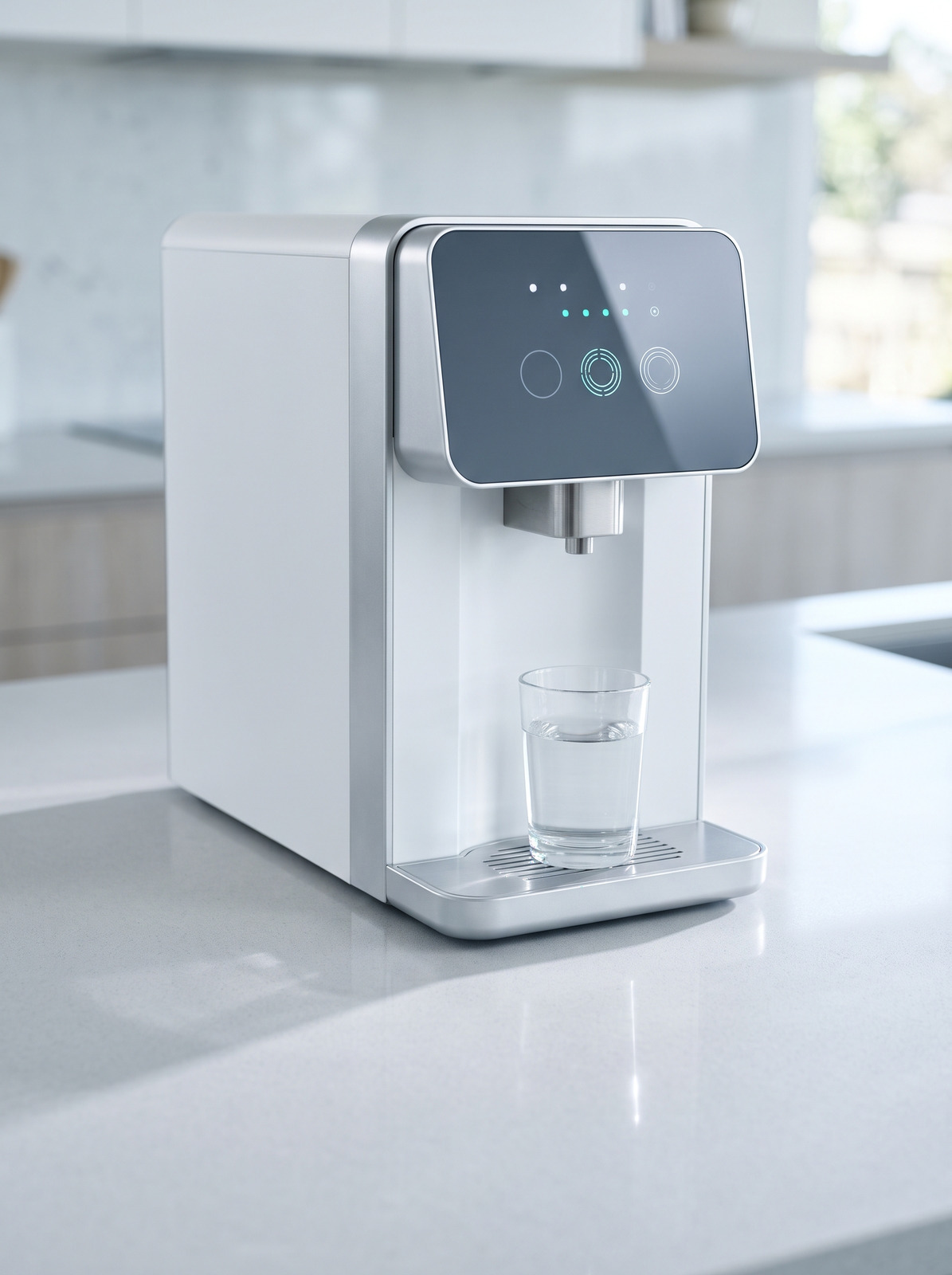
Touch & Reset Sub-Boards
Capacitive Touch · LED · Reset
Touch & Reset Sub-Boards
Separate front-panel touch, LED status and filter-reset boards scale purifier platforms across tiers. We align button seating, optical keep-out masking and single-sided checks with your main board revision.
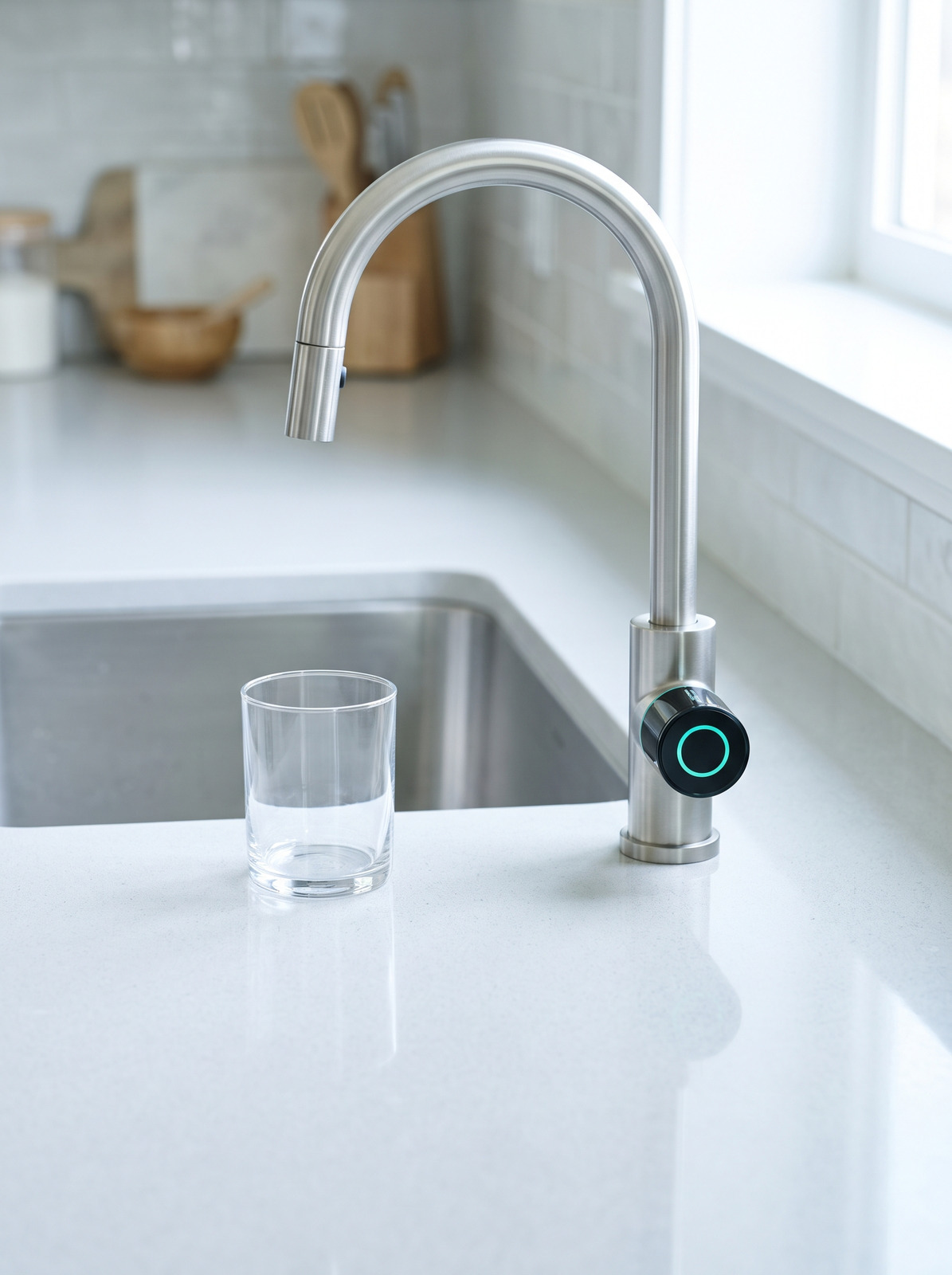
Faucet & Flow Sub-Boards
Smart Faucet · Hall-Flow · TDS
Faucet & Flow Sub-Boards
Wired smart faucet displays and Hall-effect flow-pulse boards operate near splash zones. We build single-sided SMT and same-side header layouts, verifying dry signal response before OEM wet calibration.
From Early Files to Verified RO Control Boards.
Turning a water-purifier design into consistent board shipments begins by confirming mounting faces, power boundaries and dry-test coverage before release. Resolve open manufacturing questions early, then carry one locked revision through production.
Share Files & Architecture
Send available Top and Bottom Gerbers, a draft or released BOM, assembly drawings, schematic or a reference board. Indicate whether the purifier uses an external Class II adapter supplying SELV DC and list any separate touch, faucet or flow sub-boards.
Confirm Geometry, Coating & Test Scope
Review both board faces and full package lists to verify single-sided component mounting, flag opposite-face through-hole parts, confirm conformal-coating chemistry and keep-out zones, and align dry-bench FCT fixtures and approved firmware binaries before build release.
Assemble, Reflow & Coat
Coordinate bare boards and approved components through single-sided SMT and same-side through-hole assembly with lead-free reflow and first-article review. Apply drawing-defined masking and conformal coating on cleaned, dried assemblies when specified for the build.
Flash, Dry-Check & Hand Over
Complete AOI, customer-approved firmware programming and agreed dry functional checks—covering power rails, switch inputs, reference-resistor TDS/NTC simulation, Hall-pulse input and dummy-load actuator outputs—before dispatch for your wet calibration and finished-appliance integration.
Common Questions.
Answers to recurring engineering and scope questions on single-sided geometry, dry versus wet TDS testing, drinking-water standards, firmware ownership and heating or mains boards.
Can multi-layer RO control boards fit single-sided component mounting?
Yes, when every SMT and through-hole part mounts on one PCB face. Single-sided component mounting does not define copper-layer count, so multi-layer boards with copper pours, routing and thermal vias on the reverse face can still fit. Because one SMT face alone does not confirm fit if headers, terminals, buttons or DIP switches sit on the opposite side, both Top and Bottom Gerbers and the full BOM package list are reviewed before quoting.
How are conductivity and TDS channels verified without wet water at the factory?
Dry electrical board verification replaces the wet conductivity cell with precision reference resistors across target conductance points, paired with fixed resistors simulating NTC temperature values, dry-contact switch simulation for LPS, HPS or float inputs, digital pulse injection for Hall flow inputs and dummy loads on pump or solenoid outputs. Wet liquid-standard calibration, physical probe cell-constant matching and membrane recovery or contaminant testing stay strictly with the OEM.
Does lead-free PCBA soldering satisfy NSF/ANSI 58, NSF/ANSI/CAN 61 or NSF/ANSI/CAN 372?
No. NSF/ANSI 58 governs complete point-of-use RO drinking-water systems—materials, construction, performance, efficiency and contaminant reduction—required under the U.S. International and Uniform Plumbing Codes and verified by ANSI-accredited certifiers. NSF/ANSI/CAN 61 covers wetted-component leaching and incorporates NSF/ANSI/CAN 372 U.S. Safe Drinking Water Act lead-free limits of ≤ 0.25% weighted average lead on wetted pipe, fitting and fixture surfaces and < 0.2% for plumbing solders and fluxes. Non-wetted lead-free electronic PCBA soldering never substitutes for those certifications.
Do you develop RO control firmware, TDS algorithms or companion mobile apps?
No. Our standard manufacturing role is build-to-print PCB assembly plus programming and verifying customer-approved production firmware binaries. On mature customer-owned designs, bounded BOM-alternate reviews or limited layout and configuration adjustments can be assessed case by case. Full controller R&D from scratch, custom TDS compensation algorithms, IEC 60730-1:2022 automatic-control functional-safety validation and Wi-Fi or Bluetooth app and cloud platforms remain outside scope.
Why are instant-heating, heated-tank and onboard-mains boards outside core scope?
Control boards powered by an external Class II adapter supplying SELV DC keep hazardous mains power outside the purifier chassis. By contrast, instant-heating power stages with large heatsinks, heated storage-tank drive boards switching mains heaters, onboard offline power supplies, integrated UV lamp ballasts and BGA wireless hubs introduce heavy-copper thermal, primary-mains isolation, X-ray or RF-validation requirements outside our standard assembly scope. On mixed systems, only isolated low-voltage sub-boards—such as a standalone reset or UI board—fit core assembly evaluation.
Manufacturing Experience. Direct Cooperation.
Our factory’s experience includes long-term supplier relationships with Fortune Global 500 customers and demanding supplier audits. We bring that manufacturing discipline to sample builds, pilot batches and repeat water-purifier control board orders, aligning quality expectations around the released electronics your product needs.
Long-term supplier to Fortune Global 500 customers.
Sustained enterprise supply is part of our manufacturing experience. We apply that experience to build-to-print water-purifier control, UI and sensor board orders, with revision baselines, material responsibilities and build steps agreed for the project.
Passed demanding supplier audits and customer reviews.
Our factory has passed demanding supplier audits. That background supports direct engineering discussion of the mounting-face checks, masking drawings, documentation and acceptance expectations relevant to your purifier assembly.
First-article, AOI, and board checks.
First-article review, AOI, approved firmware loading and agreed dry electrical checks examine distinct aspects of the finished board. Clear BOM, keep-out and fixture references connect those checks directly to the build your order requires.
Long-term relationships.
Global brands.



Start with
what you have.
Tell us about your water purifier or reverse osmosis control board project. Top and Bottom Gerbers, a draft BOM, schematic or reference sample is enough to start a practical discussion; share your available files, power architecture, sub-board split and the manufacturing questions you want to resolve.
Starting a new purifier board?
Share a draft BOM, schematic or Gerbers early to check single-sided mounting fit, coating keep-outs and dry-bench FCT scope before release.
Transferring an established RO assembly?
Send the released revision, approved firmware package and sub-board list so we can align BOM parity, masking drawings and test fixtures.
 English
 German
 Arabic
 French
 Spanish
 Portuguese (Portugal)
 Korean
 Indonesian
 Chinese
 Russian
 Italian
 Dutch
 Polish
 Hindi
 Thai
 Portuguese (Brazil)