

Water Treatment
PCB Assembly.
Build-to-print SMT, through-hole and mixed PCB assembly for water-treatment control, driver, sensor-interface and display boards. Align FR-4 or aluminum-core builds with single-sided component mounting across point-of-use purifiers, split valve controllers, chemical dosing timers and commercial UV control electronics.
Three Water-Treatment Families.
One Clear Board Scope.
Water-treatment equipment spans distinct control architectures across point-of-use (POU) purifiers, point-of-entry (POE) backwash valves and commercial dosing or UV cabinets. We assemble populated electronic printed circuit boards—distinct from replaceable cartridges sometimes labeled “PCB Filter” in purifier manuals—using SMT, through-hole and mixed assembly on FR-4 and aluminum-core boards with single-sided component mounting. Production is backed by lead-free reflow, AOI, first-article review, approved customer firmware loading, customer-defined conformal coating and agreed dry-bench electrical checks. Because single-sided component mounting does not define copper-layer count—and one SMT reflow face does not confirm fit if through-hole parts sit on the opposite face—both Top and Bottom Gerbers and the full BOM package list are reviewed before quoting.
Start early with a draft BOM, schematic, Gerbers or reference sample to confirm fit before locking production release. To keep boundaries clear up front, we exclude heated-tank or instant-heat mains boards, residential UV lamp ballasts, pool chlorinators, municipal PLC or ozone plants, precision wet-chemistry metrology transmitters, mechanical septic float panels and utility water meters. Hidden-joint BGA/WCSP packages requiring X-ray, vacuum potting, heavy-copper power stages, full firmware or cloud development, and wet, hydraulic, optical, RF, EMC or agency certification testing also remain outside confirmed board-assembly scope.
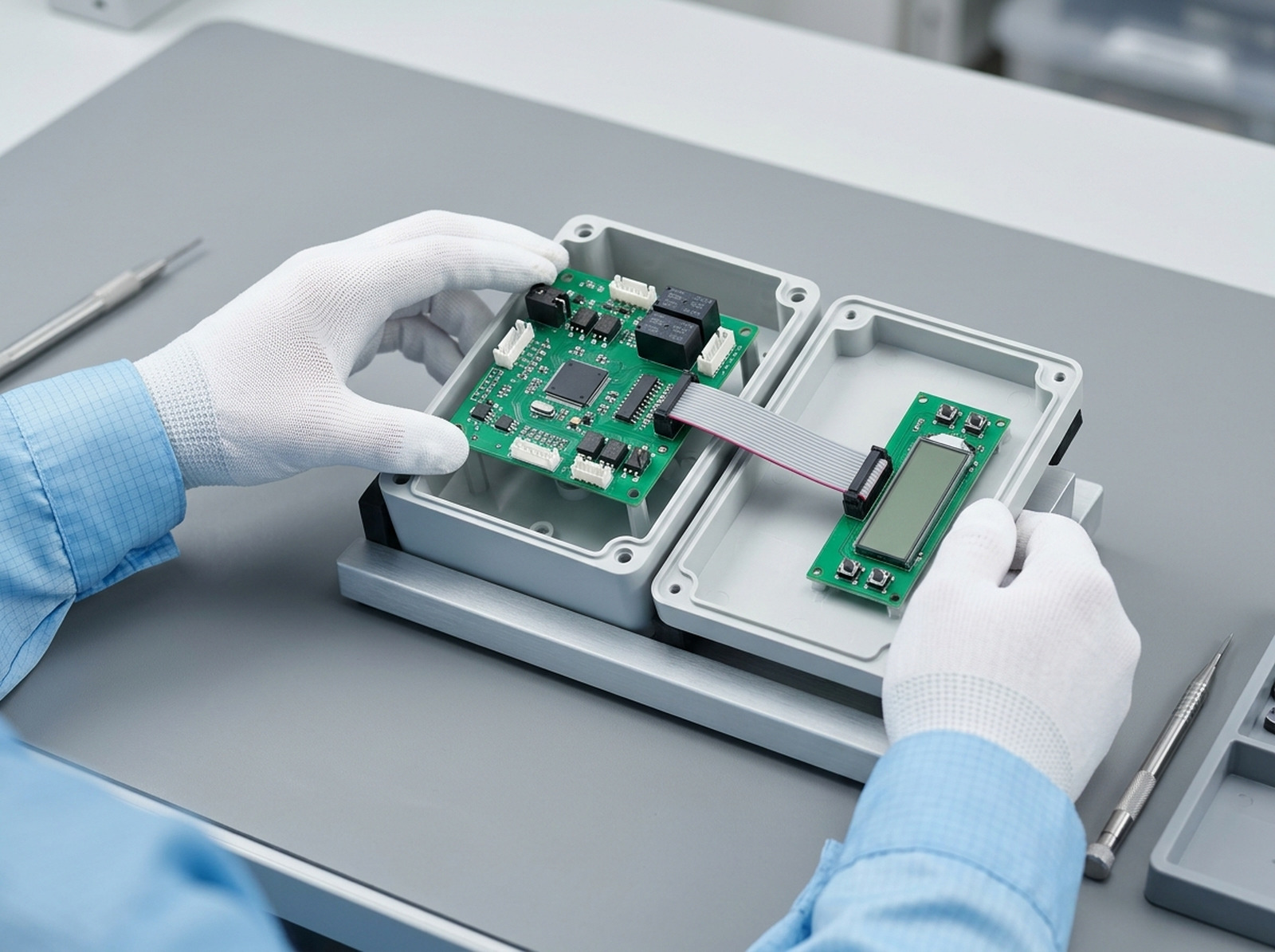
Water-Treatment Board Families We Assemble.
Explore the three water-treatment control segments suited to FR-4 and aluminum-core boards with single-sided component mounting. Each route focuses on the board partitioning, environmental care and dry-bench checks specific to that equipment family.
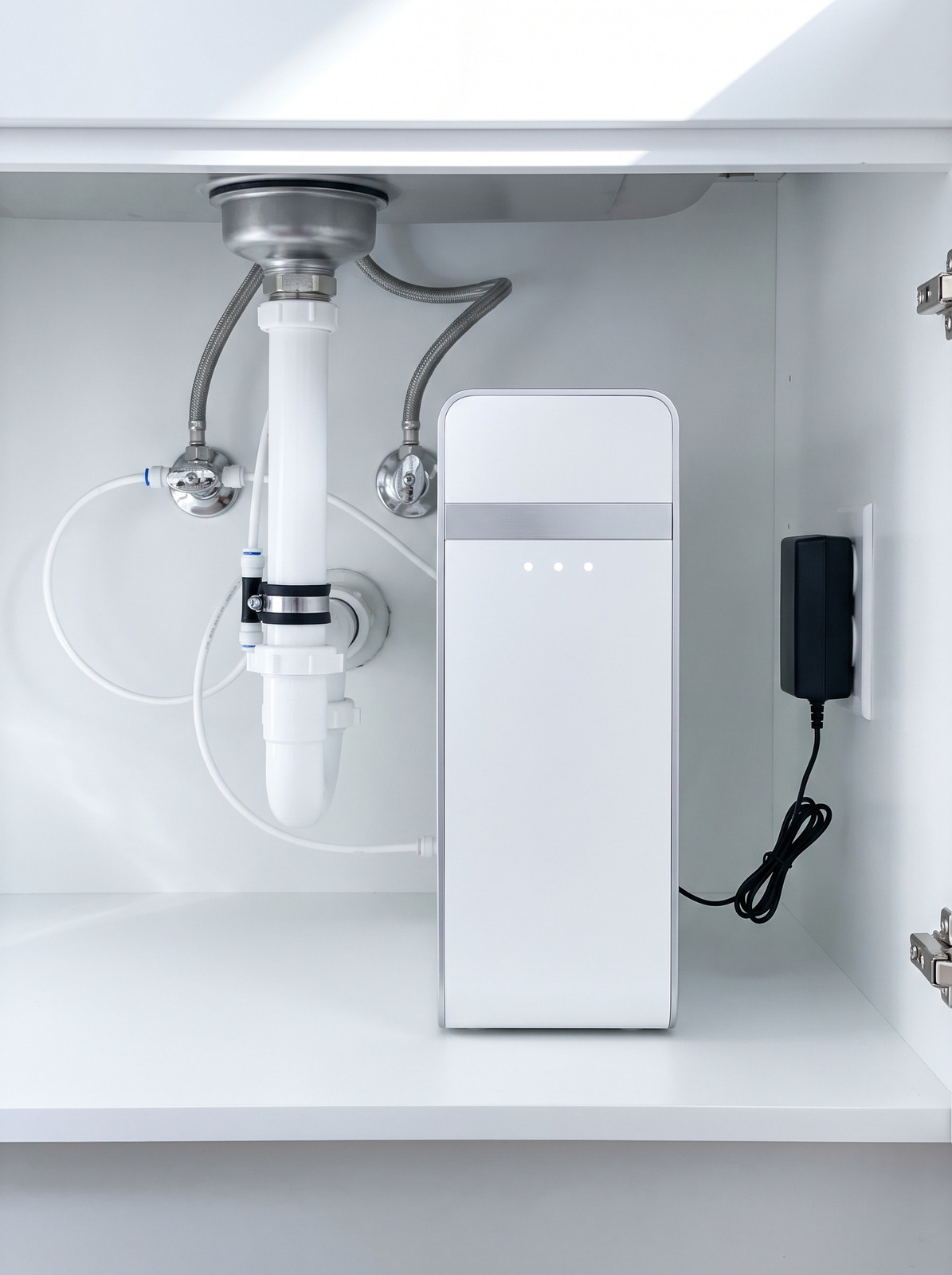
Water Purifier & RO Control
SELV Main · Faucet UI · Flow
Water Purifier & RO Control
External-adapter SELV main control boards, wired faucet-display or touch UI sub-boards and flow-sensor PCBs for under-sink and tankless purifiers, keeping mains instant-heat and heated-tank stages outside scope.
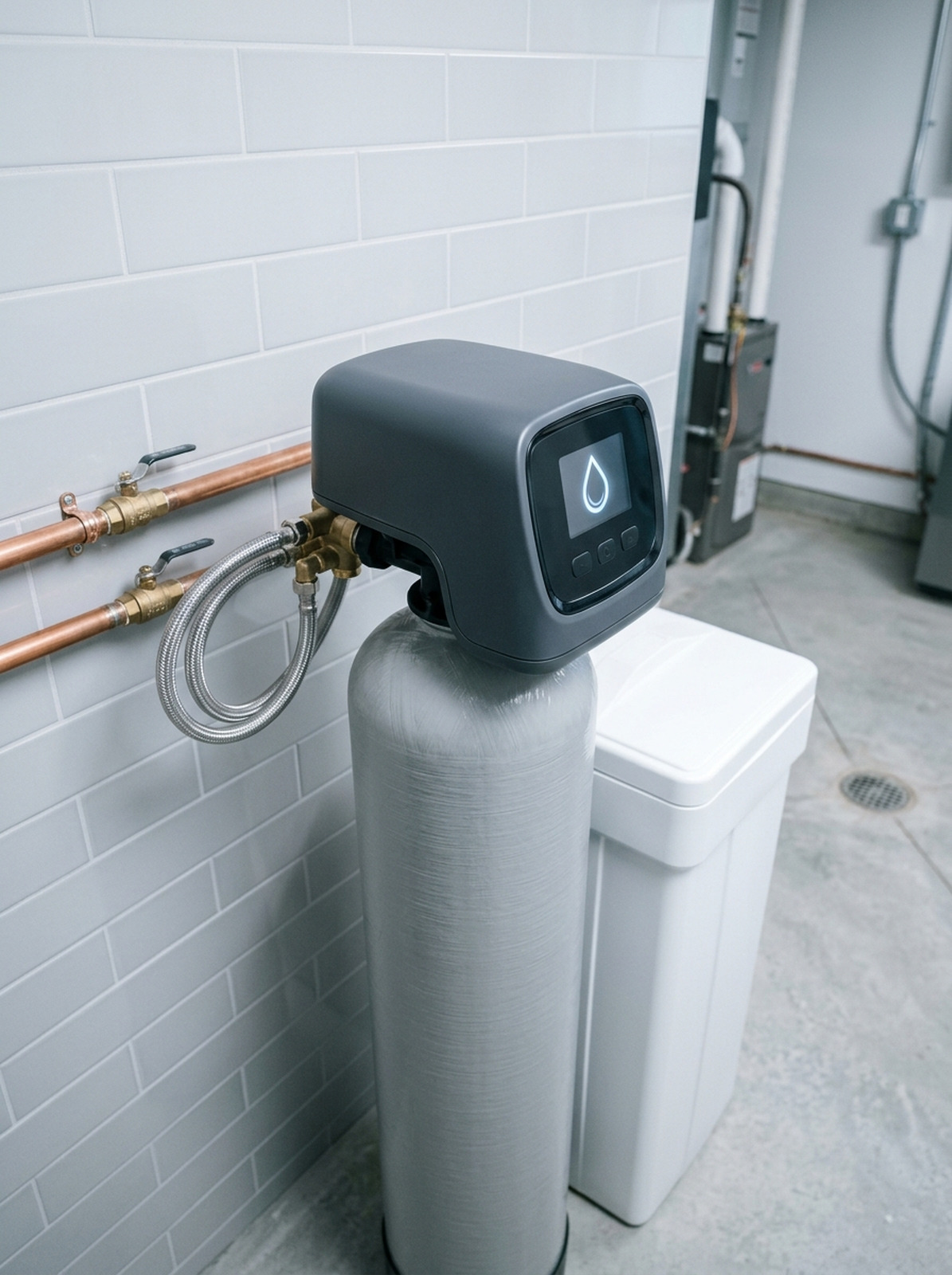
Softener & Backwash Valve Control
Split Main/UI · Locating · Prefilter
Softener & Backwash Valve Control
Customer-owned split valve main and display boards, position-locating or flow-meter sensor PCBs and automatic backwash prefilter timer boards, excluding turnkey valve heads and opposite-face powerheads.
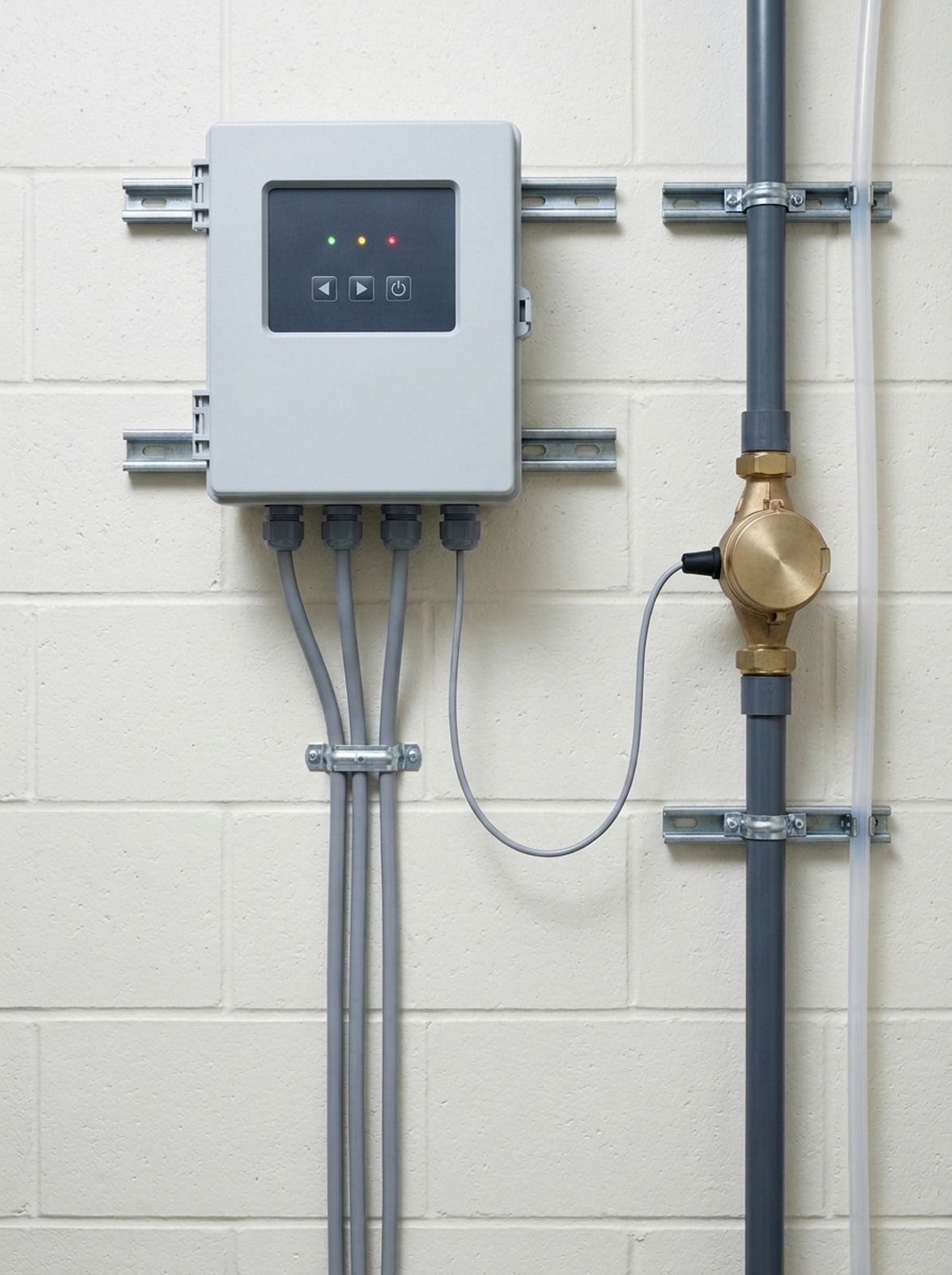
Chemical Dosing & UV Control
Feed Timers · 4–20 mA · UV Logic
Chemical Dosing & UV Control
Build-to-print chemical-feed and bleed timers, isolated industrial I/O or relay cards, commercial cabinet UV control boards and SELV expansion pods, excluding residential UV ballasts and wet-chemistry metrology.
Compare Water-Treatment Board Families & Scope.
Point-of-use purifiers, split valve controllers, chemical dosing timers and decoupled commercial UV boards sit in distinct electrical safety domains and enclosure environments. Comparing their power paths, board splits and verification boundaries keeps quoting clear before release.
Purifier & RO Control Boards
Split Softener Valve & Prefilter Boards
Chemical-Feed, Bleed & Isolated I/O Boards
Decoupled UV Control & SELV Expansion Pods
Four Cross-Sector Controls Behind Water-Treatment PCBA.
Across purifiers, backwash valves, chemical dosing timers and commercial UV cabinets, consistent board production depends on four electrical, mechanical, environmental and verification controls aligned before assembly begins.
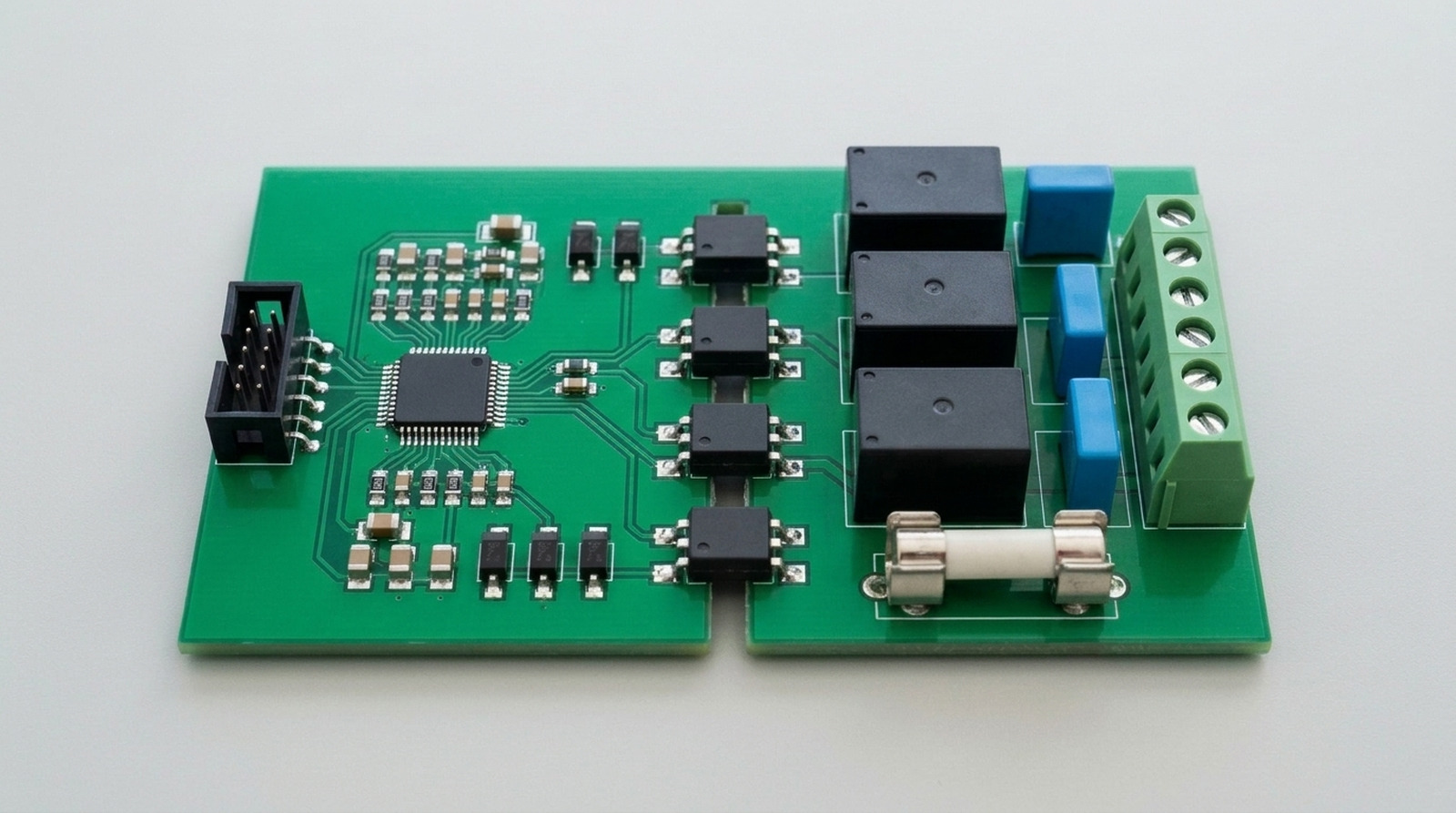
SELV vs. Mains, Relay & Ballast Isolation Gate
Water-treatment boards serve distinct OEM-owned equipment safety domains: external-adapter SELV control boards inside household IEC 60335-1 appliances, segregated relay or contactor-trigger I/O backplanes inside IEC 60335-1 residential or IEC 61010-1 industrial process-control equipment, and out-of-scope heating or UV lamp-ballast power stages. We classify every inquiry by electrical domain up front, hold locked BOM identities on safety-critical isolation relays, fuses or snubbers, and verify freewheeling-diode polarity on direct DC solenoid or coil drivers during AOI.
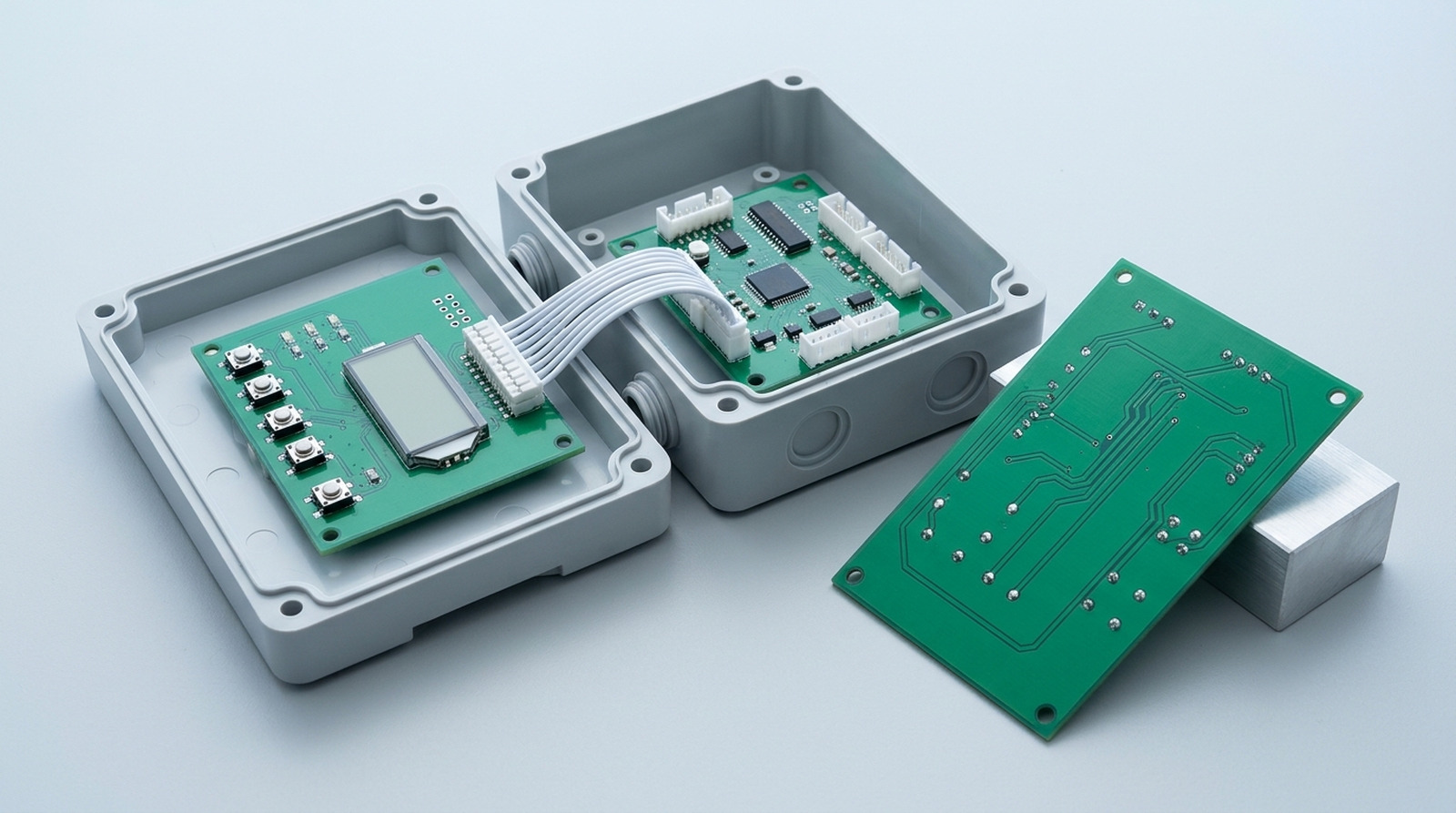
Dual-Face Gerber & Split-Board DFM Gate
Compact door- and valve-mounted water-treatment controllers frequently place displays or keypads on the front face opposite through-hole relays, wire headers, terminal blocks or DIP switches on the back—breaking single-sided mounting even when SMT reflow sits on one side. Split-board architectures that separate UI and sensing PCBs avoid that collision. Because copper-layer count does not determine mounting faces, we review Top and Bottom Gerbers, full BOM packages, assembly drawings and height clearances before quoting.
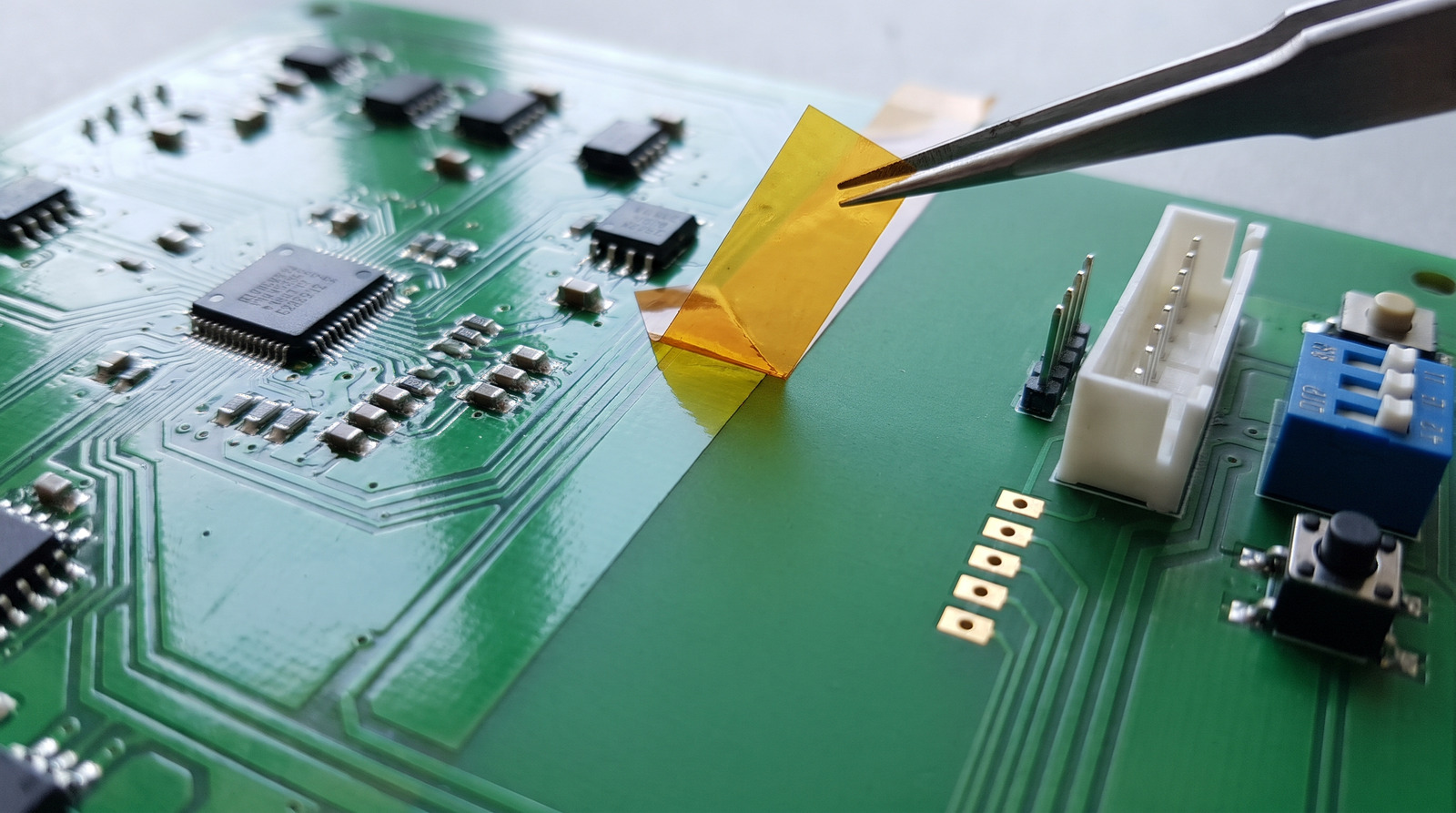
Humid & Chemical-Room Coating, Cleanliness & Masking
Equipment in under-sink cabinets, brine spaces and chemical rooms often uses IEC 60529 IP or NEMA 250 (Type 3 or Type 4X) enclosures, yet IEC 60529 does not cover condensation or corrosive vapors, and NEMA-to-IP mapping is one-way. Thin-film conformal coating (chemistries referenced under IPC-CC-830) is a separate board-level process—never an IP rating or out-of-scope vacuum potting. Coating follows customer-specified resin and pre-coat cleanliness rules, with keep-out masking over open headers, switches, relays and optics plus via bleed-through review.
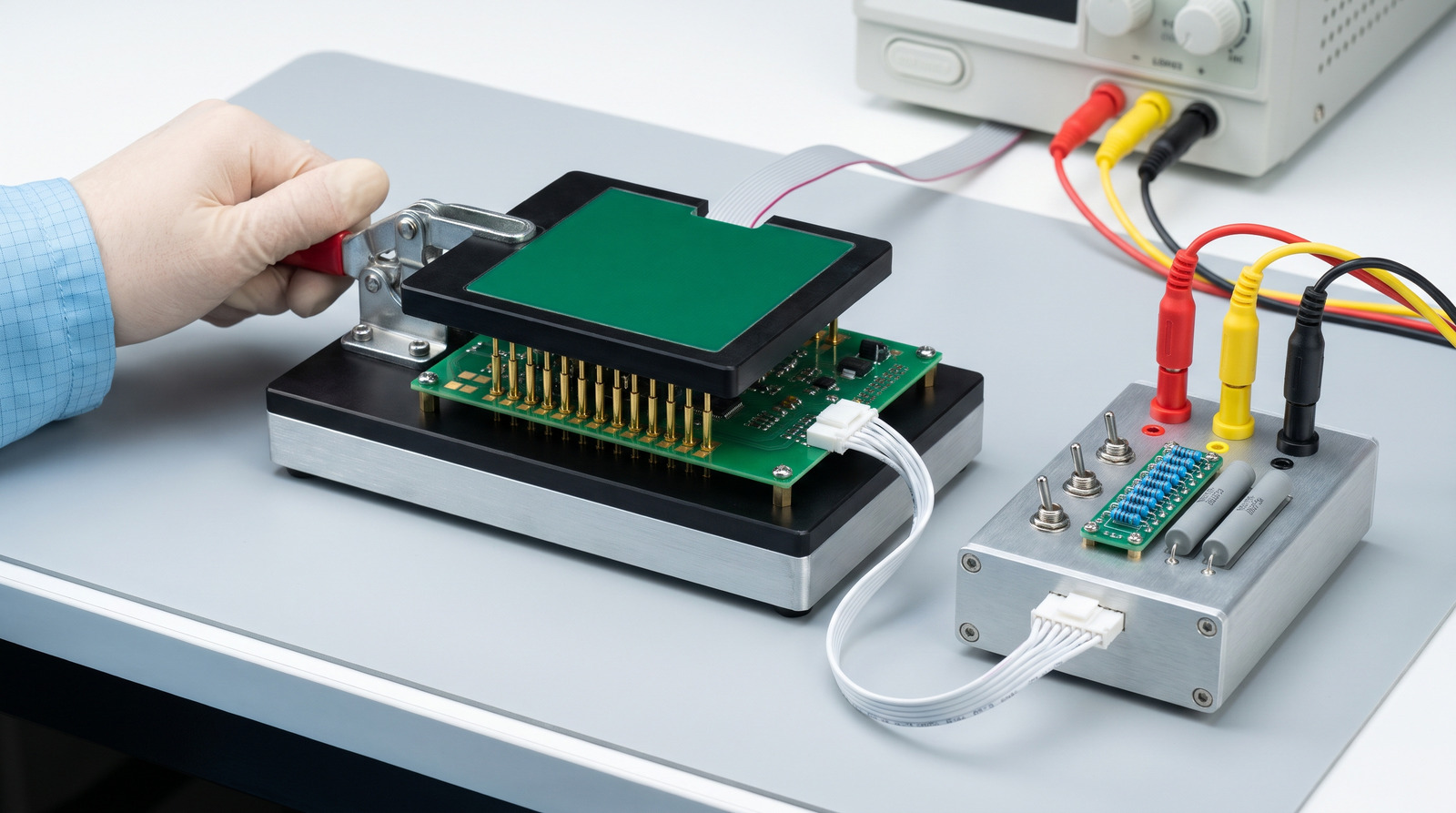
Dry-Bench Electrical Checks vs. Wet & Agency Testing
Production board functionality can be verified deterministically on a dry bench without water, brine, chemicals or live UV-C lamps. Agreed dry-bench checks cover power rails, customer-approved firmware programming with checksum verification, dry-contact or IEC 61131-2 24 V industrial digital input switching, flow-pulse injection, precision-resistor sensing checks, IEC 60381-1 4–20 mA live-zero loop checks and dummy relay or solenoid loads. Wet fluid calibration, mechanical valve homing, optical UV biodosimetry and finished-product certifications remain OEM-owned.
Common Questions.
Direct answers on single-sided mounting screening, conformal coating versus enclosure ratings, dry-bench board testing, drinking-water standards and build-to-print file handoff.
Does copper-layer count or single-sided SMT reflow guarantee single-sided assembly fit?
No. Copper-layer count is independent of component mounting sides: a multi-layer routing stackup can still carry true single-sided component placement, whereas a simpler board falls outside single-sided fit when through-hole relays, wire headers, DIP switches or terminal blocks sit opposite a front display or keypad. Share both Top and Bottom Gerbers, BOM package details and assembly drawings so we can screen mounting faces and height clearances before quoting.
Does conformal coating give a water-treatment PCBA an IP65, IP68 or NEMA 4X rating?
No. IEC 60529 IP designations (such as IP65 or IP68) and NEMA 250 ratings (such as Type 3 or Type 4X) classify finished enclosures rather than bare circuit boards, and IEC 60529 does not specify protection against condensation moisture or corrosive vapors. Thin-film conformal coating (board-level chemistries referenced under IPC-CC-830) helps protect clean, masked board areas under customer-specified rules, remaining wholly distinct from enclosure ingress testing and out-of-scope vacuum potting.
How are water-treatment PCBs tested in production without water, chemicals or live UV-C lamps?
Board verification runs on an agreed dry-bench functional setup before shipment. Precision reference resistors simulate conductivity or temperature channels; dry-contact switches, switched IEC 61131-2 24 V industrial digital signals and pulse generators exercise pressure, level or flow inputs; loop loads verify IEC 60381-1 4–20 mA circuits; and dummy loads check relay or solenoid outputs alongside firmware checksum verification. Wet calibration, mechanical valve homing and optical UV validation remain customer-owned.
Can lead-free PCBA soldering satisfy NSF/ANSI 44, 55, 58, 61 or 372 compliance?
No. Those standards govern finished drinking-water equipment and wetted paths certified by accredited third parties—including NSF/ANSI 58 (POU RO), NSF/ANSI 44 (residential softeners and voluntary demand-initiated regeneration efficiency), NSF/ANSI 55 Class A (40 mJ/cm² minimum UV dose at 254 nm) and NSF/ANSI/CAN 61 and 372 (wetted leaching and U.S. Safe Drinking Water Act lead-free limits: ≤0.25% weighted average lead on wetted surfaces; <0.2% in plumbing solders and fluxes). Lead-free PCBA soldering never certifies wetted-plumbing or system compliance.
What files are required for build-to-print assembly versus custom controller development?
Early fit review can start from a draft BOM, schematic, Gerbers or reference sample. Locked production release requires Top and Bottom Gerbers, BOM, centroid data, coating keep-out drawings, approved compiled firmware binaries with checksums and an agreed dry-test plan. Bounded layout or parameter adjustments on mature customer designs can be evaluated case by case, whereas turnkey appliance, valve or UV controller development, mobile apps, cloud platforms and IEC 60730-1 automatic-control safety qualification remain customer-owned.
Manufacturing Experience. Direct Cooperation.
Our factory’s experience includes long-term supplier relationships with Fortune Global 500 customers and demanding supplier audits. We apply that manufacturing discipline to water-treatment control, driver, sensor-interface and UI builds—from initial samples through repeat batches—with build scope and dry-bench checks aligned directly around your design.
Long-term supplier to Fortune Global 500 customers.
Sustained enterprise supply shapes how we coordinate component identity, revision control and repeat build consistency across modular water-treatment control boards, with material and assembly responsibilities confirmed for each project.
Passed demanding supplier audits and customer reviews.
Passing demanding customer audits supports straightforward technical review of BOM locks, conformal coating keep-out drawings, firmware revision control and the acceptance documentation relevant to your water-treatment assembly.
First-article, AOI, and board checks.
First-article review, AOI, customer-approved firmware verification and agreed dry-bench electrical checks examine distinct aspects of the assembly before shipment, keeping factory inspection cleanly separated from customer-owned wet or agency qualification.
Long-term relationships.
Global brands.




Start with
what you have.
Tell us about your water-treatment control, UI or sensor-interface board. A draft BOM, Top and Bottom Gerbers, schematic or reference sample is enough to start a practical fit review—share what is ready now, intended quantities, any coating keep-out notes and the electrical domain of your build.
Starting a new build?
Share draft Gerbers, schematics or a preliminary BOM early to verify single-sided mounting, isolation boundaries, coating masking and dry-bench checks before production release.
Planning a repeat or transfer?
Share the released revision, BOM, firmware binary checksum and any component or variant updates so repeat batches stay aligned with your qualified assembly.
 English
 German
 Arabic
 French
 Spanish
 Portuguese (Portugal)
 Korean
 Indonesian
 Chinese
 Russian
 Italian
 Dutch
 Polish
 Hindi
 Thai
 Portuguese (Brazil)